Pricing Your Artwork: A Complete Beginner’s Guide

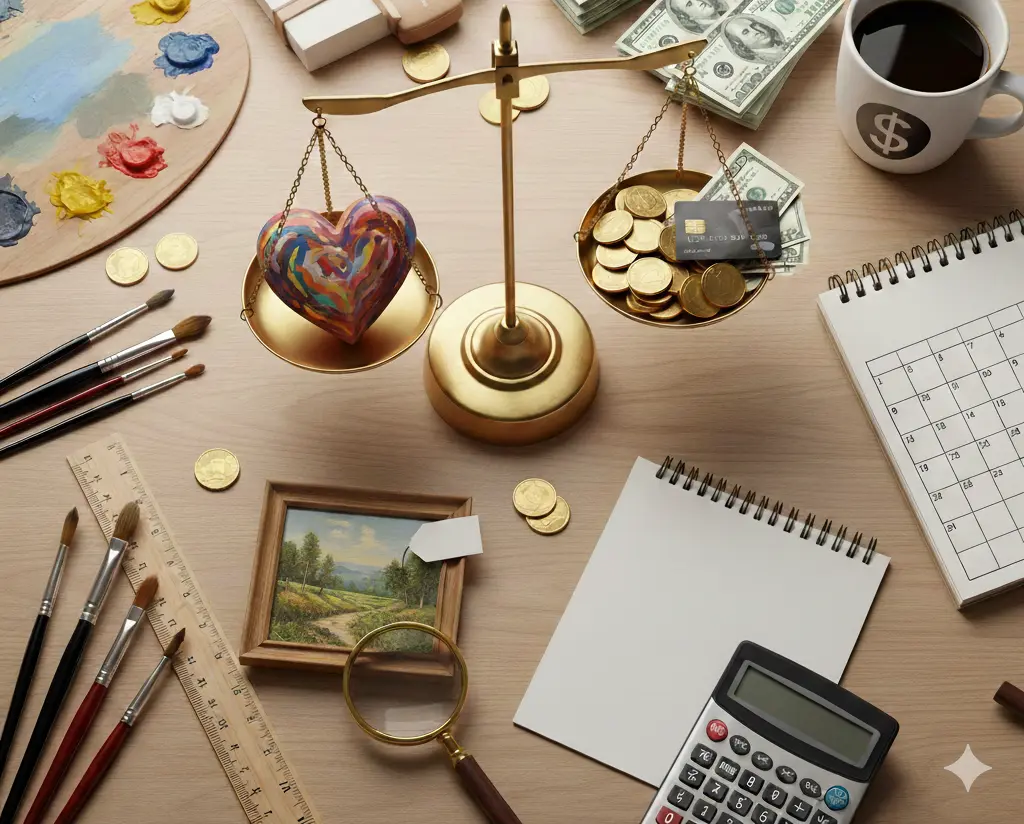
canvas with painting , brushes, calculater and some $

Pricing Your Artwork: A Complete Beginner’s Guide

Pricing your artwork can be confusing especially when you are just starting. Many artists struggle with these questions like “Am I charging too much?” or “Why isn’t my art selling?” and the truth is that art pricing is both a skill and a strategy. When it is done right it reflects your value, covers your costs and attracts the right buyers. In this guide, you’ll know how to price artwork for beginners and how professional artists calculate prices.

Why Pricing Your Artwork Matters

What you created isn’t about selling – it reveals how you see things, what skills shaped it, plus the time spent making it happen. Setting smart rates gives clarity on staying true to yourself while moving forward.
  • Get paid what you deserve, based on how much you actually do
  • Build credibility as an artist
  • Attract the right type of buyers
  • Grow sustainably in the art market

Understand The True Cost Of Creating Art

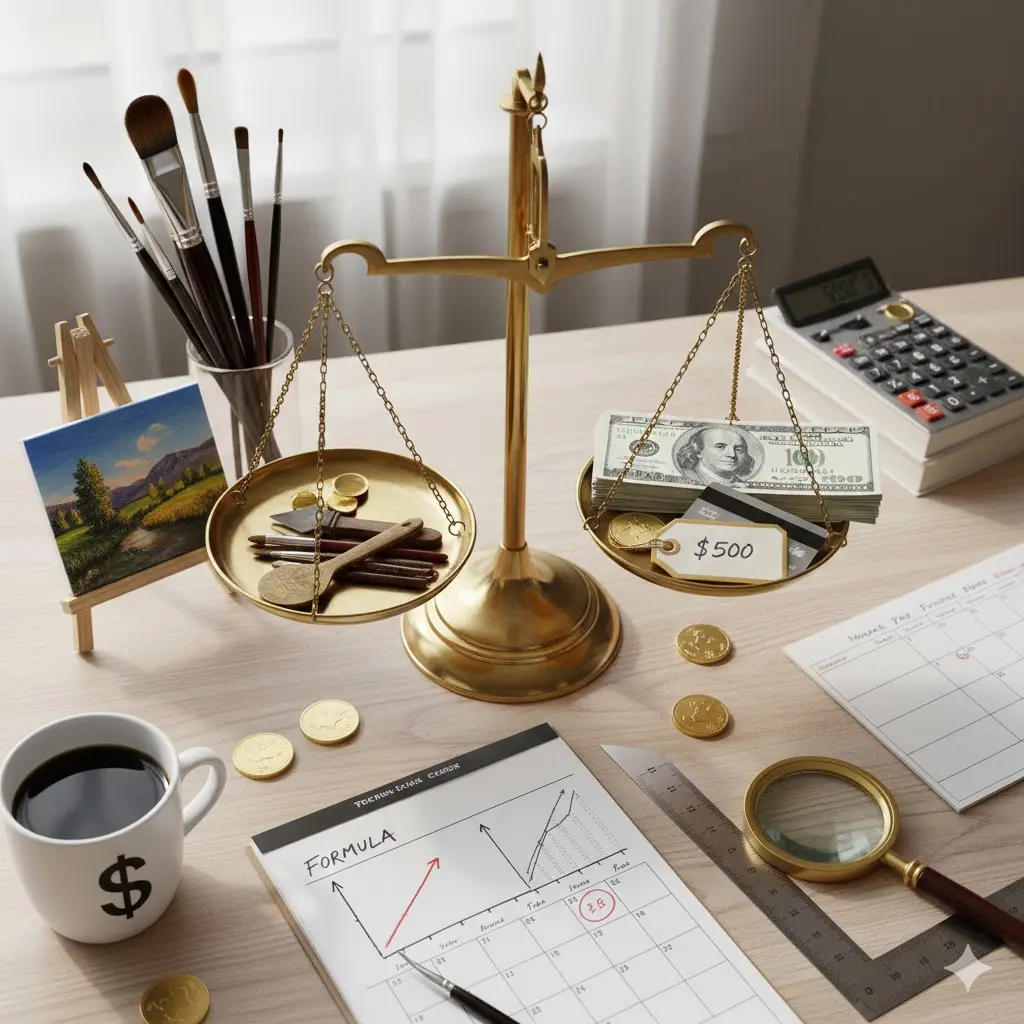
pricing artwork thing and some canvas with paintings dairy etc
Before setting any price, you must calculate your actual costs. Some creators skip this part, then charge too little.

Include These Costs:

  • Art supplies (canvas, paint, brushes, paper, digital tools)
  • Space paid for use, covered under rent or lease terms
  • Packaging and shipping materials
  • Fees from websites, marketing or platforms
  • Electricity and internet (for digital artists)
Knowing how much you spend builds real clarity around value. That base shapes what you can charge.

How To Price Artwork For Beginners (Simple Method)

showing art related things and brushes money and canvases
If you’re new then keep it simple and fair.

Beginner Pricing Formula:

(Material Cost + Hourly Rate × Hours Worked) = Base Price
Example:
  • Materials: $20
  • Hours worked: 10
  • Hourly rate: $15

Artwork Price = $170

This method works well for beginners who are selling their paintings online or locally.

Pricing Artwork By Square Inch (Most Popular Method)

One of the most common professional methods is pricing artwork by square inch.

Formula:

Width × Height × Rate per Square Inch
Example:

  • 16 × 20 inch painting = 320 sq inches
  • Rate: $2 per square inch
Price = $640

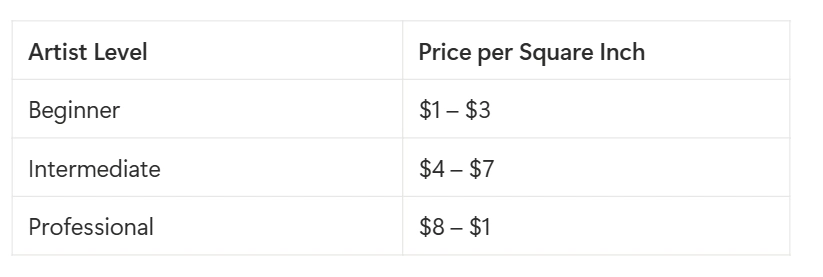
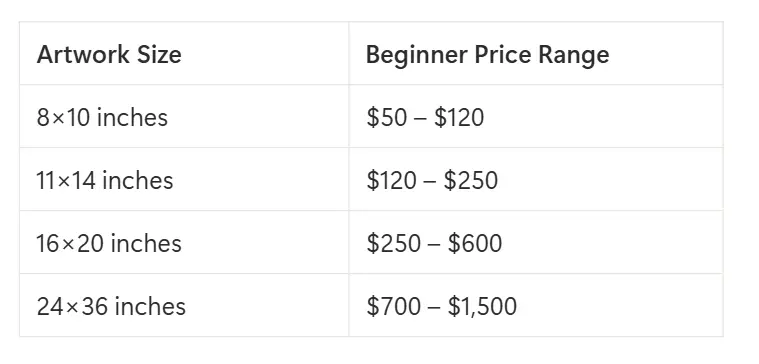
Recommended Rates:

pricing art chart
This method keeps your pricing consistent and easy to scale. There is another method called the Market Comparison Method Research. You can check rates of many artists who have similar styles, experiences, and audiences. This will help you stay competitive while avoiding underpricing.

Art Pricing Chart (Quick Reference)

art pricing chart
Think of this chart like a starting point – it helps, but doesn’t dictate. What you see there is just one way to look, not the only one. As your experience goes up the rates will increase accordingly.

Common Art Pricing Mistakes To Avoid

Acne scars can be really dangerous, and if you don’t follow a certain routine, then your skin can get increasingly damaged, and you will end up wasting years dealing with it. Start on time, consult a professional, and start using products and treatments they tell you to because they have experience and know what the best choice for you is.

  • Changing prices too often
  • Underpricing to “get sales.”
  • Charging different prices for similar artworks
  • Forgetting material and platform costs
  • Consistency will build your credibility.P

Final Tips For Confident Art Pricing

  • Start simple and increase gradually
  • Track what sells best
  • Stick to one pricing method
  • Don’t apologize for your prices
  • Your art has value, so own it

Final Thoughts

Learning how to price your art will take time, but once you find the right way then everything will become easier. Whether you use a pricing artwork calculator, square inch method, or commission-based pricing the key is confidence and consistency.
Remember: People don’t just buy art they buy the artist behind it.

FAQs

How to price art commissions?

Pricing commissions between 30 and 50 percent above standard art pieces, accounting for tailored tasks, adjustments, plus longer hours. From the start, grab half upfront – no exceptions.

How to price artwork for beginners?

Use this simple formula:

Material cost + (hours worked × hourly rate).

Start affordable, stay consistent and increase prices gradually.

How do I calculate the price of my artwork?

You can calculate it by:

(Width × Height × price per square inch) + material costs

or by time-based pricing if you’re a beginner.

What is the 70/30 rule in art?

Spend 70 percent of your time creating art and 30 percent on promoting, marketing and selling it. Both are essential for success.

What is the 80/20 rule for artists?

80 percent of your income often comes from 20 percent of your artworks or clients, so focus on what sells best.

How do I find out the value of my art?

Compare the prices of similar artists. Consider the size of the work, the medium they used, the demand for the work and past sales. The past market response defines the value of the work over time.

COMMENT

There are no reviews yet. Be the first one to write one.

Actually, this article could
be in your email

Featured materials from FOXYLAB MAGAZINE
are available in our newsletters.
Subscribe and get a dose of inspiration!

more articles

A whole world on the tip of a pencil. The story of an artist who proved that true art has no limits and that it is never too late to start all over again.

READ MORE ARTICLES

International fashion icon and symbol of Parisian style, Ines de la Fressange is one of the most famous women in France.

Anastasia Pilepchuk is a Berlin-based artist with Buryat roots. She creates masks and face jewellery inspired by the nature and the culture of her beautiful region.

A whole world on the tip of a pencil. The story of an artist who proved that true art has no limits and that it is never too late to start all over again.


Search

FOLLOW US ON