How To Get Into Art Galleries Easily

how to get into art galleries guide look

Unlock Your Creative Potential: Why You Should Try Painting

Breaking into art galleries is one of the biggest milestones for any artist. Whatever your medium, if you’re a painter, sculptor, photographer or mixed-media creator, getting gallery representation can elevate your credibility, expand your audience and increase your sales. For young artists who are not familiar with the gallery system, registering with an art gallery can be scary. The method can be even more peculiar if you don’t have any artistic training. In actuality, getting into art galleries requires more strategy, positioning and perseverance than it does chance. This is a complete guide to get into art galleries breaks down everything you need to know from preparing your portfolio to writing emails that get responses.

Why Art Galleries Are Selective

Before submitting your work, understand this: art galleries are businesses. They operate on commission, typically taking 30–50% of each sale. Their success depends on representing artists whose work aligns with their audience and consistently sells.

Most established art galleries:

  • Already represent a stable group of artists
  • Have scheduled exhibitions months (or years) in advance
  • Maintain long-term collector relationships
  • Carefully manage wall space
This is why many rejection emails mention “space limitations.” It’s often not personal, it’s logistical.
Being able to focus only on one thing can really help you relax and clear your mind. This can quickly become your favorite hobby, something you’ll turn to whenever everything around you feels like too much to handle.

Step 1: Choose The Suitable Galleries For Your Pieces Of Art

Not every gallery is a fit. Targeting the wrong ones wastes time and reduces confidence.

Look for:

  • Galleries that state they support emerging artists
  • Artists with similar or complementary styles
  • Comparable price points
  • Clear submission guidelines

Be cautious of:

  • “Collective” galleries that charge membership fees
  • Galleries with no submission information at all
  • Locations that don’t frequently hold exhibits

Step 2: Build A Gallery-Ready Portfolio

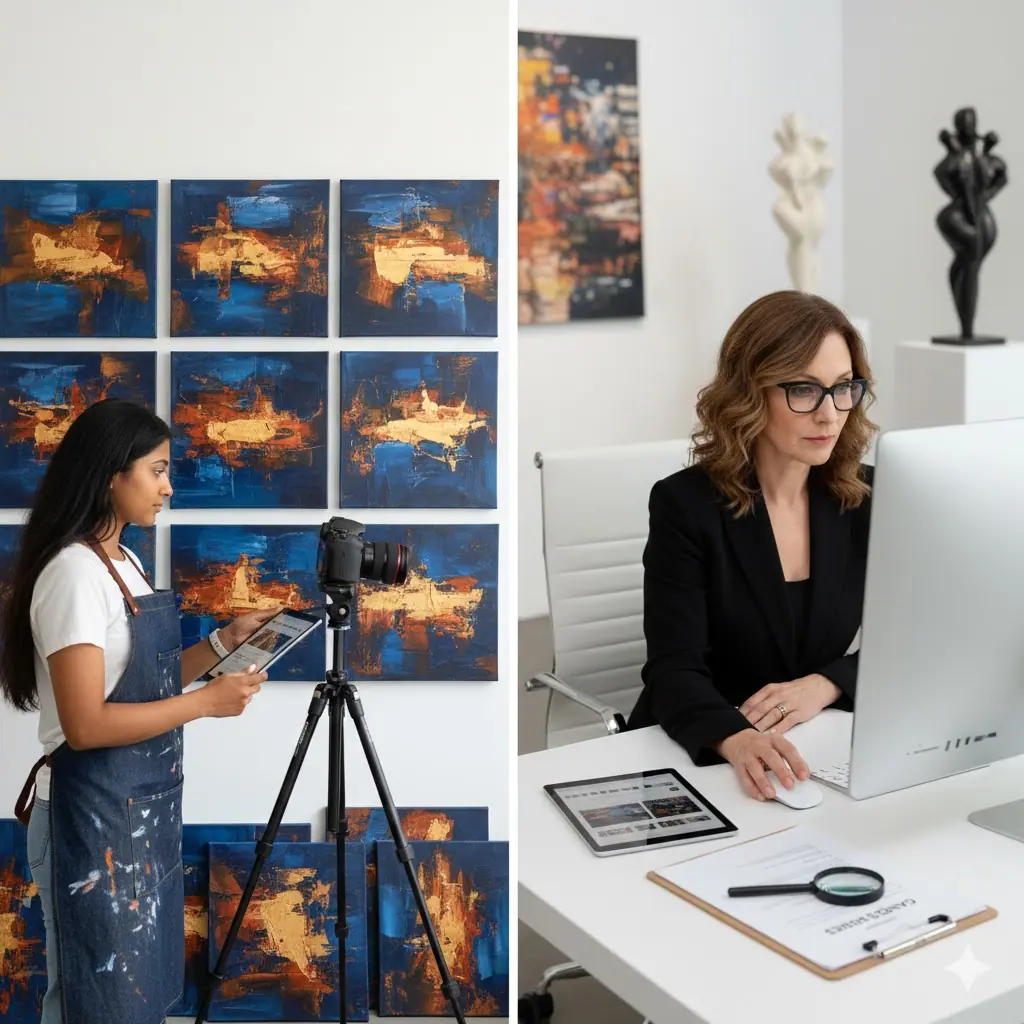
Your first impression is reflected in your portfolio. Art galleries evaluate professionalism through presentation. They Include:
  • 15–25 cohesive works
  • Consistent style and theme
  • Curate carefully. Galleries prefer clarity over variety.

Here is the Guidelines for Photography:

  • Shoot artwork straight-on
  • Use soft natural light
  • Avoid shadows and glare
  • Edit only for color accuracy

Step 3: Optimize Your Website

When art galleries click your link, your website must feel established and easy to navigate.
Essential Website Elements:
  • Portfolio (organized by series if applicable)
  • Artist statement
  • CV
  • Contact information
  • Exhibition history

Smart Optimization Tips:

  • Collect and display verified buyer reviews
  • Separate different art series onto individual pages
  • Avoid cluttered dropdown menus
  • Keep the design minimal and elegant
  • Confusion reduces credibility. Simplicity builds trust

Step 4: Write A Reply-Worthy Email

Cold emails are standard practice in the art world. However, long emails often go unread. Gallery directors and curators are busy. Keep your email to 5–6 sentences.

Structure it like this:

  1. State your intention to exhibit in their area
  2. Express why you chose their gallery specifically
  3. Briefly mention your sales history (if any)
  4. Provide direct links to your website and social media
  5. Attach 3–7 strong images

Important:

  • Personalize every email
  • Mention specific artists they represent
  • Follow their submission instructions exactly
  • Avoid demanding language
Make them feel respected, not pressured.

Step 5: Highlight Your Sales History

While education and awards matter, sales history is extremely attractive to art galleries.

If applicable, mention:

  • Art fairs you’ve participated in
  • Website sales
  • Collector lists
  • Commission work
  • Positive reviews
Galleries want to know that collectors already value your work.

Step 6: Understand Painting Sizes And Market Demand

Different markets respond to different artwork sizes. General Market Observations:
  • Small to medium works (under 48 inches) sell well in cities and tourist areas
  • Large-scale works (over 48 inches) perform better in affluent suburban areas
  • Large paintings often require strong collector bases
Before producing only oversized pieces, research the market your target galleries serve.

Step 7: Apply Strategically And In Volume

One common strategy is to contact a large number of suitable art galleries. Not randomly but strategically.

Realistically:

One common strategy is to contact a large number of suitable art galleries. Not randomly but strategically.
  • Only 10–20% may respond
  • Many responses will be rejections
  • Some will say “not now”
  • A few may request more information
  • Gallery representation often takes years, not weeks.

Track:

  • Date contacted
  • Response received
  • Follow-up dates
  • Notes about feedback
Organization increases long-term success.

Step 8: Be Professional After Rejection

Rejection is not failure. It’s part of the industry. If a gallery responds with a no:
  • Thank them politely
  • Ask (briefly) if they have feedback
  • Maintain connection for future opportunities
  • Professional behavior leaves doors open.

Step 9: Build Relationships Beyond Email

While email is important, relationship-building matters more. Artists and producers frequently use platforms such as Instagram. Post consistently and show finished artwork, studio process and exhibitions artwork

Attend:

  • Gallery openings
  • Art fairs
  • Artist talks
  • Community exhibitions
Introduce yourself naturally. Avoid asking for representation immediately. Instead, concentrate on developing a relationship. Being present and consistent creates familiarity, which in turn develops trust.

Step 10: Determine How Many Galleries You Need

The number of art galleries required to earn a livable income depends on:
  • How fast you produce work
  • Your price range
  • Sales frequency
  • Collector demand

If it sells slowly:

  • Refine your marketing
  • Strengthen relationships
  • Improve positioning

Step 11: Logistics And Shipping

Large artwork requires careful transport.

Options include:

  • Professional art shipping companies
  • Custom-built crates
  • Local delivery for nearby galleries
Don’t ever compromise on safety. Your reputation is compromised by damaged artwork.

Step 12: Maintain Long-Term Gallery Relationships

Once accepted into art galleries, your work continues.

Maintain:

  • Clear communication
  • Timely delivery
  • Promotional support
  • Professional contracts
Promote awareness about exhibitions to those who are interested to help the gallery’s advertising campaigns.Both parties gain from a solid collaboration.

Common Mistakes Emerging Artists Make

how to get into art galleries guide
  • Sending generic mass emails
  • Ignoring submission guidelines
  • Overloading galleries with images
  • Pricing inconsistently
  • Having an unorganized website
  • Giving up too soon

Conclusion

To get into art galleries, one must be prepared, strategic, and persistent. Your primary objectives should be to build a strong portfolio of work, present a polished image, and build sincere relationships with other artists. Most rejections are not about your talent. They are about timing, space, and fit. Focus on creating strong work. Present it professionally. Reach out consistently. And build real connections, not shortcuts. Some emails will be ignored. Some replies will say no. A few will open doors. That’s how the gallery world works. The artists who succeed are not the luckiest ones; they are the ones who didn’t stop.

COMMENT

There are no reviews yet. Be the first one to write one.

Actually, this article could
be in your email

Featured materials from FOXYLAB MAGAZINE
are available in our newsletters.
Subscribe and get a dose of inspiration!

more articles

A whole world on the tip of a pencil. The story of an artist who proved that true art has no limits and that it is never too late to start all over again.
READ MORE ARTICLES

International fashion icon and symbol of Parisian style, Ines de la Fressange is one of the most famous women in France.

Anastasia Pilepchuk is a Berlin-based artist with Buryat roots. She creates masks and face jewellery inspired by the nature and the culture of her beautiful region.

A whole world on the tip of a pencil. The story of an artist who proved that true art has no limits and that it is never too late to start all over again.


Search

FOLLOW US ON