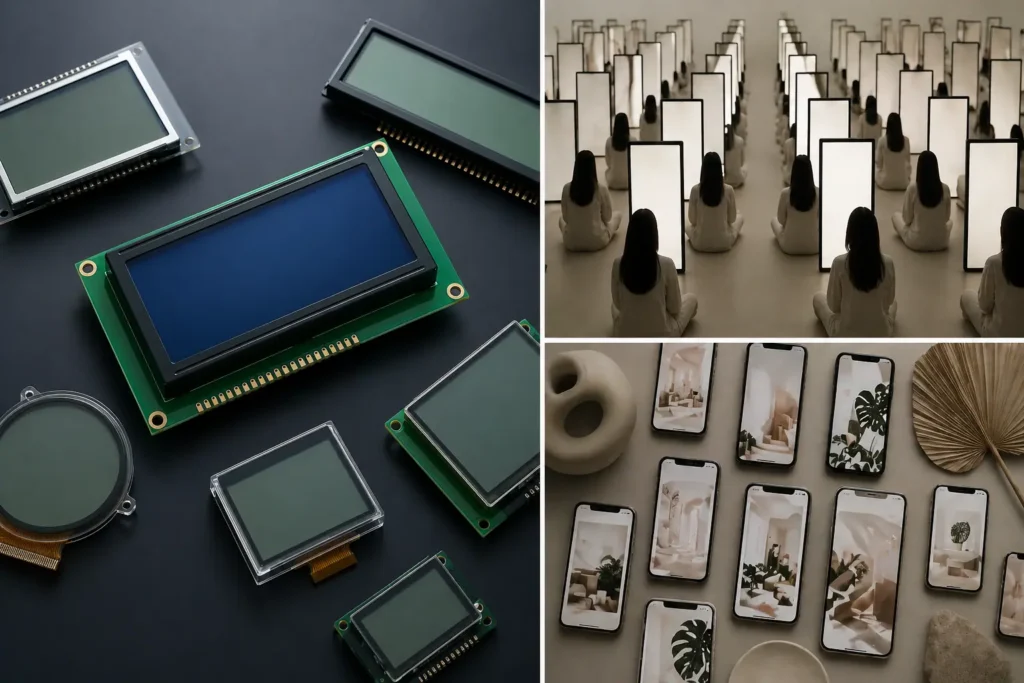
Today, we are scrolling more than ever before, but still seeing less. Less of anything new and different. Why does this happen? The answer lies in what cultural critics call “Aesthetic Homogenization.”Aesthetic homogenization stems from the combination of digital exhaustion and the effort to achieve algorithmic dominance. It’s the process by which the interiors of homes, clothes, and even cities around the world are starting to look eerily similar, all made to perform well on a smartphone screen.
How does this happen? What does this do to creativity? How can we go against it?
When everyone’s scrolling through the same Pinterest mood boards or Instagram’s Explore page, you start to lose that unique, local flavor in design. Suddenly, it’s all mid-century modern furniture, Monstera plants, and splashes of Millennial Pink—everywhere you look. And hey, it’s not just a passing trend. Businesses have to do this to survive. If you want people to find your place, it needs to look “Instagrammable”—and that means playing by Instagram’s visual rules.
Our cognitive load seems to be at an all-time high. When we are overstimulated by notifications and a constant stream of information, our aesthetic preferences shift towards the “clean” and “minimal.” We want visual environments that do not require much from our processing power. However, this shift towards digital minimalism has backfired. Now, we find ourselves in a world that feels more sterile and lacking in character.
The way we consume media shapes our taste more than anything else. It used to be that subcultures grew slowly in certain places, like London’s punk or Seattle’s grunge. Now, they show up, blow up, and disappear on TikTok in just a few weeks.
For creative industries, aesthetic homogenization is a “Goldilocks” problem. A design that is too strange doesn’t catch on, and one that is too similar gets lost in the noise. “Blandscaping” has become popular because it removes serifs from brand identities and makes logos more uniform by using high-contrast, sans-serif fonts.
While predictable aesthetics offer a sense of comfort to a fatigued mind, they stifle the “serendipity of discovery.” Real innovation tends to spark from clashing ideas, not from perfect harmony.But algorithms are built to smooth out those rough edges. When they show us only what we already enjoy, we lose the habit of seeing through someone else’s eyes, and our interest in different cultures can fade.
As all things feel too bland or repetitive, many are seeking refuge in niche communities. We see these individuals adopting various popular style movements like Cluttercore, Gorpcore, and Avant-Basic.These types of styles do have a common thread—they value elements such as texture, disorderliness, and historical references that aren’t typically found in the standard 1:1 format of an Instagram grid.
So, what can we do to improve our visual literacy? The first step is to stop scrolling and start looking beyond our screens. There are so many libraries, local archives, flea markets, and art clubs to explore, each of them filled with pieces that have never been affected by modern digitalization.These can challenge your mind and give you a different perspective of the world, a perspective completely different from what we’re used to seeing on our small screens. And maybe, that is exactly what you need to redefine yourself and find joy in the things you haven’t thought about before.