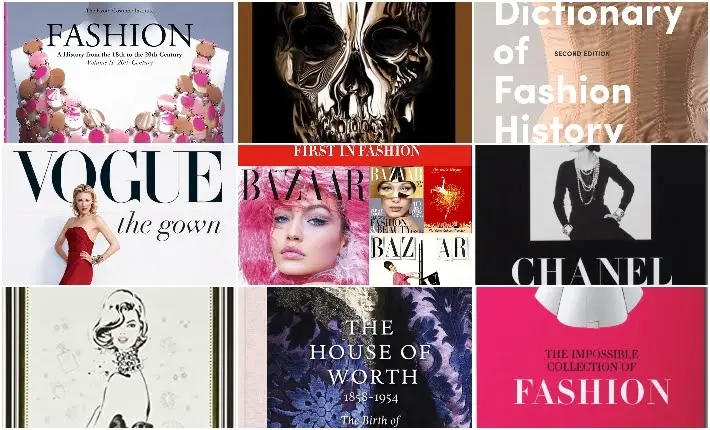
Fashion history begins long before the first fashion magazine existed. One of the most cited works is “The History of Costume” by Blanche Payne. This book offers a huge chronological panorama: from ancient draped garments to the structured silhouettes of the Renaissance.The writing is dense but accessible.Readers often return to it because it connects clothing to climate, geography and craft traditions. This helps us see that fashion is never random. It is survival, it is technique, and only later does it become aesthetics.Another key text is James Laver’s “Costume and Fashion: A Concise History.” Laver was known for his witty explanations and his ability to place trends within social behaviour. He famously introduced the idea that fashion moves according to predictable phases: seduction, shock, acceptance and boredom. This simple model still appears in modern analyses of consumer behaviour.
The 20th century transformed fashion from a craft into a global narrative. Many historians argue that the most influential era was the golden age of haute couture, and several books shaped how we remember this period.One of the most influential is “Dior by Dior,” the autobiography of Christian Dior. Instead of providing technical instructions, Dior tells the story of his house with an unusual mix of elegance and vulnerability. He describes the pressure of presenting collections, the magic of draping fabric directly on a mannequin and the shock of international attention after the New Look appeared in 1947.For a broader view, “The Golden Age of Couture: Paris and London 1947–1957,” published by the Victoria and Albert Museum, gives readers a curated journey through one of the most refined decades in fashion. It includes photographs, documents and essays that explain how designers shaped not only silhouettes but also cultural identity after the war.
Some titles changed the way the world understands creativity. “Yves Saint Laurent: A Biography” by Laurence Benaïm offers a deep psychological portrait of a designer who redefined modern elegance. The writing shifts between personal struggle and artistic ambition, showing how style becomes a reflection of inner conflict. The biography also documents Saint Laurent’s impact on ready-to-wear, which democratized fashion for the middle class.Another important read is “Alexander McQueen: Savage Beauty.” Technically an exhibition catalogue, it is treated as a book because of its analytical essays and powerful imagery. It reveals how McQueen built theatrical, sometimes disturbing runway shows that commented on history, nature and the limits of beauty. The book is essential for understanding fashion as performance art.
Fashion is a mirror. It reveals society. Several books highlight this idea in ways that continue to shape research and public conversation.One solid illustration comes from Diana Crane’s book, Fashion and Its Social Agendas. This study applies sociological tools to reveal how what we wear signals class, gender, and identity. Crane investigates real data, social trends and mass-market behaviours. Thanks to her research, universities now treat fashion studies as a serious field. According to the Council of Graduate Schools, programs related to fashion theory and cultural analysis increased by nearly 20 percent in the last five years, a shift partly connected to books like Crane’s.
Women in Clothes—crafted by Sheila Heti, Heidi Julavits, and Leanne Shapton—offers a compelling take on fashion and identity. This book breaks the mold of fashion history. Rather than relying on statistics, the project records hundreds of women’s interviews, stories and reflections, painting a vivid picture of their experiences. The pattern laid out here proves that the clothes we pick are tied to our inner feelings and can swing wildly from one day to the next. It becomes evidence that fashion is not just about famous designers; it is also about everyday life.