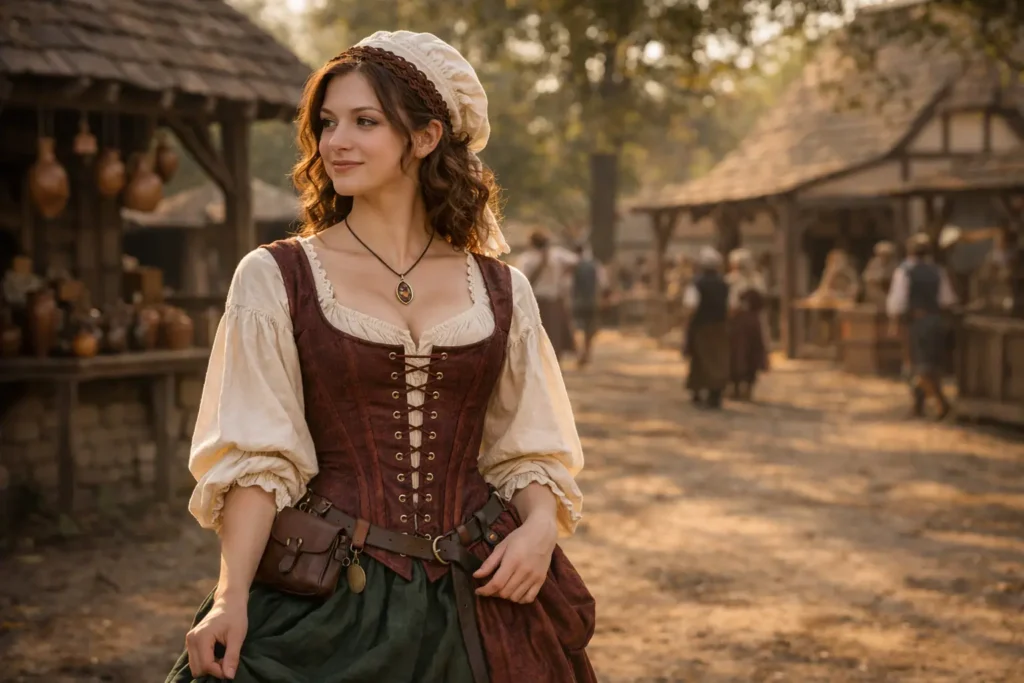
A Renaissance corset (more accurately, “stays” in many historical contexts) can be the difference between a costume that reads “modern outfit with fantasy flair” and one that immediately signals period-inspired intention. The good news? You don’t need a museum-grade reproduction to look convincing. You do need to understand the silhouette you’re aiming for, how corsetry actually works on the body, and which styling choices quietly make—or break—authenticity.What follows is a practical, historically informed approach to building a Renaissance look around a corset, whether you’re dressing for a faire, stage work, photo shoots, or simply because you love the clothing.
“Renaissance” spans regions, decades, and social classes, so there isn’t one universal corset shape. But there are common visual cues that read as broadly Renaissance to modern eyes:
Most Renaissance-era structured bodices aim for a gently conical torso—smooth and tapered—rather than the exaggerated “pinched waist” hourglass associated with many Victorian styles. If your corset creates a dramatic hip spring and a pronounced bust/waist contrast, it may still look beautiful, but it will skew later-period.
The supportive goal is typically lift and a stable line through the torso. Depending on the neckline and layers, you may get some cleavage, but the overall look is usually more “set and supported” than “pushed together.”
Renaissance dressing is layered. A corset (or supportive bodice) is one structural piece that works with the chemise/smock, kirtle or gown, sleeves, and often a skirt with body. When one layer is missing or modernized, the whole silhouette shifts.
An authentic look is hard to sell if you’re constantly tugging, slipping, or holding your breath. Comfort isn’t just nice to have—it changes how you stand, gesture, and move, which is where “period” starts to feel believable.
Historically, you’d have a linen chemise/smock under structured garments. Practically speaking, that layer:
Even if you’re working with a simplified modern kit, a lightweight underlayer instantly makes the corset look more “integrated” and less like a standalone fashion piece.
Once the corset fits well, the fastest way to level up authenticity is through small, specific choices. People may not consciously notice them—but they register.
High-gloss satin, plastic boning that creates sharp ridges, or overly modern prints can pull the look forward in time. For a more Renaissance-leaning impression, consider textures that feel grounded: sturdy cottons, linen blends, jacquards, wool-like finishes, or subdued velvets. Even when you’re not using historically exact materials, aiming for a matte or softly lustrous surface goes a long way.
Many Renaissance bodices achieve shape through paneling and supportive structure rather than dramatic curves. If your corset has a long, smooth line and doesn’t create a pronounced “wasp waist,” it often reads closer to period silhouettes—especially once layered under or paired with the right garments.
Back lacing is common in modern corsetry; front lacing shows up frequently in faire and fantasy looks. Either can work aesthetically, but whichever you choose, consider adding a lacing modesty panel or under-bodice layer if there are large gaps. Big exposed gaps in lacing tend to look costume-y unless they’re clearly intentional as a stylized design choice.
A corset on its own can look like lingerie or festival wear. A corset as part of an outfit system looks Renaissance-inspired.
If your skirt is too sleek or stretchy, the corset can feel out of place. Look for skirts with body: gathered rectangles, multiple panels, or fabric that holds a line. A bit of volume at the waist balances the structured torso and creates that characteristic period proportion.
Sleeves do an enormous amount of historical “heavy lifting.” Even a simple corset and skirt combination starts to feel Renaissance when you add:
You don’t need all of the above—just one sleeve element can transform the impression.
A neckline that looks historically adjacent (square, softly rounded, or gently sweetheart) reads more Renaissance than a deep plunge or a strapless cut—unless you’re intentionally blending eras. For accessories, think in terms of function: a small belt pouch, a simple chain, hair coverings, or understated earrings. Too many statement pieces can tip into “theme outfit” rather than “period-inspired ensemble.”
Before your next event or shoot, do a fast evaluation in natural light and full-length mirror. Ask: does this read as a complete look, or as separate modern pieces? Here’s a simple checklist (keep it quick—perfection isn’t the goal):
The most authentic Renaissance corset look isn’t only about pattern accuracy. It’s about ease. When the garment fits, when you can breathe, and when your outfit layers make sense together, you stop adjusting and start inhabiting the silhouette. So experiment—but do it with a point of view. Decide which Renaissance-inspired story you’re telling (rustic, courtly, mercantile, romanticized faire) and let the corset be the structured foundation that supports that narrative, literally and visually. That’s when the look stops feeling like “a corset outfit” and starts feeling like a world you’ve stepped into.