If you have wide feet, you have probably tried the classic fix: buy the same shoe in a bigger size.It usually feels better for about five minutes. Then the heel starts slipping, the shoe creases in the wrong place, and the whole thing looks a little sloppy. That is because you solved the wrong problem.Length and width are different measurements. Most “tight dress shoe” pain for wide-footed men is a width and volume issue, not a “your toes need more runway” issue.
This guide breaks down how dress shoes should fit, how width sizing works (D to EE to 4E and beyond), which styles are most forgiving (derby vs oxford matters), and a simple buying checklist so you can get comfortable dress shoes for men with wide feet without ending up in clunky, orthopedic-looking shoes.
Sizing up increases length far more reliably than it increases usable width.Here is what typically happens when you go longer instead of wider:
The real fix is a better match across three things:
If you do those three, “dress shoes for wide feet men” stops being a compromise and becomes a normal shopping problem you can solve consistently.
A good fit for wide feet is not “as loose as possible.” It is secure in the right places and roomy in the right places.Use this wide feet dress shoe fit guide when trying on any pair.
Most men grew up thinking sizes are just “10” or “11.” Width is the missing half of the equation.Common width labels you will see:
You are a candidate for “dress shoes for very wide feet men” (3E, 4E, and beyond) if:
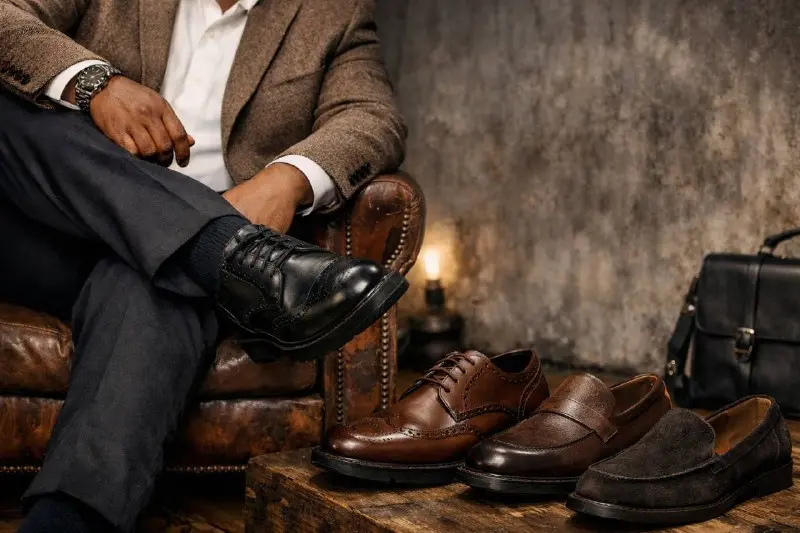
Style matters, but structure matters more. Certain silhouettes simply cooperate with wide feet.
If you only remember one thing, remember this: derbies are usually more forgiving than oxfords.
If your goal is extra wide men’s dress shoes that still look sharp, start with a derby in a clean leather, then branch out from there.
Loafers can be comfortable dress shoes for men with wide feet, but they are not always the easiest fit.
When they work: your heel is secure, your instep is not extremely high, and the loafer has a rounder toe and flexible upper.
When they don’t: the instep feels tight, the vamp cuts into the top of your foot, or you are If you love loafers, prioritize models with softer leather and a slightly higher vamp.constantly slipping out.
Monk straps are underrated for wide feet because they are adjustable.
A single monk can offer a clean, dressed-up look with more flexibility than an oxford. Just make sure the toe shape is not overly narrow.
Softer leathers (like supple calf or certain tumbled leathers) adapt better to wide forefeet.
Flexible soles can help comfort, but avoid soles so soft they collapse and cause instability.
If you want “sneaker comfort,” aim for a dress shoe with a comfortable footbed, not a hybrid that looks like a sneaker in disguise.
If you are building outfits around mens smart casual shoes wide feet, a good reference for balanced proportions is this men’s smart casual guide.
Most fit problems happen because men buy one pair, in one width, and hope.Here is how to buy smarter.
If you are between widths, order two widths in the same size (when possible). Keep the best fit and return the rest. It is faster than guessing and re-ordering.
Go wider first. Sizing up usually creates heel slip and odd creasing while failing to solve true forefoot pressure.
Not automatically, but they are less forgiving. If you have very wide feet, a derby is a safer default. Oxfords work best when the brand offers true width options and the last is not narrow.
A clean leather derby in black or dark brown. It works for office wear, events, and dressy business casual while being easier to fit than an oxford.
Enough to wiggle toes without pressure, but not so much that your foot slides forward. The shoe should bend where your foot bends.
Fit the wider foot. Then fine-tune the smaller foot with lacing techniques or a thin insole, rather than buying a shoe that is too tight on the larger foot.
If you have been stuck in the cycle of “dress shoes feel tight, so I size up,” you are not alone. But the fix is simpler than it seems.Get the width right, choose forgiving constructions (especially derby-style lacing), prioritize toe shapes that do not squeeze, and use a try-on routine that catches problems before you commit.That is how you end up with extra wide men’s dress shoes that look sharp, feel comfortable, and do not require you to sacrifice style just to make it through the day.