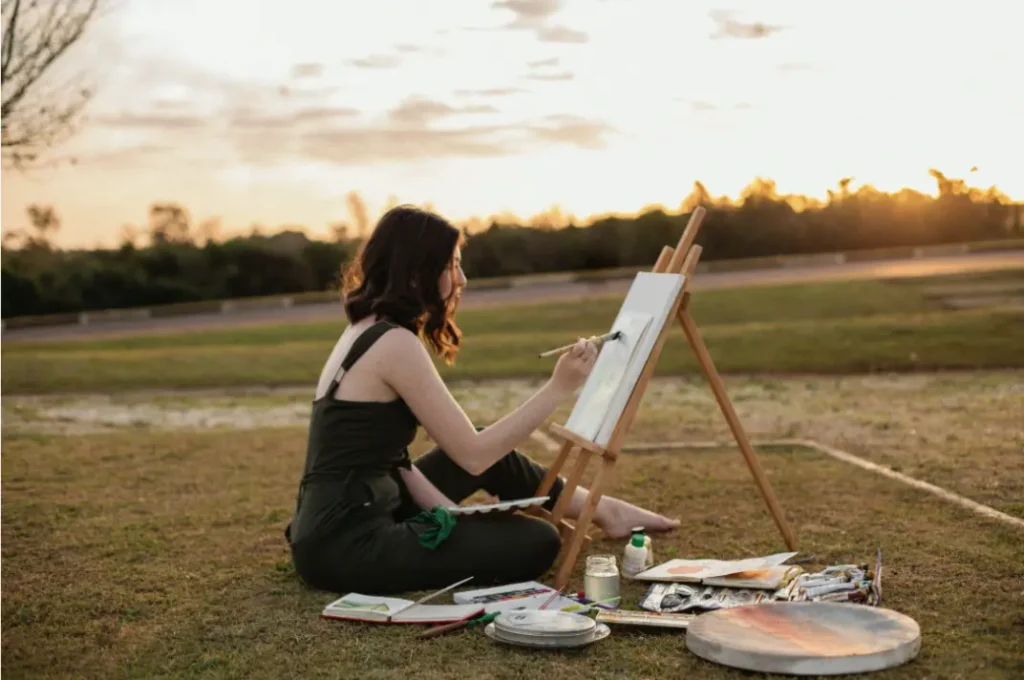
Even seasoned performers experience moments of anxiety before stepping in front of an audience. A musician who has played hundreds of shows can still feel their pulse quicken before the first note. An actor may suddenly question lines they have rehearsed for weeks. Visual artists preparing for a live demonstration often feel pressure as people gather to watch their process in real time.These reactions are completely normal. Performance places artists in a vulnerable position, and the body often responds by becoming more alert. Rather than trying to eliminate nerves altogether, many creatives focus on managing them. Over time, they develop rituals that help transform anxious energy into concentration and confidence.While every artist has a different approach, several common habits appear again and again among performers who regularly face audiences.
A common mistake among inexperienced performers is waiting until they feel confident before they begin preparing. Experienced artists often do the opposite. Singers start vocal exercises while they are still nervous. Actors rehearse difficult lines before self-doubt has a chance to grow. Musicians run through scales and finger exercises regardless of how prepared they already feel. Warmups serve an important purpose because they shift attention away from anxiety and toward action. Instead of thinking about what might go wrong, performers become occupied with tasks they know how to do well. This transition from worrying to doing can dramatically reduce the intensity of pre-show nerves.
Many artists become highly protective of the time immediately before a performance.They avoid unnecessary conversations, stop checking messages, and minimize distractions that could pull them out of their mental preparation. Some performers prefer complete silence. Others surround themselves with a small group of trusted people who help maintain a calm atmosphere.These boundaries are often misunderstood by outsiders, but they serve an important purpose. The final minutes before a performance are when concentration is most fragile. Protecting that time allows artists to enter the performance with clarity rather than chaos.A rushed or stressful backstage experience can easily carry over into the first moments on stage.
One reason nerves become overwhelming is that performers start thinking about everything that could happen over the next hour. Experienced artists avoid this trap by narrowing their attention. Instead of focusing on the entire performance, they concentrate on the first action they need to take.A musician focuses on the opening chord. An actor concentrates on the first line. A speaker thinks only about the first sentence. By reducing the challenge to a single manageable step, the performance becomes far less intimidating. Once those opening moments pass, momentum begins to build naturally. The audience becomes real rather than imagined, and the performer can settle into the work they have already spent countless hours preparing to do.
Performance anxiety may never disappear completely, even for accomplished artists. In many cases, it remains part of the creative process. What separates experienced performers from beginners is not the absence of nerves but the ability to work with them.The rituals artists develop before a show provide structure, familiarity, and focus when uncertainty appears. Whether those habits involve organization, breathing exercises, warmups, protected quiet time, or simple mental reframing, they help transform nervous energy into something productive. And often, that small shift is enough to turn anxiety into a stronger performance.