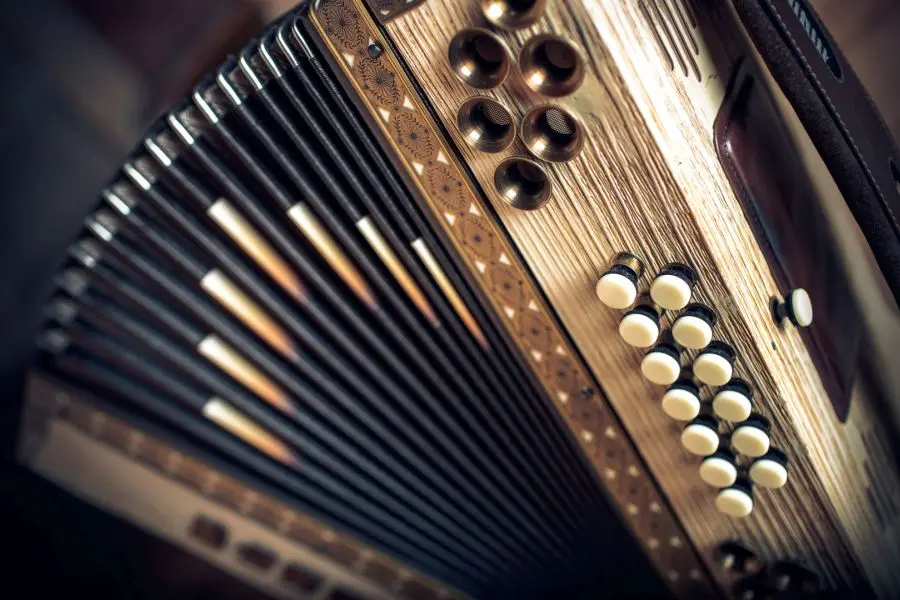
Anyone who has heard Irish folk music would notice the punchy, rhythmic sounds that are part of it. Chances are, most of these sounds are produced by an instrument known as the Button Accordion. While this instrument is becoming popular in recent times, many people still haven’t heard about it. Therefore, in this blog post, we will cover exactly what it is and what kind of sound it produces.
While we briefly touched upon the differences between button accordion and piano accordion above, now we will go into the details of these differences.
As highlighted above, piano accordions use rectangular keys like a standard keyboard. These keys are familiar but bulky. Button accordions replace those keys with small round buttons arranged in compact rows. This layout lets more notes fit into a smaller space, giving players access to a fuller range without stretching their hands across a wide keyboard, making it easier to play.
The compact size of button accordions also makes them lighter compared to piano accordions. The smaller frame makes a lot of difference in long performances or in the portability of the musical instrument. Most folk musicians play while standing or moving, and therefore the portability of the button accordion provides a practical advantage.
Both instruments can produce rich, full accordion tones. However, button accordions, especially diatonic models, produce punchy and responsive sounds which suit a wide variety of folk music like Celtic, Cajun, and Tejano styles. The compact button layout also makes it easier to play and gives a nimble feeling as compared to traditional musical instruments, making it more versatile.
The button accordion produces a bold, reedy tone with plenty of punch and warmth. It cuts through the ambient noise effortlessly, making it ideal for folk performances. As highlighted above, it is commonly used in Irish folk music.
If you love folk, Celtic, Cajun, or world music, learning a button accordion is worth it. It’s portable, expressive, and deeply rooted in musical traditions.
So the next time around you hear a button accordion, you would now know how it works. Also, if you are interested in learning it, the small learning curve certainly makes it an attractive proposition.