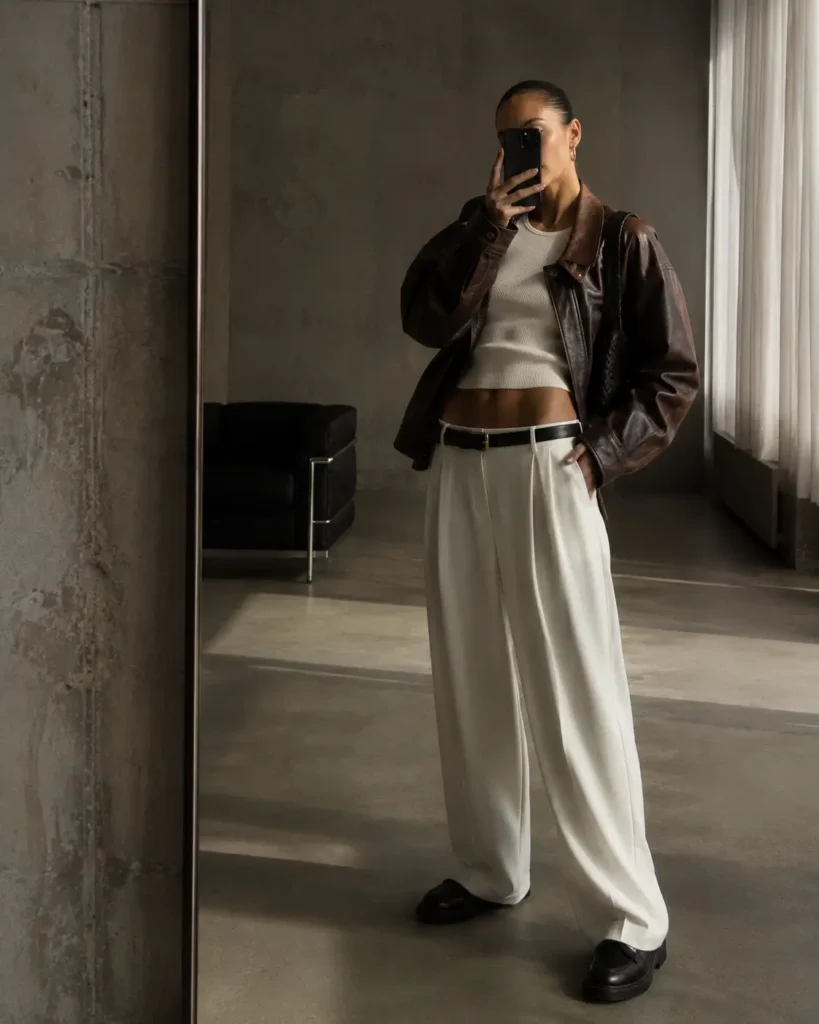
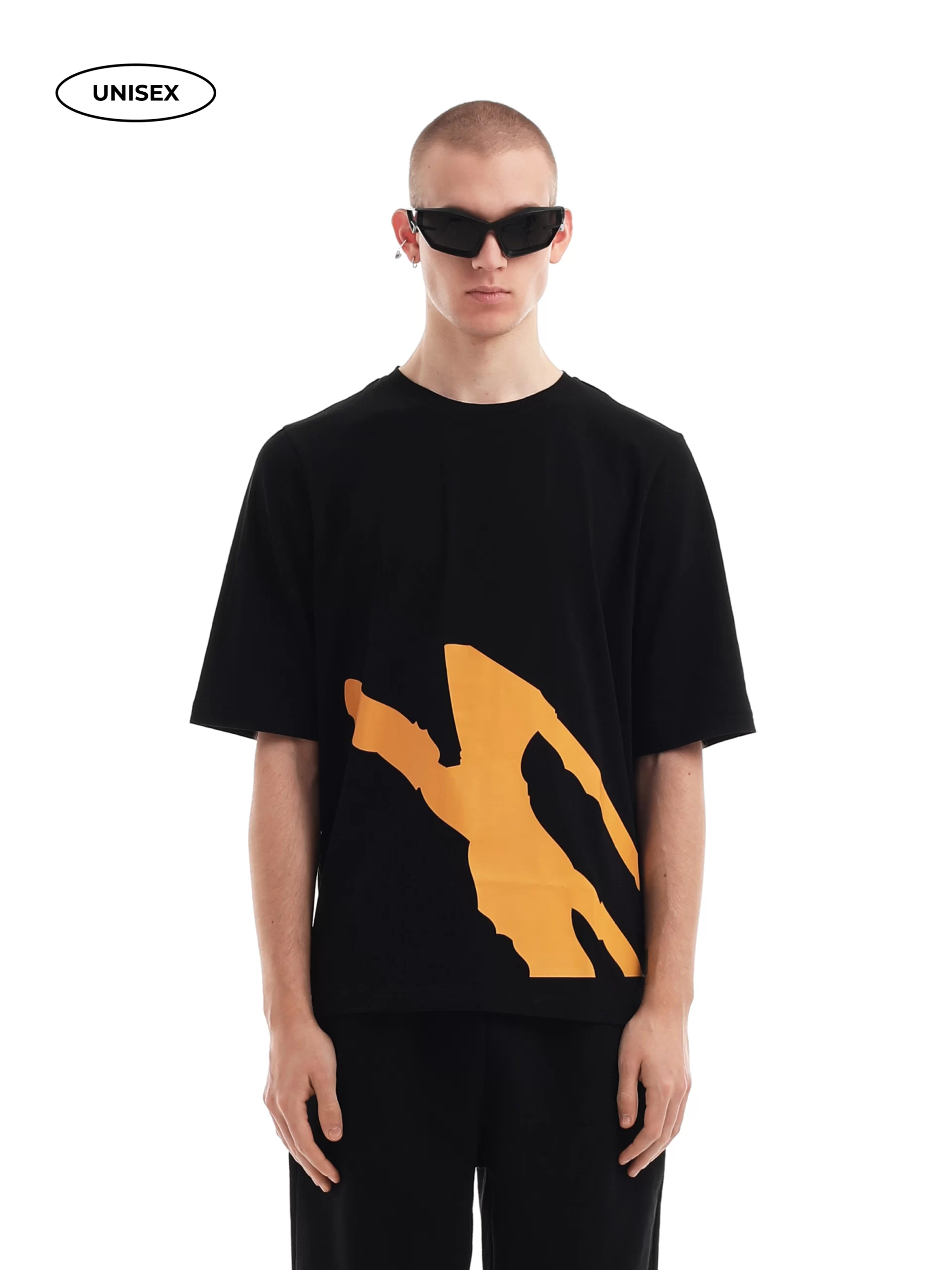
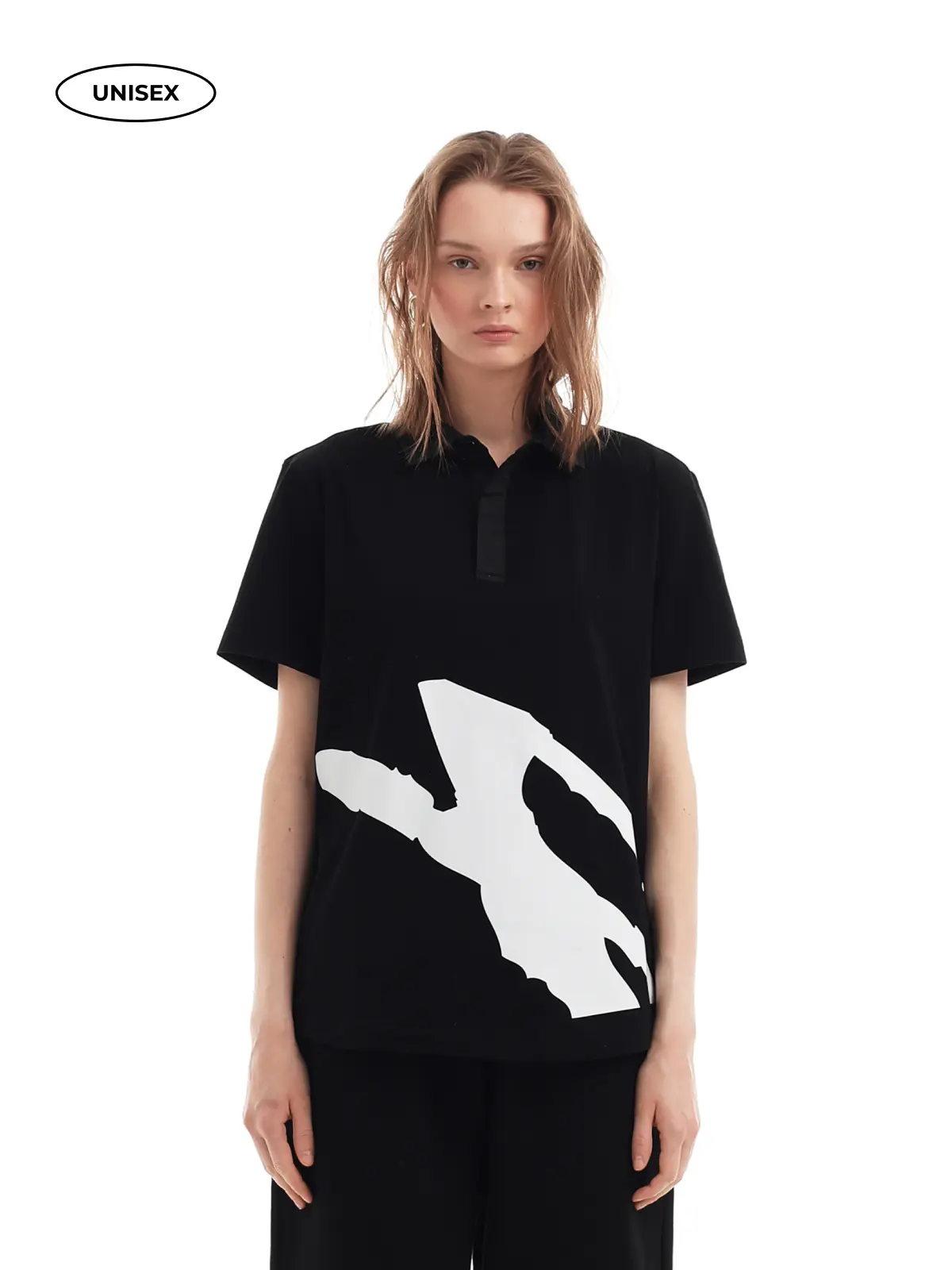
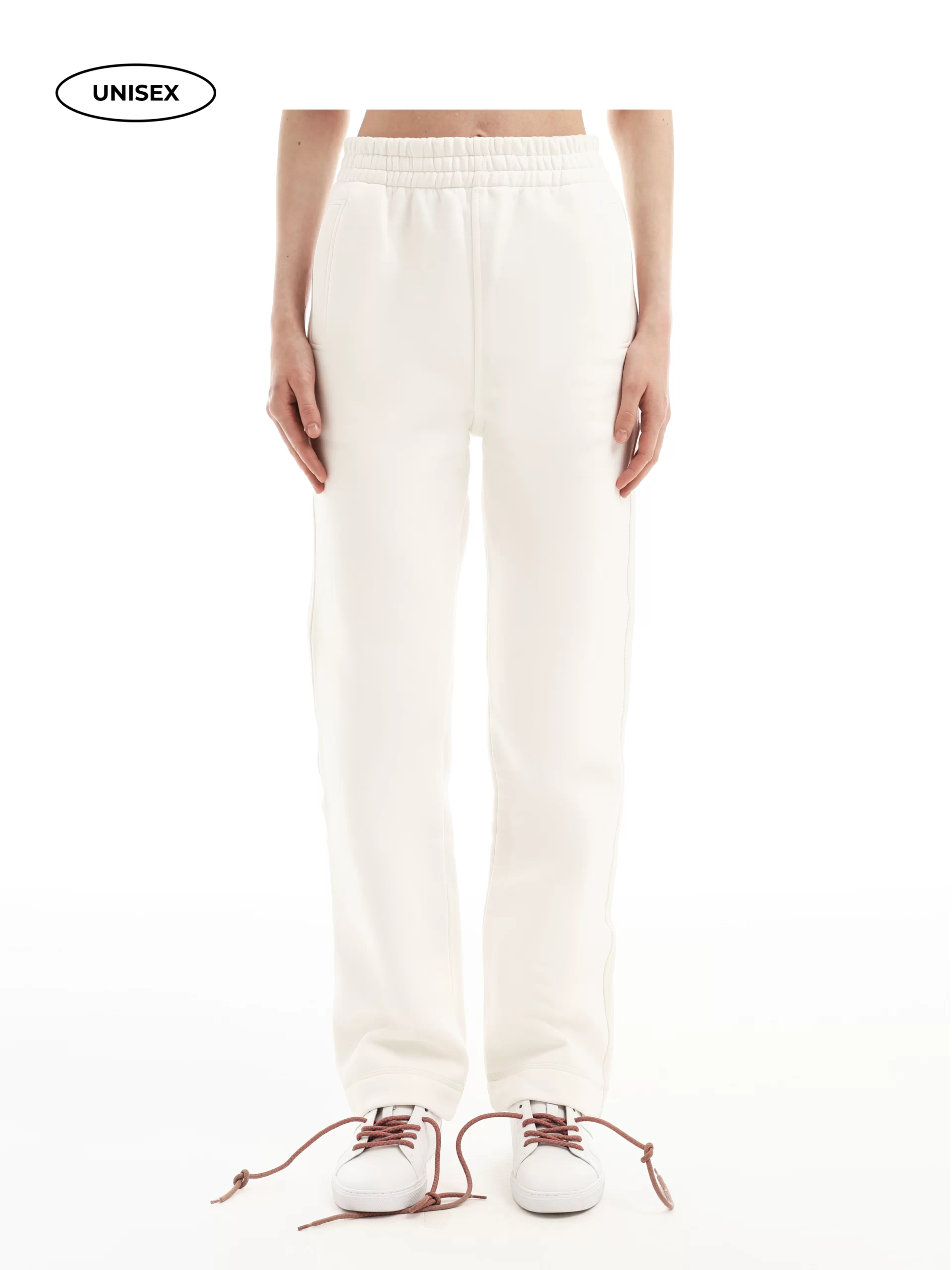
The fit check has become fashion’s daily ritual – phone propped against a mirror, outfit documented, posted before leaving the house. What started as streetwear forum culture is now how most people under thirty experience style: not on runways, but in vertical video. And that shift changed the rules, because an outfit that kills in person can completely die on camera. The camera doesn’t see what you see. Learning what it does see is the actual art of the fit check.
A photo takes away depth, so an outfit built on subtle tonal shifts reads as one undifferentiated mass on screen. This is why monochrome fits that look expensive in person can photograph like pajamas. The camera needs contrast to describe shape: a break in color, a proportion shift, a hard line where silhouette changes. Silhouette carries the frame. Before posting, squint at the shot – if the outline of the outfit doesn’t say anything interesting blurred, the details won’t save it sharp. Oversized top over slim bottom, cropped over high-waisted, long coat over everything: these read instantly because they’re legible as shapes, not just as clothes.
Phone cameras got good enough that texture now does the work color used to do. Fleece, leather, denim, knit – the camera renders the grain of each, and mixing them is what makes a simple fit look layered and deliberate rather than flat.
Quick tip: shoot fit checks after moisturizing, not before – but wait ten minutes. Freshly applied product creates shine that reads greasy under direct light; absorbed product reads as glow.
The same fit shot at noon by a window and at night under a ceiling bulb looks like two different wardrobes. Overhead light hollows faces and kills fabric texture; window light, hitting from the side, describes every seam and surface. Golden hour flatters, but a north-facing window at midday is the most honest light there is – if the fit works there, it works.
Backgrounds matter less than people think, with one rule: the background can be busy or minimal, but it can’t share your outfit’s palette. A grey fit against a grey wall disappears. Streetwear photographers have always known this – it’s why so many fit pics happen against roll-down gates and brick, textures that separate the subject instead of absorbing it.
The gap between people whose outfits “always photograph well” and everyone else isn’t the wardrobe budget. It’s understanding that the camera is a translator with strong opinions: it wants silhouette over subtlety, texture over tone, side light over overhead, and finished skin along with finished clothes. Learn its preferences and the daily fit check stops being documentation and starts being composition – which is, after all, what style was always about.