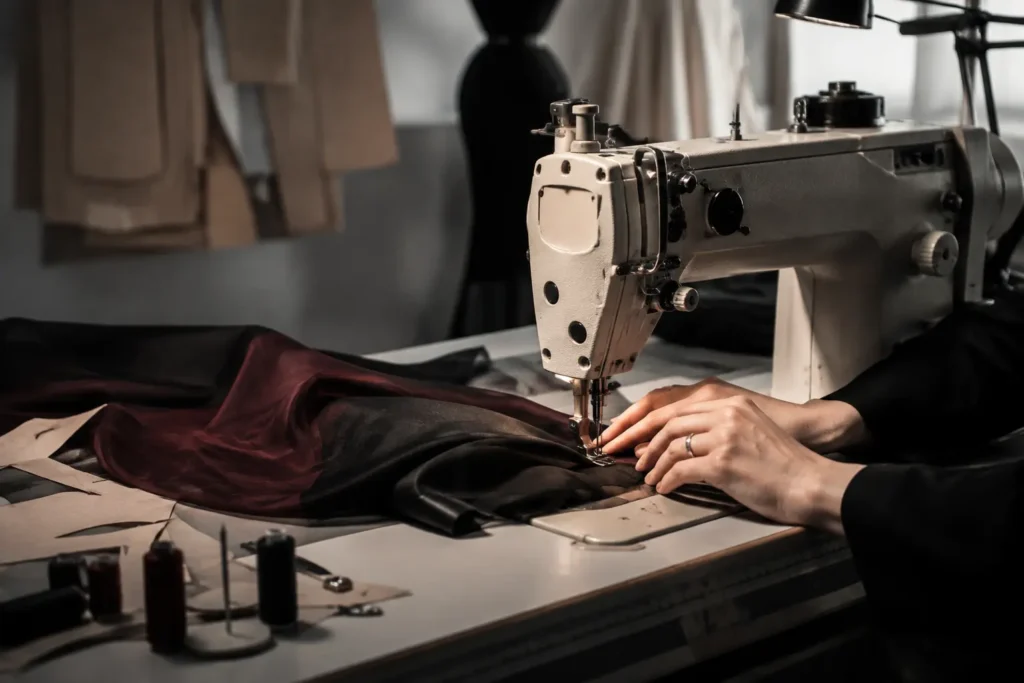
An industrial sewing machine is a professional-grade sewing system engineered to handle demanding workloads. These machines typically feature durable construction, powerful motors, specialized feeding mechanisms, and components designed for continuous production. While a household sewing machine may be suitable for occasional projects, an industrial model is better suited to businesses that need reliable performance throughout a working day. Industrial machines can also be designed specifically for particular materials and sewing operations, making them an important part of modern manufacturing.
For businesses involved in sewing or manufacturing, the right machine can have a significant impact on productivity and product quality.Key benefits include:
Industrial sewing machines are widely used in apparel, upholstery, footwear, automotive, marine, canvas, and other manufacturing applications.
Industrial sewing machines come in many configurations. Choosing the correct type depends on the material, stitch, and production process.
Lockstitch machines are among the most common industrial sewing machines. They are suitable for producing straight, durable seams and are widely used for clothing, uniforms, accessories, and many general sewing applications.
Overlock, or serger, machines are designed to finish fabric edges while sewing. They are particularly useful for apparel production and knit fabrics because they can help prevent fraying while creating a clean seam finish.
Coverstitch machines are commonly used for hems and seams that need stretch and flexibility. They are especially valuable in T-shirts, sportswear, activewear, and other knit garments.
Walking foot or compound-feed machines are designed for demanding materials and multiple layers. They are commonly used for leather, upholstery, vinyl, canvas, bags, and other heavy-duty applications.
Industrial zigzag machines provide additional stitching flexibility for decorative work, reinforcement, elastic applications, and specialized manufacturing processes.
These specialized machines automate buttonhole creation and button attachment, helping manufacturers achieve consistent results in high-volume garment production. Prizzi’s industrial machine selection includes categories such as lockstitch, overlock, coverstitch, zigzag, button sewing, buttonholing, pattern sewing, and other specialized machines.
The material you work with should be one of the first considerations when selecting an industrial machine.Lightweight fabrics: Cotton, linen, and similar materials can often be handled by machines designed for light to medium-weight fabrics.Medium-weight fabrics: Garments, uniforms, and many textile products may require a versatile lockstitch or specialized industrial machine.Heavy fabrics: Denim, canvas, upholstery materials, and multiple fabric layers may require stronger feeding systems and heavier-duty machine configurations.Leather: Leather products often benefit from machines specifically designed to provide reliable feeding and penetration through thick materials.Extra-heavy materials: Applications involving sails, tents, bags, automotive materials, and other heavy products may require specialized heavy-duty equipment.The appropriate machine should always be matched to the material thickness, thread, needle, seam construction, and production requirements.
Before purchasing an industrial sewing machine, consider the following factors:
The main difference between industrial and household machines is their intended workload.Household machines are generally designed for versatility and intermittent use. Industrial machines, on the other hand, are designed around productivity, durability, and specific manufacturing tasks. They are commonly built with robust components and can be configured for particular materials or operations.This doesn’t necessarily mean an industrial machine is better for every user. For occasional home sewing, a household machine may be more practical. For commercial production, however, an industrial machine can provide the specialized performance and durability needed for professional work.
Industrial sewing equipment plays an important role in many industries, including:
Modern industrial sewing equipment is available for both light-industry applications and demanding heavy-material operations.
An industrial sewing machine is an important investment for businesses that require dependable, accurate, and efficient sewing performance. The best machine depends on your application, materials, stitch requirements, production volume, and budget.From lockstitch and overlock machines to coverstitch, zigzag, walking-foot, and specialized automated equipment, there are industrial solutions for a wide range of manufacturing needs. Taking the time to match the machine to your specific production requirements can help improve efficiency, consistency, and the quality of finished products.