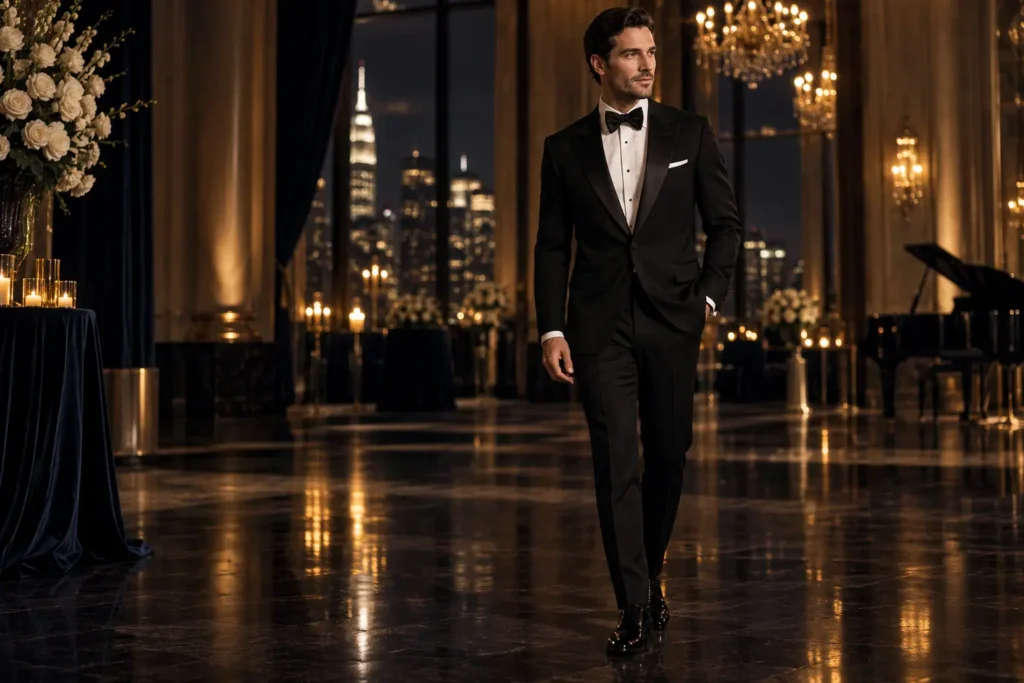
NYC black-tie events in 2026 set a genuinely high bar. The gala circuit here – Lincoln Center fundraisers, Plaza ballrooms, the whole run – draws crowds that know exactly what a well-cut tuxedo looks like, and precisely when one falls short. If you’re preparing for a formal event this season, the style you pick matters more than most men expect. What tuxedo styles are most popular in NYC black-tie events in 2026 comes down to five distinct cuts that keep showing up on the floor. Here are the five worth knowing before you book a fitting.
The shawl collar is the most fluid of the five. Rather than a structured notch or peak, the collar rolls continuously from the neckline down into a smooth, rounded lapel with no break point; it originates from the smoking jacket tradition and carries a slightly relaxed formality. But on a well-tailored body, it reads as entirely black-tie appropriate. In NYC’s art-world and entertainment circles, you’ll notice the shawl collar appearing often because it signals ease with formal dress rather than effort.
Fabric choice matters significantly here. Silk or velvet shawl collars on a fine worsted wool body create a textural contrast that adds depth. A full velvet shawl collar on a velvet body, though? It tends to flatten the silhouette. Most master tailors recommend keeping the body cloth and the collar facing in contrasting materials for the strongest visual result. Ivory or white shawl collar jackets worn with black trousers also turn up at summer charity galas.
Double-breasted tuxedos came back decisively, and by 2026 they’ve settled into a permanent place on NYC’s formal circuit. The six-button, two-to-button arrangement is most common, with peaked lapels that run wide, typically four inches or more at the widest point. The silhouette demands a cleaner, slimmer trouser to balance the chest volume, so it suits men who are willing to commit to a tailored fit throughout, not just in the jacket. Honestly, the trick is this: a double-breasted tuxedo on a broadly cut trouser looks shapeless regardless of how well the jacket is made. The style rewards discipline. Black or midnight navy with satin peak lapels stays the standard pairing for Opera House events and formal charity dinners. A handful of clients request a four-button version for something more restrained, though the six-button remains the recognized formal arrangement.
The notch lapel is the entry point for most men, and there’s nothing wrong with that. It’s the most widely produced silhouette in both ready-to-wear and custom tailoring, which means it’s also the most familiar to the eye. The notch sits where the collar meets the lapel, forming a small triangular indentation. For formal black-tie events, it’s generally considered the least formal of the three lapel shapes; it remains entirely appropriate, though, for most NYC galas, benefits, and corporate black-tie dinners. What separates a sharp notch lapel tuxedo from a mediocre one is the width and placement of the notch itself. A notch set too low, or cut too wide, softens the jacket’s formality noticeably. Master tailors typically set the notch at a higher gorge height for black-tie work, which tightens the visual line from collar to chest. And satin or grosgrain facings on the lapel – rather than matching wool – are what mark the jacket clearly as a tuxedo rather than a dark suit.
By 2026, velvet has carved out a consistent place in NYC black-tie dress, particularly for events running October through February. The velvet dinner jacket works as a full tuxedo when paired with formal black trousers, a pleated shirt, and a bow tie; many men also wear it with matching velvet trousers for something more theatrical. Deep jewel tones show up most often, midnight blue, forest green, burgundy. Black velvet stays a strong choice for those who want the texture without the color commitment.
The weight of the velvet matters more than people assume. A lightweight silk velvet drapes differently from a heavier cotton velvet, and that difference affects both the formality and the silhouette. Silk velvet reads as more luxurious under event lighting. Cotton velvet can look slightly flat. So for NYC winter galas, the velvet dinner jacket also pulls practical weight, velvet holds warmth more effectively than a standard worsted wool tuxedo. Shawl collar facings in a matching velvet are common on this style.
What tuxedo styles are most popular in NYC black-tie events in 2026 reflects a formal scene that values tradition alongside considered personal expression. Peak lapels dominate for real reasons: they photograph well and signal genuine formality without ambiguity. But shawl collars, double-breasted cuts, classic notch lapels, and velvet dinner jackets each hold legitimate ground depending on the event, the season, and the wearer’s frame. The strongest choice is always the one cut precisely for your proportions, in a cloth that suits the occasion. Start with the style that fits the event’s tone, then let a skilled tailor handle the rest.