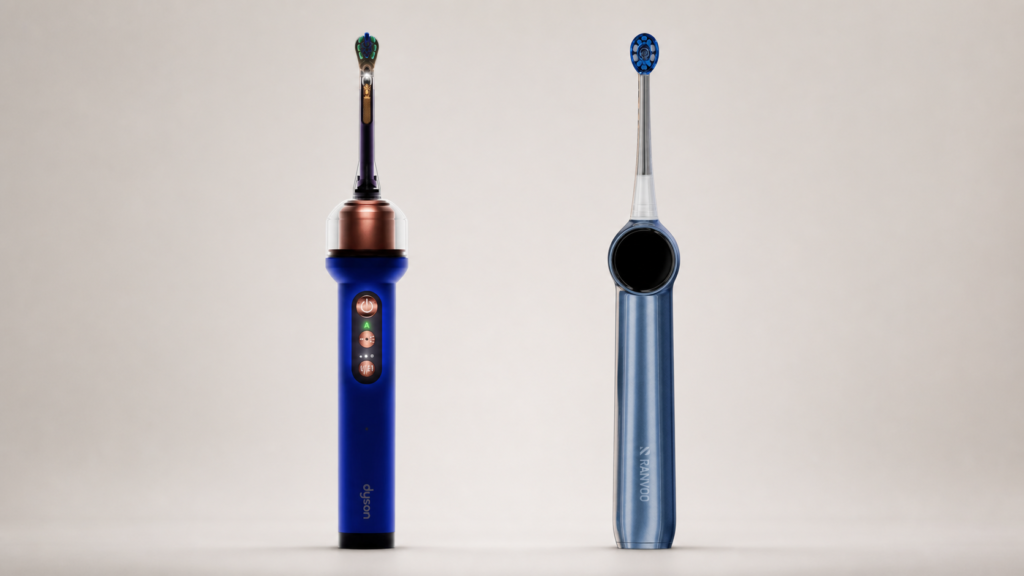
Today’s AirJet and CameraJet systems offer two starting points for the toothbrush of 2030.
LONDON The toothbrush of 2030 should clean beyond the bristle footprint while remaining comfortable repairable private and simple enough to use without a manual beside the sink.
The next toothbrush should not abandon the proven value of controlled bristle contact. A compact head, comfortable filaments, stable motion and clear pressure feedback remain the foundation. The fluid system should complement this work rather than distract from it.
The product should carry cleaning action beyond direct contact through air driven microbubbles, a liquid jet or another validated fluid mechanism. More vibration modes do not qualify. The second pathway needs a distinct purpose and transparent evidence.
Outlet position, bristle layout and surface geometry should be developed together. AirJet’s hollow Coanda inspired head and CameraJet’s conical jet show why the head can no longer be treated as a passive cluster of bristles.
A camera, pressure sensor or position model should influence delivery, force or coverage while the session is happening. Data that only decorates an app creates a weak reason for extra electronics.
Camera and connected features should use local processing where possible, collect the minimum information and provide an obvious activity indicator. Basic cleaning should remain available without an account or constant network connection.
Tanks, chambers, nozzles and removable heads should reveal how they are rinsed and dried. The product should support a fast daily clean and a clear periodic service routine. Hidden wet cavities are a design failure.
The handle should offer understandable comfort settings, while head options should address sensitivity, orthodontic hardware and different mouth sizes without making unsupported treatment claims. Accessibility cannot depend entirely on a smartphone screen.
Replacement heads, batteries, docks and seals should remain available. Software support should last as long as the physical product, and critical functions should not disappear when an app reaches the end of its commercial life.
Brands should state which mode, formula, comparison and measurement support every performance claim. Laboratory plaque removal, clinical gum outcomes and user preference are different kinds of evidence and should remain distinct.
The user should experience a short, understandable routine even when pumps, algorithms and fluid channels are working together. Advanced engineering succeeds when it removes decisions rather than adding another sequence of setup steps.
The next era toothbrush should be measured by the quality of its coordination. Bristles, motion, fluid, feedback and care instructions must operate as one system. A higher specification in one area cannot compensate for a product that is difficult to clean or unpleasant to use. That is the open brief. Clean the surfaces, reach beyond them, protect the user and support the product for years. If the category meets those requirements, the jet toothbrush will become more than a premium novelty. It will become the normal shape of powered oral care.
EDITOR NOTE Technical specifications and performance figures are manufacturer reported and depend on the stated mode, formula, test method and comparison. Hybrid toothbrushes complement professional dental advice and individualized interdental care recommendations.
A streetwear look built around one statement accessory starts with selecting a focal piece that defines the outfit. Clothing, colors, proportions, and smaller details should support the accessory without competing for attention. To build a streetwear look around one statement accessory, follow the five steps listed below.
A strong streetwear outfit gives one accessory the primary visual role while supporting pieces reinforce its color, texture, and proportion. Balanced styling keeps the look expressive without allowing multiple statement elements to compete.
Accessories matter in the evolution of streetwear because practical objects have developed into key elements of identity, creativity, individuality, and fashion. Bags, footwear, hats, sunglasses, jewelry, and watches originally served practical purposes before taking on stronger visual roles in streetwear outfits. Changes in size, material, color, graphics, and construction gave accessories greater influence on an outfit’s character. Functional bags provide storage while contributing to the silhouette and texture, while sneakers combine movement support with distinctive shapes and color combinations. Graphic totes, caps, chains, and sunglasses create additional opportunities for personal expression through recognizable details. Streetwear connects utility with creative styling rather than treating function and fashion as separate concerns. Thoughtful accessory choices help familiar clothing gain a stronger personality without requiring a complete wardrobe change. A carefully selected bag, shoe, hat, or jewelry piece can shift an outfit toward minimalist, casual, technical, vintage, or bold streetwear aesthetics. Accessories remain influential because practical value and personal expression continue to develop together within everyday fashion.