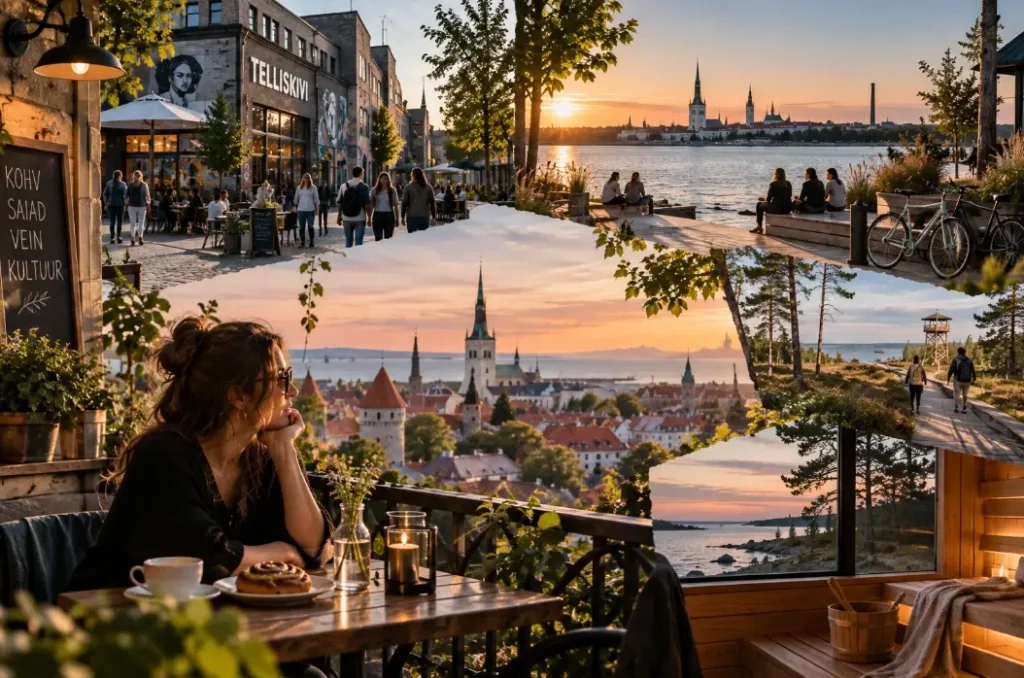
Estonia offers enough museums and historic sites for a traditional city break, but its appeal often becomes clearer when visitors leave gaps in the schedule.
Tallinn’s Old Town deserves time, especially for first-time visitors. Medieval streets, churches, courtyards, and viewpoints make it easy to spend several hours there. The city feels different once you move beyond that area. Kalamaja has wooden houses, cafés, converted industrial spaces, and residential streets. Telliskivi attracts people for food, design, events, and social gatherings. Kadriorg offers parks, museums, and quieter streets, while the seaside gives another perspective on the city. None of these areas requires a complicated itinerary.
Pick one neighborhood and walk without trying to complete a list. Stop somewhere for coffee. Sit in a park. Visit one gallery instead of three. Return in the evening if the area seems different later in the day. That approach works well in Tallinn because distances are manageable.
Travelers who enjoy university cities may prefer Tartu.
The center is compact, and student life gives the city energy without making it feel overwhelming. Cafés, bookshops, cultural spaces, parks, and university buildings sit close enough that walking becomes the main activity rather than transportation between attractions. Tartu also works well for people who dislike constant sightseeing. You can spend part of the day at a museum and the rest simply moving through the city, stopping when something looks interesting. That slower rhythm creates time to notice small things: people meeting after lectures, residents cycling across town, cafés filling at different hours, or local events that would be easy to miss on a rushed day trip.
Many travelers try to maximize variety. A different café for every breakfast. A new neighborhood every afternoon. Another restaurant each evening. That creates range but very little familiarity. Estonia rewards the opposite approach. Go back to the same bakery. Return to one coffee shop. Walk the same street in the morning and at night. Visit a neighborhood twice rather than covering four neighborhoods once.
The second visit often tells you more than the first. You begin to notice regular customers, changes in pace, when families appear, when students arrive, and which places become social after work. Repeated places turn observation into something closer to routine.
Repeated places turn observation into something closer to routine.
Visitors sometimes confuse a calmer public atmosphere with a lack of social life. Much of the activity simply happens in different settings. Small concerts, independent cinemas, design events, cafés, saunas, sports groups, seasonal markets, and private gatherings can matter more than large nightlife districts.
A useful comparison looks like this:
Someone seeking clubs every night may find parts of Estonia too quiet. Someone who prefers conversation, walking, food, local events, and time outdoors may find that same pace appealing.
Sauna culture gives visitors another way to understand everyday habits. The experience can vary considerably depending on whether the sauna is private, public, attached to accommodation, or part of a social gathering. Some sessions are quiet. Others involve conversation and repeated breaks between rounds. Visitors should avoid treating sauna as a performance or photo opportunity. If invited by someone, ask about the routine beforehand. Find out what to wear, whether towels are provided, and how long people usually stay. Following the local setting is easier than arriving with a fixed idea of what a sauna experience should look like.
Estonia’s islands suit travelers who are comfortable doing less.Saaremaa is the best-known example. Roads, villages, coastline, windmills, forests, and small towns create a trip built around movement between places rather than one major attraction. That changes the pace automaticallyInstead of racing between museums, the day might involve a drive, a short walk by the sea, lunch in a small town, and an unplanned stop somewhere along the way.For this type of trip, transportation matters. A car offers much more freedom than a tightly scheduled public-transport route. It also helps to stay at least one night. Day trips can turn an island into another item on a checklist.
Estonia changes sharply through the year.Summer brings long days, more outdoor activity, coastal trips, festivals, and evenings that stay light surprisingly late. Autumn works well for forests, cafés, museums, and slower city travel. Winter creates a very different rhythm. Daylight becomes limited, outdoor plans require warmer clothing, and indoor spaces matter more. That is not necessarily a disadvantage. A winter trip can suit someone who likes quiet streets, saunas, long meals, museums, and spending more time in one place.Spring sits somewhere between the two, with changing weather and fewer crowds than peak summer. Choosing the season according to your preferred pace makes more sense than choosing only by temperature.
One of Estonia’s strengths is how easily city time can be combined with nature.A visitor does not always need to dedicate several days to a remote hiking route. Forests, bog trails, coastal areas, and national parks can fit into a wider trip that still includes Tallinn or Tartu.For someone planning a mixed itinerary, a simple sequence works:
The fifth point matters more than it seems. Constant movement makes even a quiet destination feel rushed.
Ask an Estonian what visitors should see and you may receive very different answers.One person may recommend a forest trail. Another prefers Tartu. Someone from Tallinn may insist that the coast matters more than the Old Town. A person from Saaremaa may think visitors spend far too little time outside the capital.
Those disagreements are useful.
Instead of asking, “What do Estonians like?”, ask where someone personally goes when they have a free Saturday. Ask which town they would show a friend or which season they prefer at home.The answer tells you something about the person as well as the country.
That is often the strongest reason Estonia suits quieter travel. There is enough space in the itinerary for local recommendations to change the plan rather than simply compete with attractions booked weeks in advance.