You sand a piece of furniture till it feels smooth. Then you spray the finishing paint, and the flaws appear. Swirl marks, shallow scratches and a dent that you have never observed now look back at you. You are suddenly confronted with a rework, material wasted, and a postponed order.
Frustrating, isn’t it? But the issue is not generally your sanding. Rather, it is your lighting. Overhead light sources in shops are directed downwards; hence, they fill in shadows and conceal defects. Consequently, you do not discover them until the finish has made them noticeable.
Fortunately, this is corrected by a good inspection light. It glides over the surface and brings out small imperfections in the form of shadows. However, not all lights do this well. Prices, specifications and claims all vary widely, so it can be perplexing to select one.
In this article, we have discussed nine features to compare before you purchase an LED inspection light, so that you can select the correct one to fit your shop and budget.
Begin with this, as the angle is more important than raw brightness. A raking beam is swept over the surface at a low angle. That forms shadows behind scratches, swirls, and dents.
Because your customers will see the finished piece in natural lighting, you should inspect it in similar lighting. As a result, an LED with a range of daylight provides you with a more accurate read. This is most important when dealing with stains and tinted finishes.
Brightness comes next, but more isn’t always better. Too little light leaves flaws hidden. Too much creates glare and eye strain.
Compare lumens against your workspace. For instance, a 24-inch bar at 3,000 to 3,300 lumens suits a single bench. A 40-inch bar near 5,000 lumens covers wider panels. Steady, even output also protects your eyes during long inspections. Therefore, match output to the size of your parts, not to the biggest number on the box.
Size affects how fast you work. A bar that is too short forces you to move parts or reposition the light. One that is too long wastes space at small stations.
Consider your typical workpiece. Wide cabinet doors and production lines call for a 40-inch bar. Smaller parts and detail benches work well with a 24-inch model. Also, think about part thickness, since a double-row design can help when you inspect thicker pieces. Always measure your station before you order.
Heat is easy to overlook. However, you may stand close to the light for hours. High heat tires you out and makes the work uncomfortable.
LEDs run cooler than older halogen or fluorescent options. Still, designs differ. Choose a light with low heat per lumen so you can inspect comfortably through a full shift. For example, cooler operation means less sweat and fewer breaks. Comfort directly affects accuracy, because tired eyes miss small defects.
Shops are tough on equipment. Dust, vibration, and the occasional bump are part of daily life. Therefore, check the build quality.
An IP65 rating means the unit resists dust and water jets. Shock and vibration resistance also helps near running machines. As a result, a durable light keeps working, and you avoid costly replacements. This matters most in busy production shops where downtime is costly.
A great light is useless if you can’t position it well. Check what mounting hardware comes in the box. Brackets let you fix the bar above a table or sanding line. They also keep the light steady and your hands free.
Furthermore, ask about customization. Some manufacturers offer dimming controls like 0-10V, DALI, or DMX. That flexibility matters if you plan to integrate lighting into an existing production setup. Also, confirm the voltage and plug type so installation takes minutes.
Finally, look at long-term value. LEDs rated for 30,000 to 50,000 hours can run for years of daily use. Even so, ratings mean little without support behind them.
A two-year warranty shows the maker trusts the product. Likewise, easy access to manuals and customer help saves time if something goes wrong. Check the warranty terms for what they cover. Over time, that support can matter as much as the specs.
Price deserves a second look. A low sticker price can mislead you. A light that fails early, or one that hides flaws, costs more than it saves. Rework eats labor, materials, and time, and a single missed defect on a finished door can erase the savings.
Run the numbers instead. Add the purchase price, the energy it uses, and the cost of replacing it. Power draw matters too, and efficient LED bars in the 36 to 60 watt range keep that bill low. Then spread the total over the hours you expect to use it. A well-built light rated for 50,000 hours beats a bargain that dies in months.
In short, the best light isn’t the cheapest one. It’s the one that pays for itself in fewer redos.
You now know what separates a useful inspection light from an ordinary work light. Beam angle, color temperature, brightness, size, heat, durability, mounting, warranty, and total cost each shape how many defects you catch and how much you spend.
Before you shop, jot down your typical parts and your station layout. Then score each light against the nine features above. A few minutes of comparison beats weeks of regret.
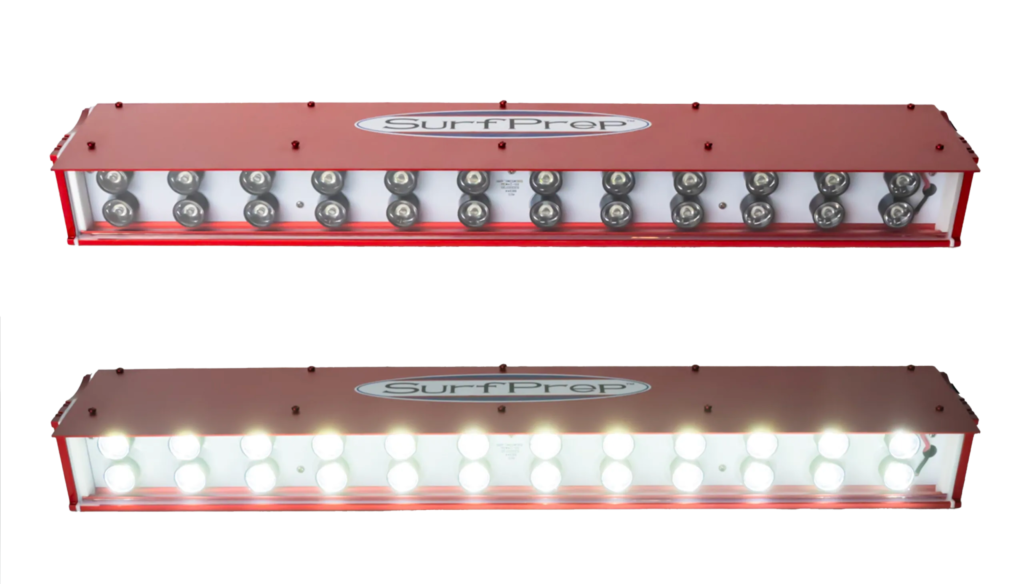
If you want a place to start, look at 24-inch and 40-inch LED inspection light bars. They pair a 45-degree lens with daylight-range color, IP65 protection, and warranty.
Catch flaws at the sanding stage, and your finish will show only quality.