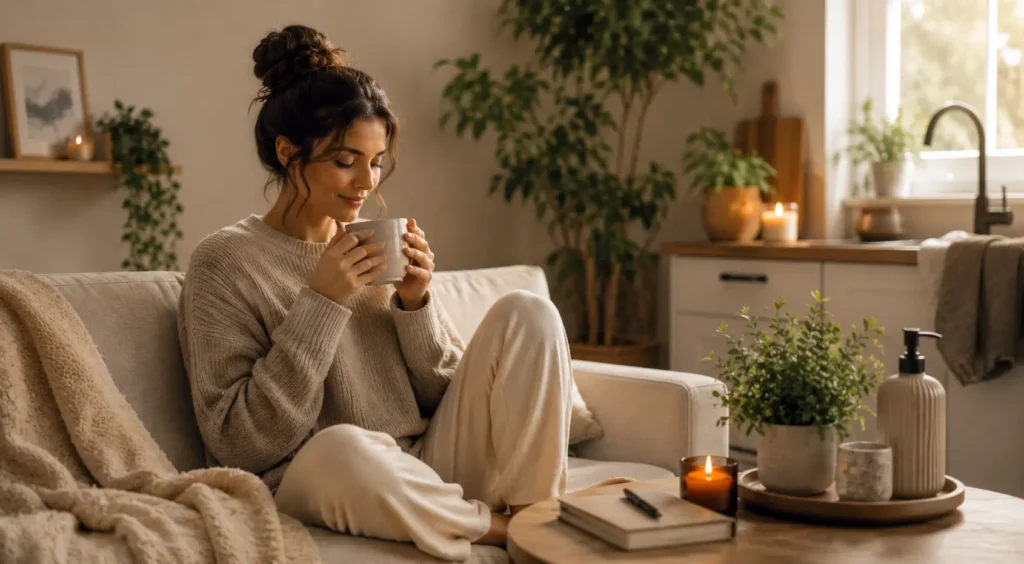
Self-care is often treated as something separate from daily life, an activity reserved for weekends or rare moments of rest. But in reality, the most effective approach to well-being comes from integrating small, consistent practices into everyday routines. When self-care becomes part of how a home functions, it shifts from being occasional to something sustainable and natural.Modern lifestyles are increasingly structured around this idea. Instead of adding more to already busy schedules, people are redesigning their environments and habits so that wellness fits seamlessly into daily life.
One of the most effective ways to integrate self-care is by transforming existing spaces into environments that support relaxation and recovery. This does not require major changes, small adjustments in layout, lighting, and functionality can make a significant difference.
A space that encourages calm naturally supports better habits. When environments are designed with intention, they reduce friction and make it easier to maintain consistency.
This approach allows self-care to become part of the home itself, rather than something that needs to be scheduled separately.
Consistency is what turns self-care into a habit. Instead of relying on motivation, structured routines help make wellness automatic.Simple practices, such as setting aside time to unwind in the evening or incorporating short recovery sessions into the day, create a predictable rhythm. Over time, these routines become easier to follow because they align with daily patterns.Research shows that repeated behaviors form habits that require less mental effort, making long-term consistency more achievable.
Another key aspect of integrating self-care is combining it with tasks that already exist in daily routines. Activities like cooking, cleaning, or organizing can become more enjoyable when paired with elements that enhance the experience.For example, preparing meals can shift from being purely functional to something more engaging when supported by well-designed tools. High-quality equipment, such as dalstrong knives, is often associated with precision, durability, and ease of use, making everyday cooking feel more efficient and intentional.This blend of practicality and enjoyment helps transform routine tasks into moments that contribute to overall well-being.
One of the challenges of modern living is the lack of separation between work and personal time. Without clear boundaries, it becomes difficult to fully relax.
Intentional routines help create these transitions. Whether it’s a short recovery session, a quiet activity, or a change in environment, these signals tell the body and mind that it is time to shift from work to rest.
Over time, these transitions improve both productivity and relaxation by creating a more balanced daily structure.
Complex routines are difficult to maintain. The most effective self-care habits are those that are simple enough to repeat consistently.
This might include a short daily routine rather than an extended session, or small environmental changes rather than major redesigns. The goal is to create habits that fit naturally into existing schedules.
Simplicity ensures that self-care remains sustainable, even during busy periods.
No routine stays the same forever. As schedules, responsibilities, and environments change, self-care practices need to adapt as well.Flexibility is essential for maintaining consistency. Instead of abandoning routines when circumstances change, adjusting them helps keep wellness integrated into daily life.This adaptability ensures that self-care remains relevant and effective over time.
The long-term benefit of blending self-care with home routines is balance. When wellness becomes part of everyday life, it no longer requires extra effort or planning.Consistent habits, supportive environments, and simple routines all contribute to a lifestyle where recovery and productivity coexist. Over time, this creates a more stable and sustainable approach to well-being.By integrating self-care into daily routines, individuals move away from occasional relief and toward a continuous, supportive system that improves both quality of life and overall health.