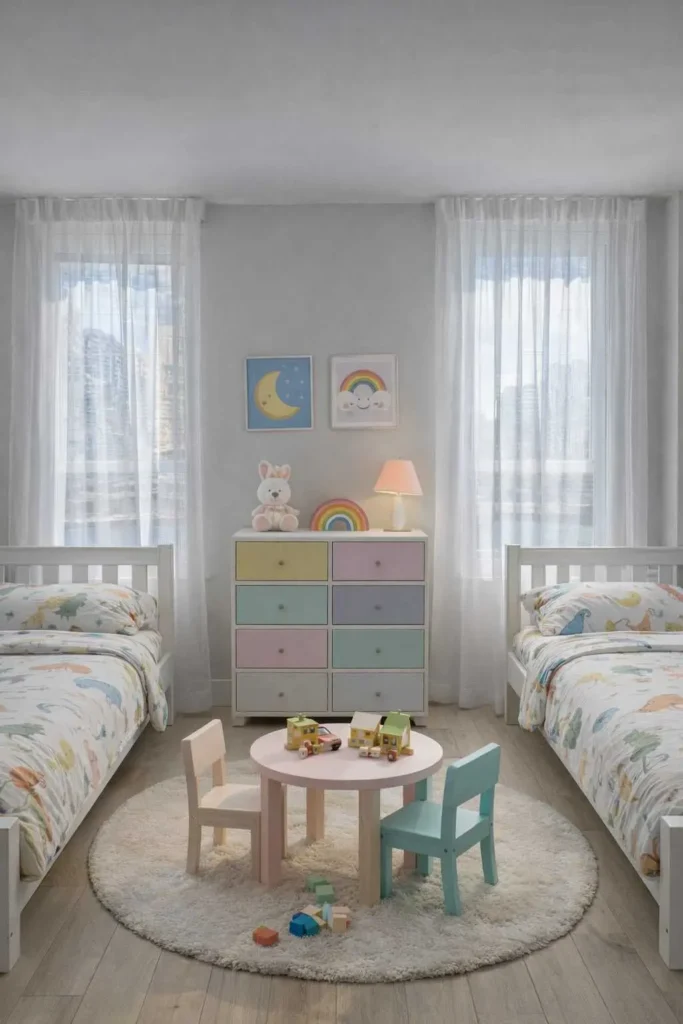
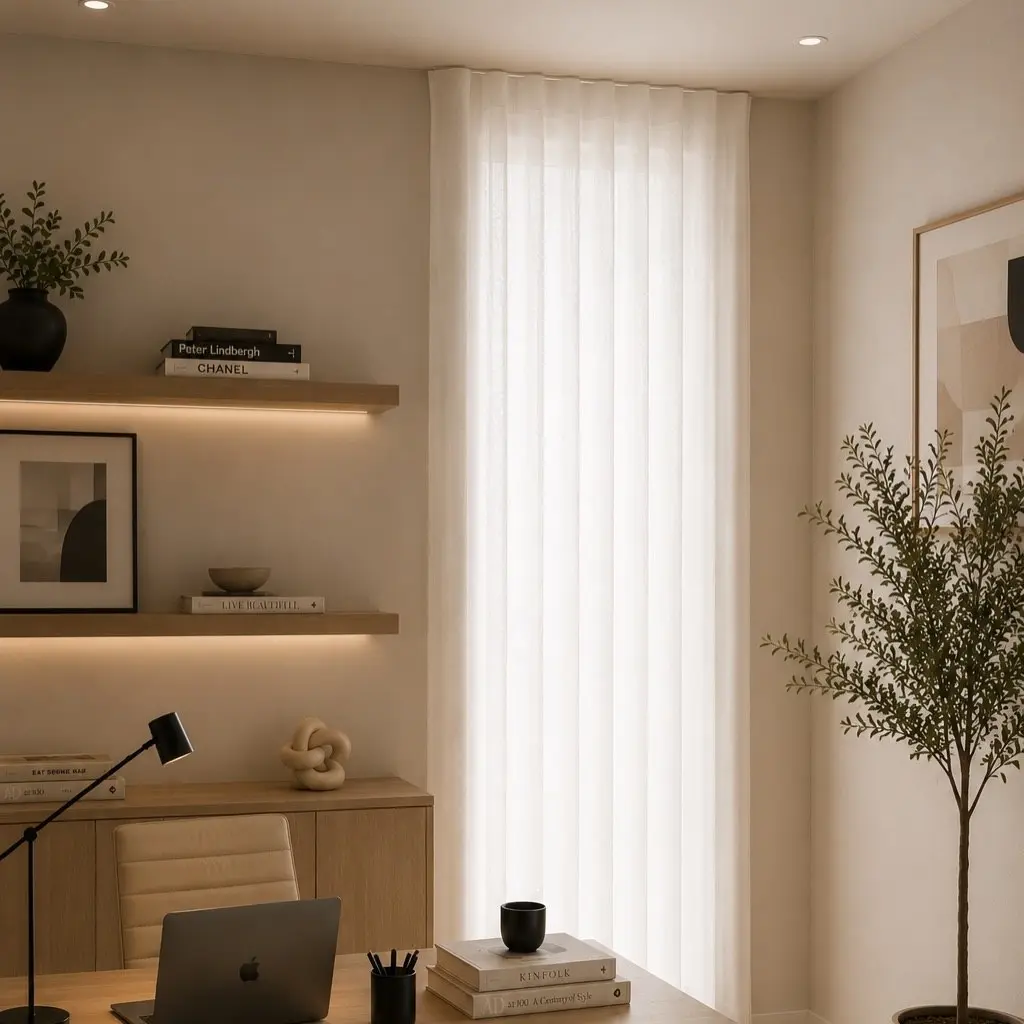
At first glance, the concept seems almost too simple.
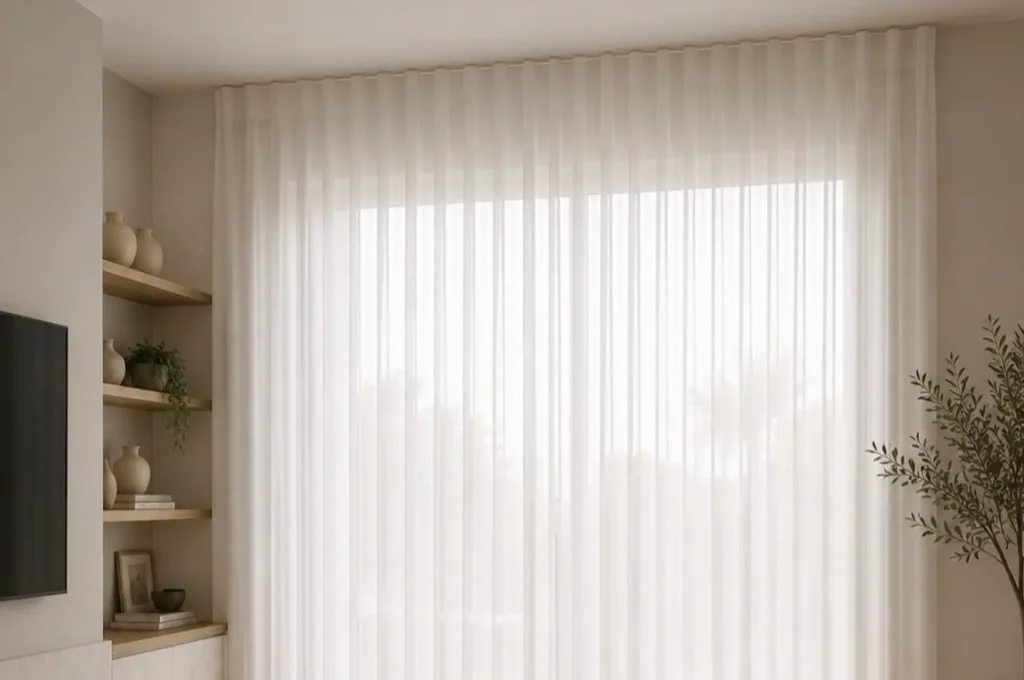
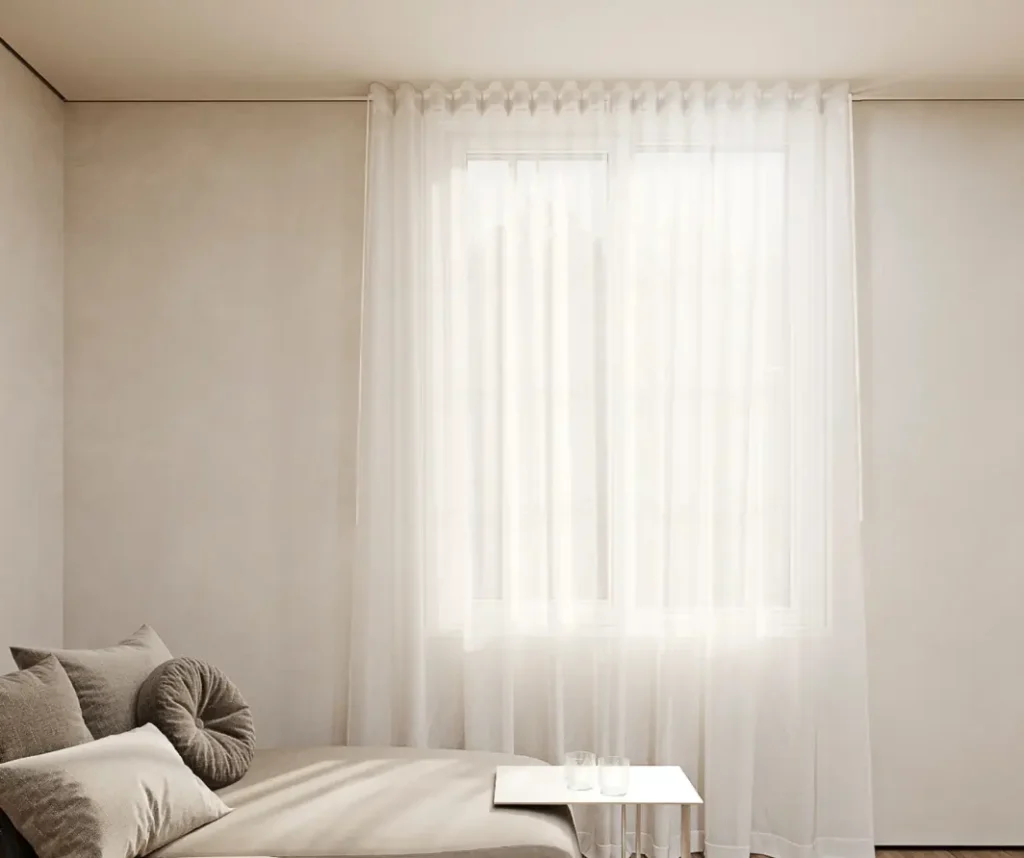
There is no visible curtain rod, bulky track, or collection of brackets interrupting the ceiling line. Instead, the curtains attach at the ceiling using DecoVeil’s self-adhesive installation system. Once installed, the attachment mechanism is discreetly concealed above the fabric. What remains visible is essentially a curtain flowing directly from ceiling to floor.
And visually, that makes a considerable difference.
Many temporary curtain solutions immediately reveal themselves as temporary. DecoVeil takes the opposite approach. The installation method may be simple, but the finished result is intended to resemble professionally installed full-height window treatments.
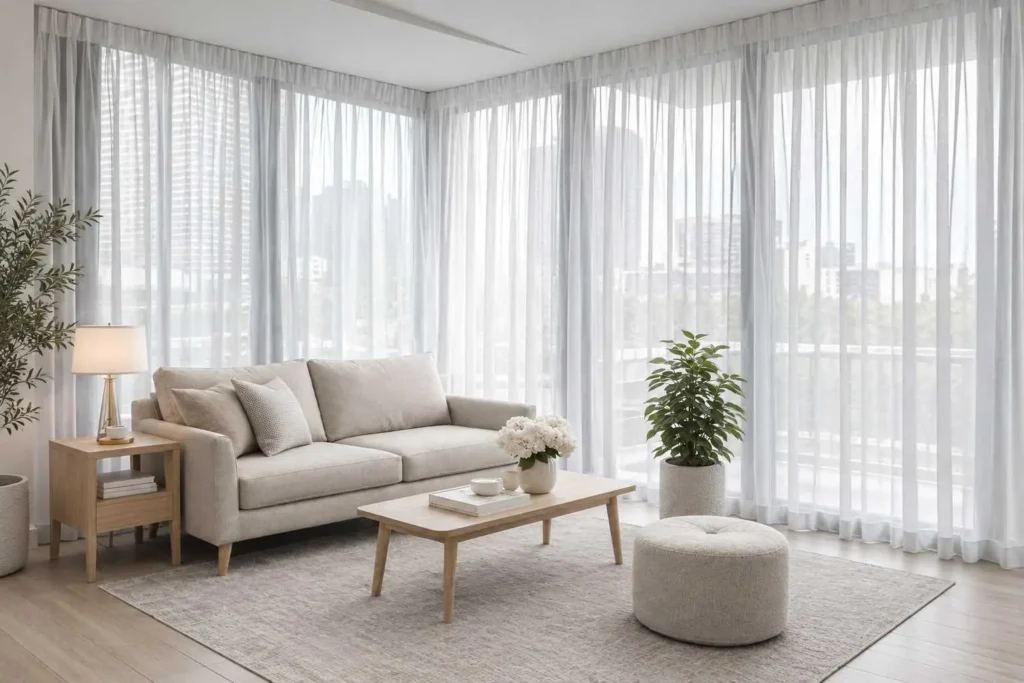
There is a reason designers frequently hang curtains well above the window frame. Drawing the eye upward can make walls appear taller, while longer fabric gives the room a softer and more finished appearance. DecoVeil essentially builds this design principle into the system. Rather than positioning curtains tightly around the dimensions of a window, the fabric can become part of the architecture of the room. The ceiling attachment visually elongates the wall while eliminating the visual interruption of traditional hardware. It is particularly effective in contemporary apartments and homes with large windows, where clean architectural lines can sometimes feel stark without textiles. The effect is less “temporary no-drill curtain” and more full-height interior treatment.
The biggest departure from conventional curtains is the installation itself. Traditional curtain installation can quickly become a small home-improvement project. DecoVeil reduces the process to something much simpler:
Its self-adhesive ceiling system eliminates the need for screws, curtain rods, and conventional mounting hardware. That obviously makes the idea attractive for renters who don’t want, or aren’t permitted, to drill into walls and ceilings. But the concept isn’t limited to rental apartments.It could make just as much sense in a bedroom, nursery, condominium, or modern home where the goal is simply to keep hardware out of sight.
Renter-friendly design has changed significantly in recent years. Removable wallpaper, modular furniture, temporary tiles, and other non-permanent interior solutions have made it possible to personalize a space without renovating it. Window treatments haven’t evolved quite as quickly. Most renter-friendly curtain solutions focus primarily on avoiding holes. The aesthetic result can become secondary. DecoVeil takes a different approach. The no-drill installation is part of the appeal, but it isn’t supposed to become the visual identity of the product. Once the curtains are hanging, the installation method largely disappears. That is perhaps the cleverest part of the idea.
DecoVeil is also modular. Each set includes two 32-inch curtain panels, providing a total of 64 inches of coverage. Additional sets can be positioned alongside one another for wider windows, sliding doors, or larger sections of wall. That creates considerably more flexibility than simply covering a standard window. Panels can frame either side of a window, extend across a patio door, or be combined to create a continuous wall of sheer fabric. The modular format also means the installation can adapt to the room instead of being dictated by the length of a conventional curtain rod.
Traditional window treatments can introduce a surprising amount of hardware into a room, from rods and brackets to cords on certain types of blinds and shades. DecoVeil’s simplified construction removes the traditional curtain rod and does not rely on dangling operating cords. For parents, fewer visible components may be particularly appealing in children’s rooms and shared family spaces. There is another practical detail too: the curtains can be removed from the attachment system for washing without dismantling the entire installation. Anyone who has postponed washing full-length curtains because taking them down feels like its own weekend project will probably understand the appeal.
This may be where the DecoVeil concept becomes more interesting than simply another installation hack. The attachment system is designed to remain in place while the curtain itself can be removed and rehung. That makes washing easier, but it also opens the door to something else: interchangeable window treatments. The idea is that homeowners could eventually change colors, textures, or levels of light filtration without replacing the entire installation system. Change the room. Change the season. Change the fabric. Keep the underlying system. DecoVeil currently offers sheer curtains in White and Beige, while the brand says additional colors, textures, and blackout options are in development.
Much of contemporary interior design is moving toward flexibility. Furniture has become modular. Wallpaper can be removable. Lighting can move from room to room. People are increasingly looking for ways to personalize homes without turning every design decision into permanent construction. Curtains, meanwhile, have remained remarkably traditional. Fabric, rod, brackets, drill. DecoVeil raises a surprisingly reasonable question: why should something as soft and decorative as a curtain require so much permanent hardware? Once you see an alternative, the conventional process starts to feel a little more complicated than it needs to be.
The challenge with convenience in interior design is that it often comes with an aesthetic compromise.
Temporary products can look temporary. Easy-install products sometimes look exactly like easy-install products. The more interesting aspect of DecoVeil is its attempt to make the convenience disappear once installation is complete. Instead of noticing the mechanism, you notice the uninterrupted fabric. You notice the height of the room and the softness introduced by the curtains. DecoVeil’s real appeal isn’t simply that it eliminates drilling. It’s that, once installed, you wouldn’t necessarily know that it does.
The hardware disappears, the fabric becomes part of the room, and a traditionally permanent design decision becomes surprisingly flexible.