We, humans, are a peculiar species. Our lives are filled with a range of complex emotions that can rock us to our very cores and, in some extreme cases, lead to a downward spiral where we allow an activity or substance to take hold over our souls and grip it so tightly that it can seem impossible to break free from. For many, addiction is simply a part of their lives that allows them to escape the realities of what they’re facing and be transported into another reality that, to them at least, seems to soothe the rough edges of life.
Unfortunately, the fact is that addictions are highly damaging to all aspects of a person’s life, from their health to their relationships, even with those they might love deeply. As a result, the question for many is how they can break free from whatever it is that has taken over them, so that they can return to a sense of normality and begin to restart their lives on their own terms rather than being controlled by something that is ultimately destined to destroy them. Although many paths ought to be tried in conjunction with one another, art has shown itself to be hugely beneficial to the recovery process, and in this article, we are exploring what it means and how it might be used by those suffering to give them hope of a new future.
It is generally guided by a trained, licensed art therapist, which enables the process to remain on track and ensures that those participating can best express themselves and communicate without fear.
Because of the nature of art therapy, it may have beneficial effects on numerous people and their ailments. This can range from those addicted to life-destroying substances or activities to those who suffer from chronic illness and need a respite from constant and grinding pain. Outside of this group, it can also be advantageous for anyone seeking a new perspective on their lives when they might feel all at sea and unable to choose a path forward.
There are multiple reasons why art has been a go-to for therapists for decades (possibly even centuries). At its core is the ability to express complex emotions via a medium other than speaking. While opening up via talking about an issue is still a great form of treatment, it can also stop those who have less of a propensity to open up this way. Some of the primary ways that art can transcend words include:
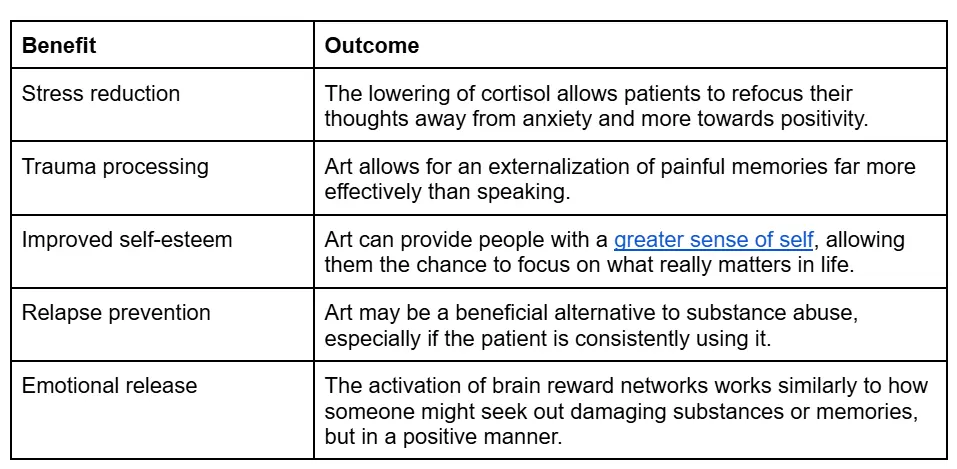
As you might imagine, there are plenty of benefits that art can offer those seeking help over the more conventional means.
Art is more than a fun way to recover from a traumatic experience, and has actual, proven benefits to help those who are at their most emotionally unstable. When used with other forms of therapy, it’s possible to allow someone to heal fully and avoid relapse.