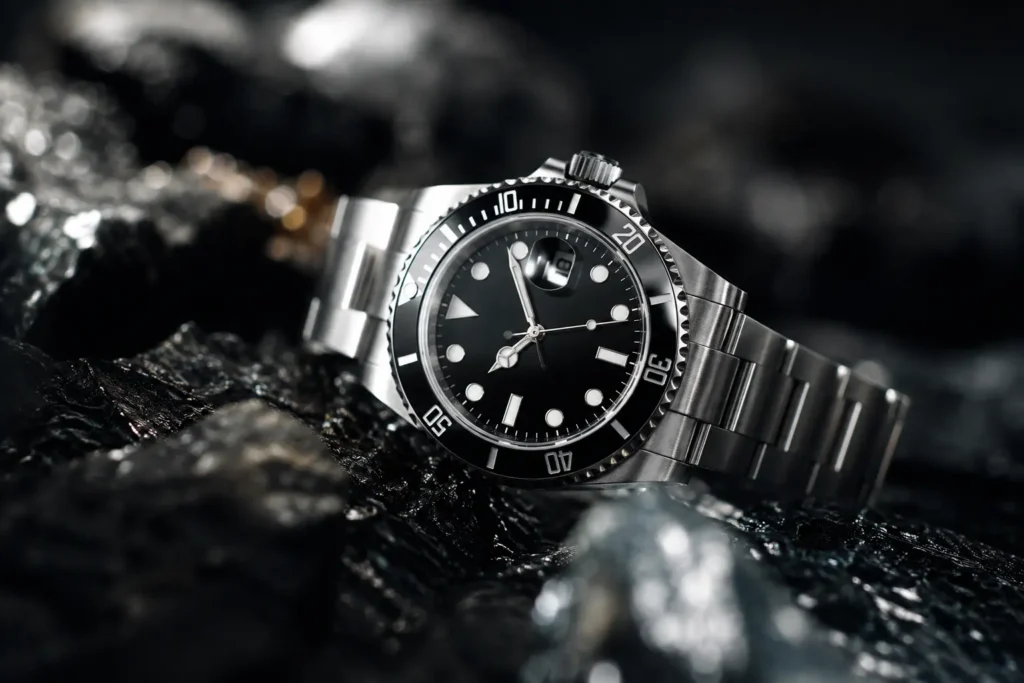
Ten years ago a copy of a steel sports Rolex announced itself across a room. The proportions were wrong, the dial printing was thick, the seconds hand ticked instead of sweeping, and the whole thing felt hollow in the hand. That is no longer a reliable description of the category. The best examples now reproduce the movement architecture, the case weight, and the dial detail closely enough that identifying one takes deliberate examination rather than a glance. This is what actually changed.
The vocabulary matters because sellers exploit its vagueness. A clone in the current sense is a watch built around a copy of the original mechanical movement rather than a generic automatic dressed to look the part. That single distinction separates the category from the souvenir stall fakes it grew out of, and it explains most of the price difference between tiers.
Everything else follows from it. Reproducing a movement forces a maker to get the case dimensions right, because the movement has to fit correctly. It forces attention to the dial, because the hands must be the correct length for the correct movement. A build that starts with a cloned caliber tends to be coherent. A build that starts with a case and drops in whatever movement is cheap tends not to be.
The expensive, difficult work sits inside the case where almost nobody looks. A serious cloned caliber reproduces the winding resistance, the hacking seconds, the beat rate, and the date change behaviour of the original. Those are the things an owner encounters daily, which is why they are the things worth paying for. Winding is the most immediate tell. An original winds with a particular resistance and sound, and a generic movement does not. Hacking is the next: pull the crown and the seconds hand should stop dead. Beat rate governs the sweep, and a movement running at the wrong frequency produces a visibly steppier motion that no amount of case polishing disguises. On a calendar reference the date should snap over rather than crawl through the small hours.
Understanding the cost structure makes the market far easier to read. Roughly speaking, the movement is the largest single component cost in a serious build, followed by the case and bracelet, then the dial and hands, then assembly and quality control. That ordering explains the tiers you encounter. A watch selling for under two hundred dollars has not paid for a cloned movement, because the movement alone costs more than that. The money went somewhere visible instead, usually into the appearance of the dial, which is why cheap pieces often photograph acceptably and disappoint in the hand. Weight is the fastest way to feel where a maker economised, because the correct alloy machined to the correct thickness produces a heft that thinner or cheaper metal cannot fake.
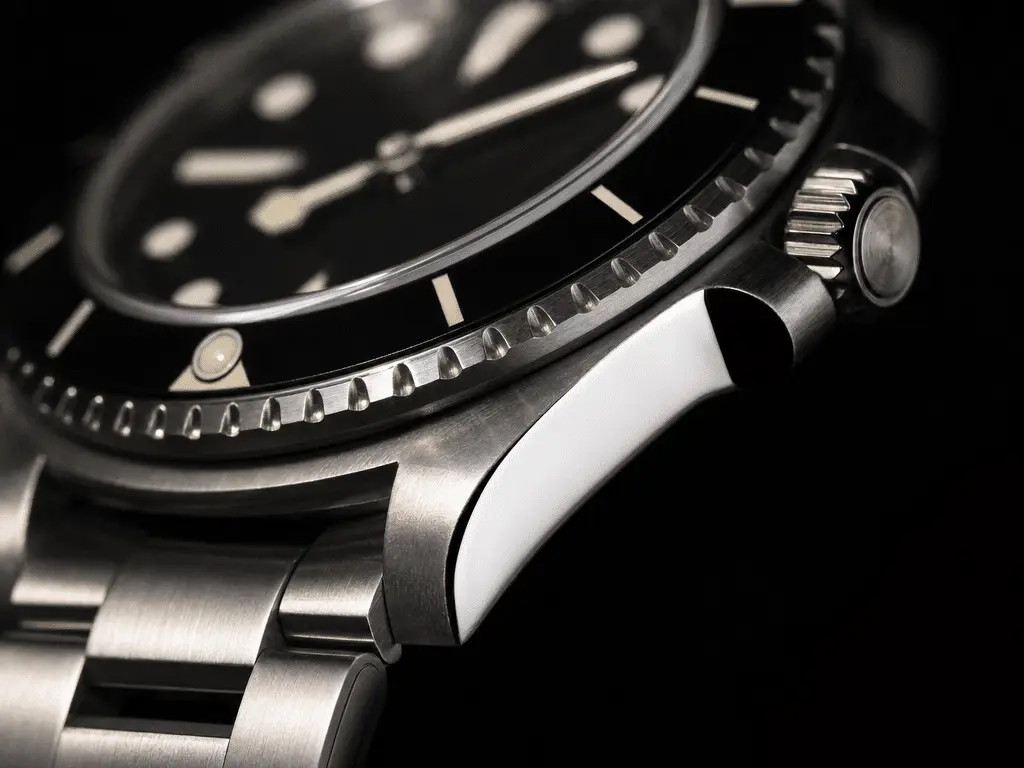
Assume the movement is right. A handful of details still distinguish a strong build from a mediocre one, and all of them are checkable without tools beyond a loupe and good light.
The effort concentrates where demand is highest and retail supply is worst, which is why the steel sports models dominate. The Submariner is the most reproduced watch in the category by a wide margin, followed by the Daytona and the GMT Master II. These are the references with waiting lists and steep premiums, so they are the ones where a convincing alternative has the largest audience.The Daytona deserves a note of its own. A chronograph is far harder to clone convincingly than a three hand watch, because the pushers, the reset behaviour, and the sub dial alignment all have to work rather than merely exist. It is the reference where the gap between a specialist maker and a general one is most obvious, and where paying for the better build changes the ownership experience most.
The product improved because the customer did. A purchase that once rested on a single set of photographs and a leap of faith now involves comparing movements, case dimensions, and maker reputations across several sources before anyone commits. That scrutiny pushed the stronger makers to document their work and pushed weaker ones out of serious consideration.
The practical summary is short. Ask which movement is inside and treat a vague answer as an answer. Feel the weight, because the correct alloy is not something a photograph conveys. Look at the dial under magnification and at the finishing transitions under a strong light. Run a nail across the bezel and listen for a firm click without play. Compare the price against the going rate for that reference and be suspicious of anything far below it.
Get those right and you have filtered out most of what disappoints buyers in this category. The improvement in manufacturing over the past decade is real, but it has not been uniform, and the gap between the best and the worst is now wider than it has ever been. Knowing which side of that gap you are buying from is the entire skill.