Social media marketing has entered an era where visual quality directly determines content performance. Platform algorithms prioritize visually engaging posts. Audience attention spans filter ruthlessly based on image quality within the first fraction of a second.
Yet the production resources available to most social media marketers—whether managing brand accounts, running agency campaigns, or building personal audiences—have not kept pace with these escalating visual standards. The gap between what platforms reward and what marketers can realistically produce defines the central operational challenge of modern social media marketing.
The emergence of commercially viable AI image generation introduces a production model that resolves the volume-quality tension social marketers face. Rather than choosing between distinctive visual quality and sustainable production volume, AI generation enables both simultaneously.
The style versatility built into the platform allows marketers to maintain brand visual identity while exploring diverse content approaches. A brand that typically communicates through clean, photorealistic imagery can experiment with illustrated treatments for specific campaigns. A personal brand built on warm, editorial aesthetics can test bolder, more graphic visual directions for promotional content. This creative flexibility exists within a single tool, eliminating the need to learn multiple platforms or engage different specialists for different visual styles.
The rapid generation capability—substantially faster than previous model iterations—aligns with the reactive nature of social media marketing. When a trending topic emerges, a cultural moment presents an opportunity, or a competitor move demands a response, marketers can produce on-brand visual content within minutes rather than routing through design queues that may take days to process.
Building a sustainable AI-assisted social content workflow requires integrating generation into existing planning and publishing processes.
Before producing any content, establish clear visual parameters that define your brand’s social media aesthetic. Document preferred color palettes, lighting characteristics, compositional styles, and atmospheric qualities. These parameters become reusable generation instructions that ensure every piece of content reinforces brand recognition regardless of who on your team initiates the generation.
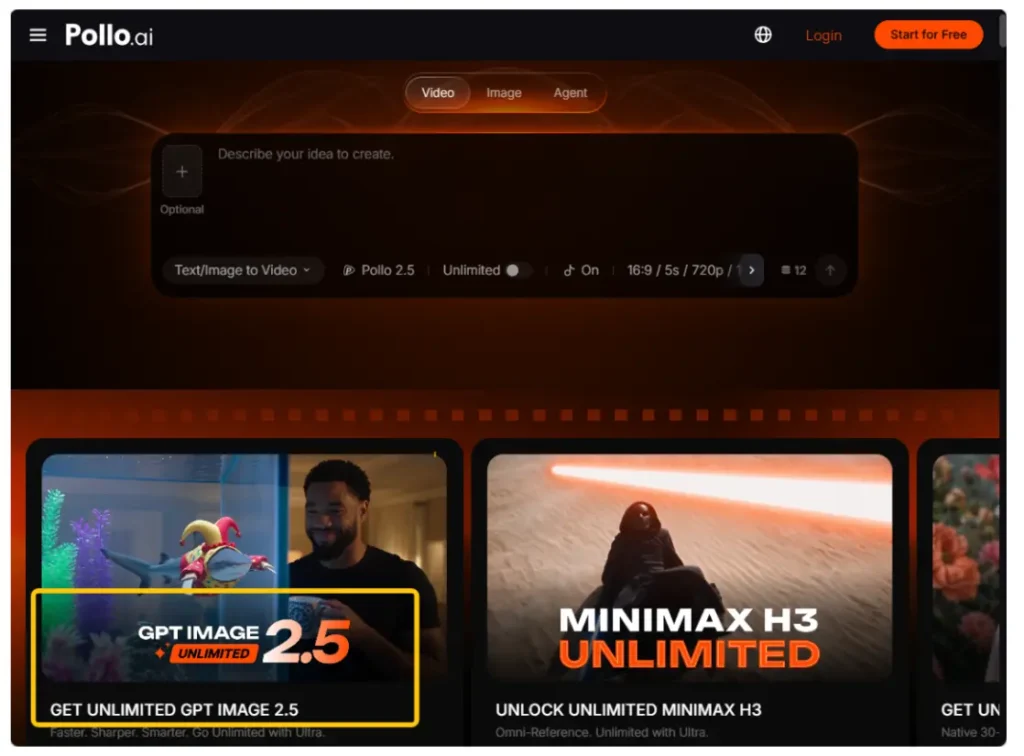
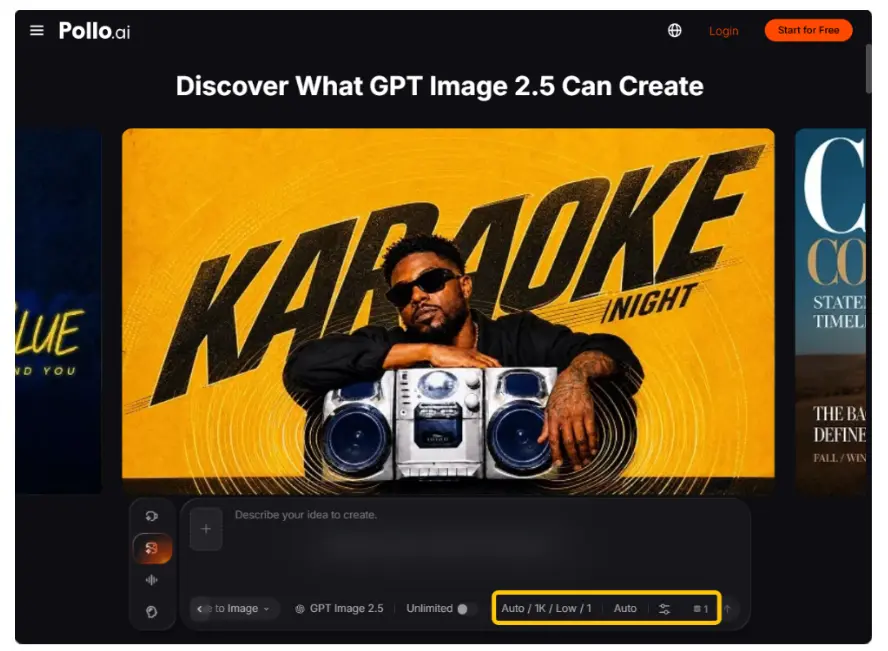
Pollo AI’s GPT Image 2.5 AI Image Generator supports custom aspect ratios and resolution settings that match platform-specific requirements, allowing marketers to generate platform-native content directly rather than producing generic images and reformatting them afterward.
Organize your generation workflow around your content calendar rather than producing images reactively. Dedicate focused sessions to generating a week’s worth of visual content in advance, organized by content theme and platform destination. This batch approach produces more consistent visual quality than scattered, ad-hoc generation and ensures your content pipeline remains filled even during busy operational periods.
Use the platform’s regional editing capability to create variations from strong base compositions. A single well-composed image can yield multiple content pieces through targeted modifications—different background contexts for different platforms, adjusted color treatments for different campaign themes, or compositional refinements that emphasize different product features.
Reserve generation capacity for real-time content opportunities. When a trending topic aligns with your brand positioning, Pollo AI’s GPT Image 2.5 AI Image Generator’s rapid output enables you to produce relevant, on-brand visual content fast enough to participate in the conversation while it remains culturally relevant. This reactive capability—producing quality visuals in minutes rather than hours—represents a significant competitive advantage in social media marketing where timing often matters as much as quality.
For marketers managing advertising budgets across multiple platforms simultaneously, this capability means that a single AI-generated image can serve as the foundation for both an organic Instagram post and a paid TikTok advertisement, maximizing creative investment across the full marketing spectrum.
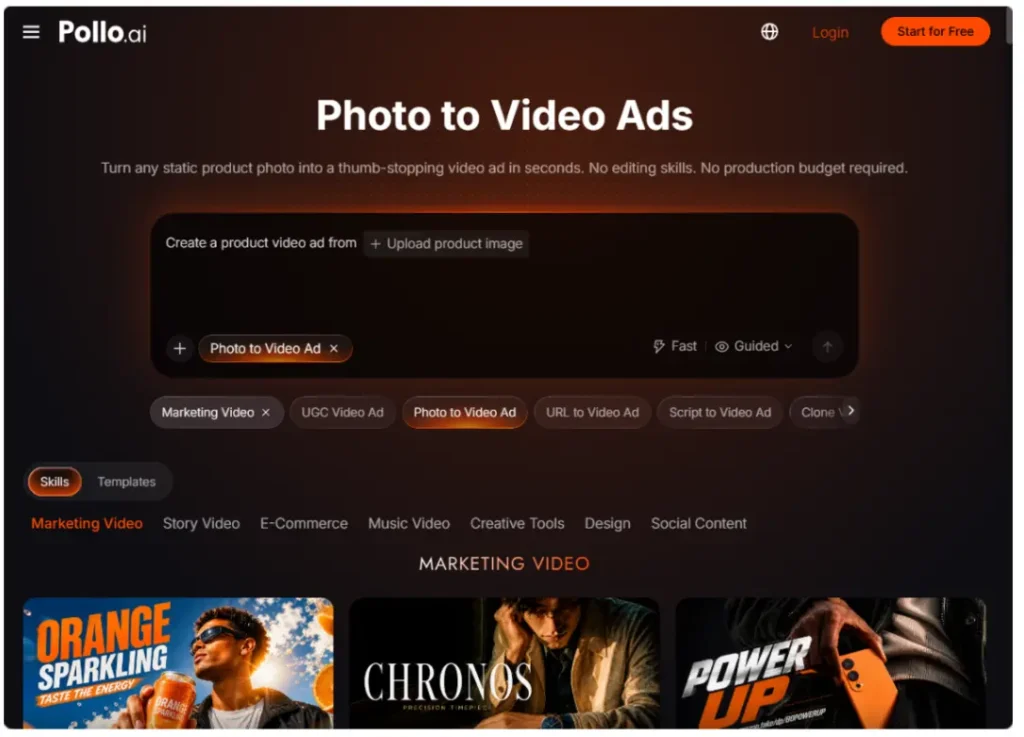
The ability to generate multiple creative variations from a single source image through Pollo AI’s AI photo to video ad generator also supports the A/B testing discipline that effective paid social requires. Different motion treatments, voiceover approaches, and visual emphasis patterns can be tested simultaneously, with performance data guiding budget allocation toward winning variations.
The long-term value of AI-assisted social content production accrues through consistency. Brands that maintain high visual standards across hundreds of posts over months build cumulative visual recognition that compounds audience trust and engagement.
Pollo AI’s GPT Image 2.5 AI Image Generator supports this long-term consistency through its character and subject fidelity capabilities. Brand mascots, recurring visual motifs, and signature aesthetic elements maintain their distinctive characteristics across ongoing content production, building the visual continuity that transforms individual posts into a cohesive brand narrative.
Track content performance systematically, noting which visual approaches, styles, and compositional patterns generate the strongest engagement within your specific audience. Feed these insights back into your generation parameters, continuously refining your visual strategy based on empirical evidence rather than assumption.
Social media marketing success increasingly depends on producing distinctive, high-quality visual content at volumes that traditional production methods cannot sustain. Pollo AI’s GPT Image 2.5 AI Image Generator provides the visual quality, production speed, and creative flexibility that modern social marketers require, enabling teams of any size to maintain premium content standards across daily publishing schedules and multi-platform campaigns. For marketers ready to shift their competitive advantage from production budget to visual strategy, the operational infrastructure for scalable, premium social content now exists.