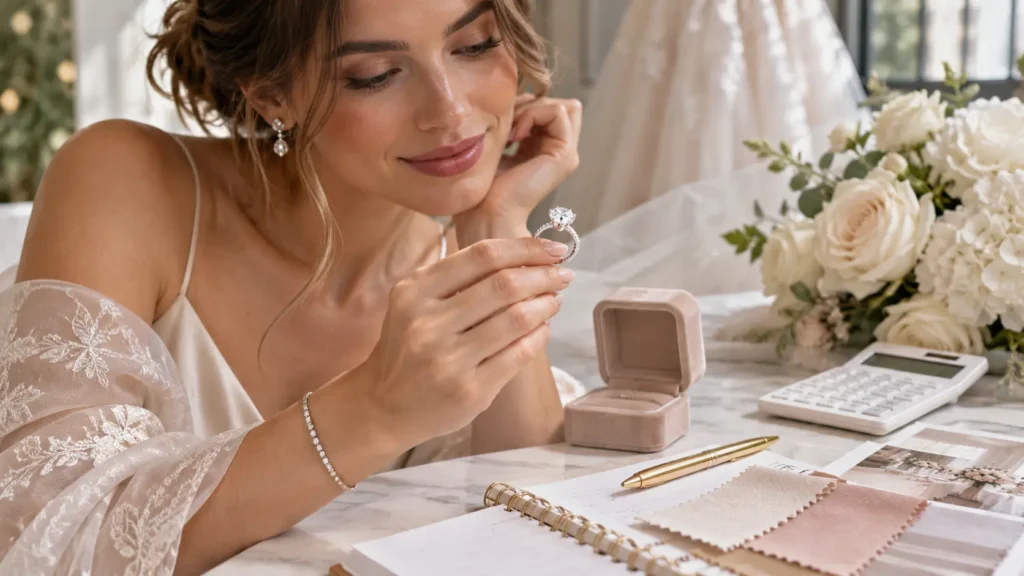
Planning a wedding is one of the most exciting experiences you can share with your partner, but it also comes with plenty of financial decisions. From choosing the perfect venue and finding a beautiful wedding dress to arranging flowers, catering, and photography, every detail seems to come with a price tag. And before you even get to the wedding day itself, there’s another important purchase to consider: the engagement ring
While you naturally want a ring that captures your relationship and makes the proposal unforgettable, spending a fortune isn’t necessary to find something beautiful. In fact, being thoughtful about your choices can help you get a stunning piece of jewelry while keeping more money available for the celebrations ahead.
If you’re trying to balance your dream wedding with a realistic budget, here are some practical ways to find an engagement ring that feels special without putting unnecessary pressure on your finances.
When you’re planning a wedding, it’s easy to get caught up in the idea that everything needs to be perfect. You might start with a reasonable budget, only to discover that small upgrades and additional expenses quickly add up.
Your engagement ring deserves attention, but it shouldn’t consume a significant portion of your savings if that means compromising on other important priorities.
According to Jewelers Mutual’s 2024 Engagement Ring Trends Study, the average engagement ring value among surveyed respondents fell between $2,500 and $5,000. That’s a considerable expense, especially when you’re also preparing for a wedding, honeymoon, and potentially a new home together.
Instead of following traditional spending expectations, think about what makes a ring meaningful to you and your partner. The right choice should reflect your relationship, personal style, and financial circumstances.
Remember, your engagement is about making a commitment, not demonstrating how much you can afford to spend.
One of the easiest ways to reduce your engagement ring expenses is to explore the pre-owned jewelry market.
You might initially associate previously owned jewelry with outdated styles or questionable quality, but that’s far from the reality. Many secondhand engagement rings feature beautiful craftsmanship, timeless settings, and high-quality gemstones that remain just as attractive as newly purchased pieces.
More importantly, buying pre-owned can give you access to rings at considerably lower prices than their brand-new equivalents.
Some marketplaces report potential savings of 30% to 60% compared with retail prices, depending on the ring’s characteristics, condition, and market value. This means you could potentially find a larger diamond, a more intricate setting, or a better-quality piece without increasing your original budget.
You also get the opportunity to discover designs that aren’t commonly available in traditional jewelry stores. Vintage-inspired details, unusual gemstone arrangements, and distinctive settings can give your engagement ring a more personal appearance.
If you’re considering this option, look for reputable sellers who provide detailed descriptions, transparent pricing, and professional gemstone authentication. Having confidence in what you’re purchasing is just as important as finding an attractive price.
If you’ve started researching engagement rings, you’ve probably encountered the four Cs: cut, color, clarity, and carat weight.
These characteristics determine much of a diamond’s appearance and value, but you don’t necessarily need the highest grade in every category to find a beautiful stone.
Understanding where you can make compromises helps you spend more strategically.
A diamond’s cut influences how effectively it reflects light. A well-cut diamond can appear bright and brilliant, even when it’s smaller than another stone.
If you want your engagement ring to have plenty of sparkle, consider prioritizing cut quality rather than focusing exclusively on carat weight.
Diamonds with minor color variations or small inclusions can still look beautiful, particularly when those characteristics aren’t easily noticeable without magnification.
Depending on the stone, choosing a slightly lower grade can reduce the price without creating a significant visual difference.
Round brilliant diamonds are popular, but they aren’t your only option. Oval, pear, emerald, and cushion cuts can offer distinctive appearances and different price points.
Explore several shapes before making your decision. You might discover a design that suits your personal style better while allowing you to stay within budget.
Who says your engagement ring has to feature a traditional round diamond?
Alternative gemstones are becoming an attractive option for couples who want something distinctive. Sapphires, emeralds, and rubies can introduce beautiful colors while giving your ring a personality of its own.
You can also explore lab-grown diamonds, which generally cost less than comparable natural diamonds. They share the same essential chemical, physical, and optical properties as natural diamonds, although their origins and market values differ.
When comparing your options, consider:
The best choice depends on your preferences, lifestyle, and how much you’re comfortable spending.
Your engagement ring setting can make a considerable difference in its overall appearance and price.
Elaborate settings with multiple gemstones, intricate detailing, and additional decorative elements can increase the cost. However, simpler designs can be just as elegant.
A solitaire setting, for example, places attention on the center stone without unnecessary distractions. It’s a classic option that works with different diamond shapes and metal colors.
If you prefer something more decorative, consider a halo setting or a delicate pavé band. Just remember that additional stones and intricate craftsmanship may increase maintenance requirements and overall costs.
Think about your everyday style, too. If you prefer understated accessories, a simple setting might be more suitable than an oversized design.
You want a ring that looks beautiful on your wedding day and continues to feel appropriate years later.
Saving money on your engagement ring isn’t just about finding a lower price. It’s also about creating more financial flexibility for the next chapter of your life.
Think about what you could do with the money you save. Perhaps you could upgrade your wedding photography, arrange a more memorable honeymoon, improve your reception experience, or simply keep additional savings for unexpected expenses.
You could even redirect part of your budget toward things you’ll enjoy together long after the celebrations are over.
Ultimately, the goal is to make decisions that support your shared priorities rather than spending simply because tradition or expectations suggest you should.
Your engagement ring will always hold sentimental value, but its price tag doesn’t determine how meaningful it is. Whether you choose a classic solitaire, a colorful gemstone, or a beautifully crafted pre-owned piece, what matters most is finding something that represents your relationship.
As you prepare for your wedding, remember that every financial decision contributes to the experience you’re building together. Set a realistic budget, explore different options, and don’t be afraid to consider alternatives that offer better value.
With a little research and thoughtful planning, you can find an engagement ring that feels truly special while keeping your wedding finances comfortably on track. After all, the most beautiful part of getting married isn’t how much you spend on the details. It’s the life you build together once the celebration is over.