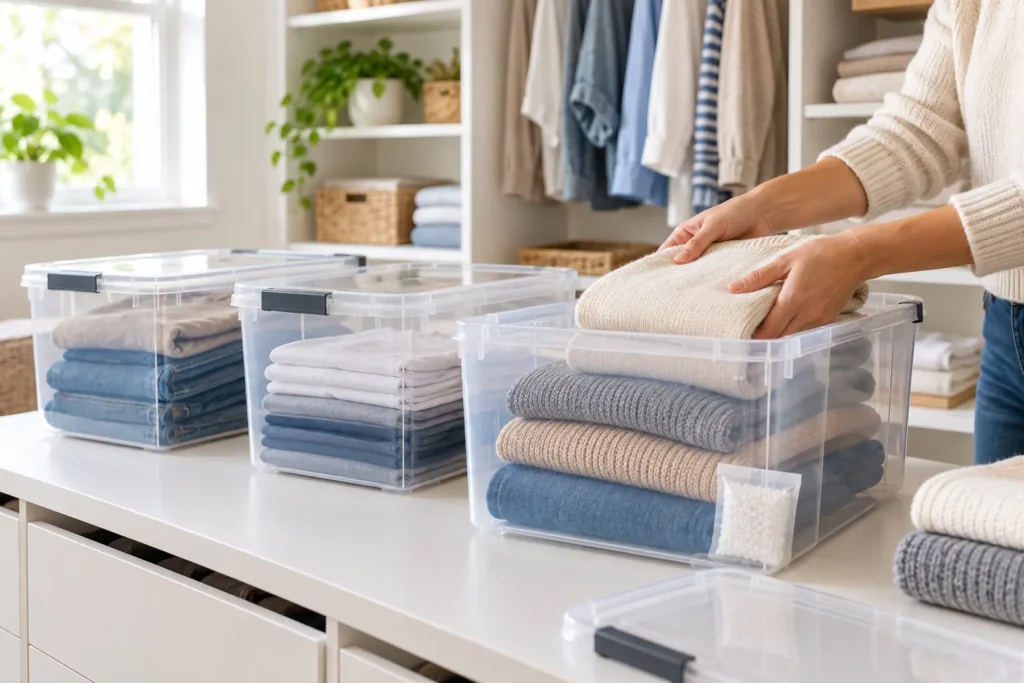
Plastic storage boxes are one of the easiest ways to organise clothes you are not currently wearing. They stack neatly, protect garments from dust and pests, and are useful for seasonal clothing, spare wardrobes and long-term storage. But they are not completely foolproof. If clothes go into a plastic box damp, dirty or packed too tightly, they can come back out smelling musty, badly creased or even affected by mould. The type of clothing matters too, because heavy knitwear, delicate fabrics and leather do not all respond well to being stored in the same way. The key is to prepare clothes properly before they go into the box and make sure the box is being used for the right garments.
For many everyday clothes, yes.
Plastic storage boxes are especially useful because they are durable, easy to stack and provide more protection than an open basket or cardboard box. They work particularly well for:
However, plastic boxes can also trap moisture if clothing is not completely dry before storage. That is why preparation is more important than simply choosing a box with a tight lid.
Not all plastic boxes are equally useful for clothing. The best option is usually a sturdy, clean box with a secure lid that can be stacked without collapsing. Clear boxes can also be helpful because you can see what is inside without opening everything.
Avoid using boxes that have previously stored strong-smelling chemicals, paint, cleaning products or anything that could leave residue or odours behind.
Even new-looking boxes can collect dust while being stored. Wipe the inside of each container before packing clothes and make sure it is completely dry before anything goes inside. If you are reusing boxes, clean them more thoroughly and check for:
A clean storage box will not help if clothing goes into it dirty, but dirty containers can make a well-prepared wardrobe smell unpleasant surprisingly quickly.
Clothes should normally be clean before they are packed away. That includes garments that do not appear visibly dirty. Body oils, deodorant, perfume, food residue and small stains can become more noticeable over time. They can also attract pests or create smells while clothes are stored.Wash garments according to their care labels, then make sure they are fully dry. Do not pack clothing while it is even slightly damp. Moisture trapped inside a closed plastic container is one of the easiest ways to create musty smells and mould problems.
This step matters more than almost anything else. A garment can feel dry on the surface while seams, waistbands, thick cuffs or padded sections still hold moisture. Allow heavier pieces extra drying time before packing them away. Pay particular attention to:
If you are unsure whether something is completely dry, give it more time. It is much easier to wait another day before packing than to discover several months later that an entire box smells damp.
Plastic boxes work best when clothing is folded neatly.Stuffing clothes into every available gap creates deep creases and makes the contents difficult to organise later.It can also reduce airflow inside the box. Fold garments in a way that keeps them relatively flat and easy to remove. For most everyday clothes:
You do not need perfect retail-style folding. The aim is simply to avoid unnecessary crushing.
Both can work, but folding is usually the better option for longer periods. Rolling can save space for lightweight clothes and is useful when packing suitcases, but tightly rolled garments can develop stubborn creases if left that way for months.
It can be tempting to press down on the lid until every last jumper fits. That is usually a mistake. Overfilling can crush fabrics, create heavy creases and make the box unnecessarily difficult to lift. Leave a small amount of space so the lid closes easily without compressing everything underneath. If you need to sit on the box to close it, it is too full.
Weight distribution matters. Place heavier garments such as jeans and sweatshirts at the bottom, with lighter clothing above them. This helps prevent delicate pieces being flattened unnecessarily. A useful order might be:
Avoid putting shoes or hard accessories directly on top of clothing unless they are separately wrapped.
One large box containing a random mixture of everything can be difficult to use later. It is usually better to organise boxes by category. For example:
This makes it much easier to find what you need without unpacking several containers.
Even transparent boxes benefit from labels. Once several boxes are stacked together, it is not always easy to see exactly what is inside each one. A useful label might say:
Winter clothes – jumpers, scarves and thermals
Summer clothes – size 10–12
Include enough detail that you can identify the contents without opening the lid.
Sometimes, but not for everything. Vacuum bags are useful when you need to reduce the volume of bulky synthetic items. They can work well for:
However, prolonged compression may not be ideal for certain fabrics and structured garments. I would avoid heavily compressing:
If you use vacuum bags, think of them as a space-saving tool rather than the default method for every piece of clothing.
Freshness starts before the lid goes on. Clean, completely dry clothing stored in a clean container should generally stay in much better condition than clothing packed straight from everyday use. You can also help by keeping boxes in a suitable environment.Avoid placing clothing boxes somewhere that regularly experiences:
You do not need to add strong fragrances to every box. Scented products can transfer smells to clothing, and some people find them overwhelming when garments are unpacked. The priority should be dry clothing and a dry storage environment.
Mould needs moisture. That means preventing mould is mainly about keeping moisture out before and during storage. The most important steps are:
If you are storing clothes for a long period, checking them occasionally can also help you spot problems early.
Moisture-absorbing products can sometimes provide extra protection, but they should not be used as a substitute for proper preparation. A moisture absorber cannot compensate for clothing that was packed damp. If you use one, make sure it is suitable for use around textiles and is positioned so it cannot leak or come into direct contact with garments.Always follow the manufacturer’s instructions.
A properly closed plastic box offers much better physical protection from clothes moths than an open wardrobe or fabric basket. However, the clothing should still be cleaned before storage. Moth larvae are attracted to natural fibres and residues such as sweat, skin oils and food. Garments made from materials such as wool and cashmere deserve particular attention. Before storage:
If you suspect an active infestation, deal with that before putting the clothes into long-term storage.
Different garments need slightly different treatment.
This is why it is worth sorting clothes before packing instead of treating the entire wardrobe the same way.
Some garments need more protection than others. Silk, embellished clothing, lace and delicate occasionwear can be damaged if they are tightly packed beneath heavier garments. Use acid-free tissue paper where appropriate to help reduce creasing and prevent decorated surfaces rubbing together. Do not overfill boxes containing delicate garments. If an item is particularly valuable, check its care requirements before deciding that a plastic box is the best storage option.
Knitwear is generally well suited to folded storage. Jumpers can stretch out of shape when left hanging for long periods, particularly heavier wool or cashmere pieces. Before packing:
For expensive wool and cashmere, pest prevention is especially important.
Plastic storage is useful, but it is not always the best choice. You may want an alternative for:
These may benefit from breathable garment bags, hanging storage or specialist preservation methods. The clothing care label and material should guide the final decision.
Plastic containers are only one option.
That also makes unpacking far easier when you eventually need the clothes again.
Plastic boxes are useful partly because they stack well. However, do not create unstable towers. Place:
Avoid stacking boxes so high that you need to pull several heavy containers down just to reach one underneath.If the manufacturer gives a stacking limit, follow it.
If you are storing a large wardrobe, an inventory can save a surprising amount of time. You do not need to list every individual T-shirt. A simple record could be:
You can keep the list on your phone so you know exactly which box you need later.
This is one of the quickest ways to create mould and unpleasant smells.
Clothing becomes crushed and the box becomes harder to lift.
Small stains and body oils can become much worse over time.
Mixing Delicate and Heavy Garments
Heavy jeans and sweatshirts can crush more delicate clothing.
Storing Everything in Vacuum Bags
Not every material responds well to prolonged compression.
Several identical plastic boxes become very frustrating when you need one specific item.
Keeping Boxes Somewhere Damp
A good container cannot completely compensate for a poor storage environment.
Before closing the lid, check that:
There is no fixed maximum period.Properly prepared clothing can remain stored for extended periods, provided the environment remains suitable. The longer clothing will be stored, however, the more important preparation becomes. For storage lasting many months, it is sensible to occasionally inspect boxes where practical.Check for:
Catching a problem early can prevent damage spreading through an entire wardrobe.
Plastic boxes can be an excellent way to store clothes, but the container itself is only part of the solution. Clothing should go into storage clean, completely dry and organised in a way that suits the fabric. Avoid overpacking, be careful with delicate materials and keep boxes somewhere dry and stable. For everyday garments, seasonal wardrobes and spare clothing, a good plastic box can provide simple and effective protection for months at a time. The most important rule is also the simplest: never seal moisture inside with your clothes.