Peru rarely fits into a single climate or elevation, which is exactly what makes a Lima-Cusco-Amazon itinerary so rewarding. In the space of ten days, you can go from sea-level fog and ceviche counters in the capital to 11,000-foot mountain air in the Sacred Valley, then down into rainforest canopy where the thermometer climbs into the 90s. Pulling that off without wasting days on bad connections takes some planning, but the logistics are more forgiving than most travelers expect.
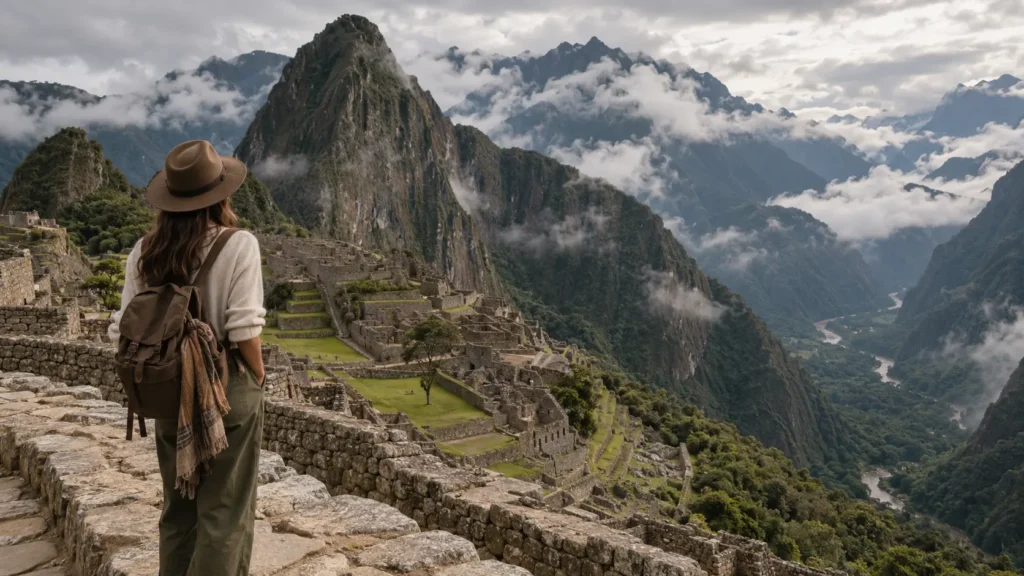
Lima, Cusco, and the Amazon each show a different version of Peru, and none of them substitutes for the others. Lima gives you the country’s food scene, colonial architecture, and a coastline that stretches for miles along cliffside parks. Cusco and the surrounding Sacred Valley hold the archaeological weight — Inca stonework, terraced hillsides, and Machu Picchu itself. The Amazon, usually accessed through Puerto Maldonado or Iquitos, adds the biodiversity angle: macaws, caimans, and a canopy that hums differently than anywhere in the highlands.
Skipping any one of the three leaves a gap. Visitors who go only to Cusco miss the culinary depth of Lima and the sheer scale of the rainforest. Those who stick to Lima and the coast never see the ruins that made Peru famous in the first place.
The standard route starts in Lima, since nearly all international flights land there first. From Lima, a 90-minute flight gets you to Cusco, where you’ll want at least a day to adjust before heading into the Sacred Valley or hiking toward Machu Picchu. After the highlands, a short flight from Cusco to Puerto Maldonado — about 40 minutes — drops you into the Tambopata region of the Amazon basin.
This order matters. Going Lima to Cusco to the jungle lets your body acclimate gradually, gaining elevation before dropping back down to near sea level in the rainforest. Reversing the order, or trying to bounce between altitudes repeatedly, tends to produce more headaches and fatigue than the trip is worth.
A workable minimum looks like two days in Lima, four to five days around Cusco and the Sacred Valley (including Machu Picchu), and three days in the Amazon. That adds up to roughly ten days, not counting international travel. Extending Cusco time to six or seven days lets you add Rainbow Mountain or the Humantay Lake trek without rushing.
Shorter trips are possible but require trade-offs. Cutting the Amazon down to two days still allows for one full day of jungle activities, though early flights in and out eat into that time. Travelers who try to compress everything into a week usually end up seeing less of each place and feeling more exhausted by the flights than by the sightseeing.
Cusco sits at about 11,150 feet, and the jump from Lima’s sea level is the part of this itinerary that catches people off guard. Mild headaches, shortness of breath, and poor sleep are common for the first 24 to 48 hours. Coca tea, hydration, and a light first day — no strenuous hikes right off the plane — make the adjustment easier.
Some travelers prefer to break the ascent by spending a night in the Sacred Valley, which sits about 2,000 feet lower than Cusco itself, before continuing up to the city. It’s a small detour but a genuinely useful one if altitude sickness has been an issue on previous trips.
The flight from Cusco to Puerto Maldonado is short, but it drops you from alpine cold into humid lowland heat in under an hour. Pack layers you can shed quickly. Most Amazon lodges in this region are another one to two hours away by boat along the Tambopata or Madre de Dios rivers, so factor that transfer time into arrival and departure days.
A single packing list has to cover coastal mildness, mountain cold, and jungle humidity. Lima rarely demands more than a light jacket, even in winter months (June through September). Cusco nights drop close to freezing, so a warm layer and a rain shell are worth the suitcase space. The Amazon calls for lightweight, quick-dry clothing, a strong insect repellent, and closed shoes for night walks.
The real value of linking these three destinations isn’t just efficiency — it’s the contrast. Watching the landscape shift from coastal desert to stone terraces to river-choked jungle within the same trip gives a far more complete sense of Peru than any single region can offer on its own. Plan the route with altitude and transfer times in mind, and the logistics stop being an obstacle and start feeling like part of the trip itself.