The Role of Logbook Services in DOT Audits and Inspections

The Role of Logbook Services in DOT Audits and Inspections

SHARE THE ARTICLE

DOT audits and roadside inspections are among the most consequential events in a carrier’s operational life. A well-maintained logbook record can mean the difference between a clean audit outcome and a cascade of citations that affect scores, contracts, and revenue. Logbook services have evolved into a critical support function — not just for recordkeeping, but for audit readiness across every stage of a carrier’s compliance cycle. This article explains how professional logbook management supports carriers through DOT scrutiny and why it matters operationally. Carriers looking to strengthen their overall compliance infrastructure can explore https://fleet.care/services/logbook-service/ as part of a broader support strategy.

What DOT Auditors Examine During a Compliance Review

The FMCSA conducts several types of audits, including New Entrant Safety Audits, Compliance Reviews, and Focused Audits triggered by poor CSA scores or complaints. Each type involves a structured review of specific records.

During a standard compliance review, auditors typically examine the following:

  • driver records of duty status for the preceding six months;
  • ELD data and supporting documents such as fuel receipts and toll records;
  • vehicle inspection reports and maintenance logs;
  • driver qualification files, including medical certificates and license validity;
  • records of violations and corrective actions taken by the carrier.
Discrepancies between ELD data and supporting documents are among the most common findings. Logbook services help ensure these records are consistent, complete, and retrievable on demand

How Logbook Services Prepare Carriers for Roadside Inspections

Roadside inspections under the CVSA (Commercial Vehicle Safety Alliance) follow standardized levels, from Level I — the most comprehensive — through Level VI for radioactive material transporters. Level I inspections always include a full review of the driver’s record of duty status for the current day and the previous seven days

A driver who cannot produce a compliant, accurate log during a Level I inspection faces an immediate out-of-service order — an outcome that delays delivery, disrupts schedules, and generates CSA points that persist for 24 months.
Professional logbook management ensures that drivers carry correctly formatted records at all times. Services typically include daily log auditing, error correction before violations accumulate, and driver coaching on proper documentation habits. The operational benefit is measurable: carriers with clean logbook records experience fewer extended inspections and lower out-of-service rates.

The Connection Between Logbook Accuracy and CSA Score Management

The FMCSA’s Compliance, Safety, Accountability (CSA) program scores carriers across seven BASICs — Behavior Analysis and Safety Improvement Categories. The Hours of Service Compliance BASIC directly reflects the logbook and ELD violation history.
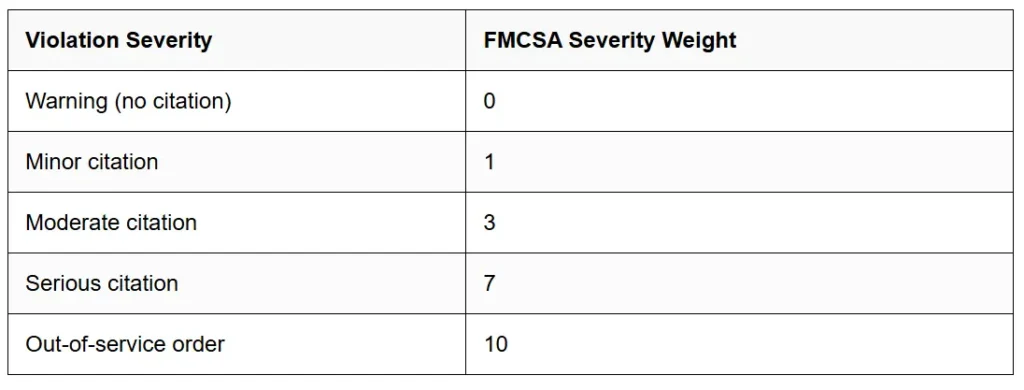
Violations are weighted by severity and recency, with more recent citations carrying greater impact. A pattern of minor logbook errors can push a carrier above intervention thresholds just as effectively as a single serious violation. Logbook services address this by monitoring records continuously rather than reactively.
The table below illustrates how violation severity affects CSA scoring weight:

What Carriers Gain From Ongoing Logbook Support

The value of logbook services extends beyond audit preparation. Carriers that maintain accurate, consistent records benefit across multiple operational areas
  • Identify and correct documentation errors before they reach an inspection or audit.
  • Maintain driver qualification files in sync with logbook records to avoid cross-category violations.
  • Respond to audit document requests quickly, reducing the administrative burden during a compliance review.
  • Demonstrate a culture of compliance to freight partners and insurers who review safety data independently.
Carriers with structured logbook support are better positioned to pass New Entrant Safety Audits — a requirement that must be completed within the first 12 months of FMCSA registration.
Logbook compliance is a continuous operational discipline, not a task completed once and set aside. Carriers that treat recordkeeping as an active process — supported by qualified professionals — build a compliance record that withstands regulatory scrutiny and supports long-term growth in a safety-focused industry.

COMMENT

There are no reviews yet. Be the first one to write one.

Actually, this article could
be in your email

Featured materials from FOXYLAB MAGAZINE
are available in our newsletters.
Subscribe and get a dose of inspiration!

more articles

A whole world on the tip of a pencil. The story of an artist who proved that true art has no limits and that it is never too late to start all over again.

READ MORE ARTICLES

International fashion icon and symbol of Parisian style, Ines de la Fressange is one of the most famous women in France.

Anastasia Pilepchuk is a Berlin-based artist with Buryat roots. She creates masks and face jewellery inspired by the nature and the culture of her beautiful region.

A whole world on the tip of a pencil. The story of an artist who proved that true art has no limits and that it is never too late to start all over again.


Search

FOLLOW US ON