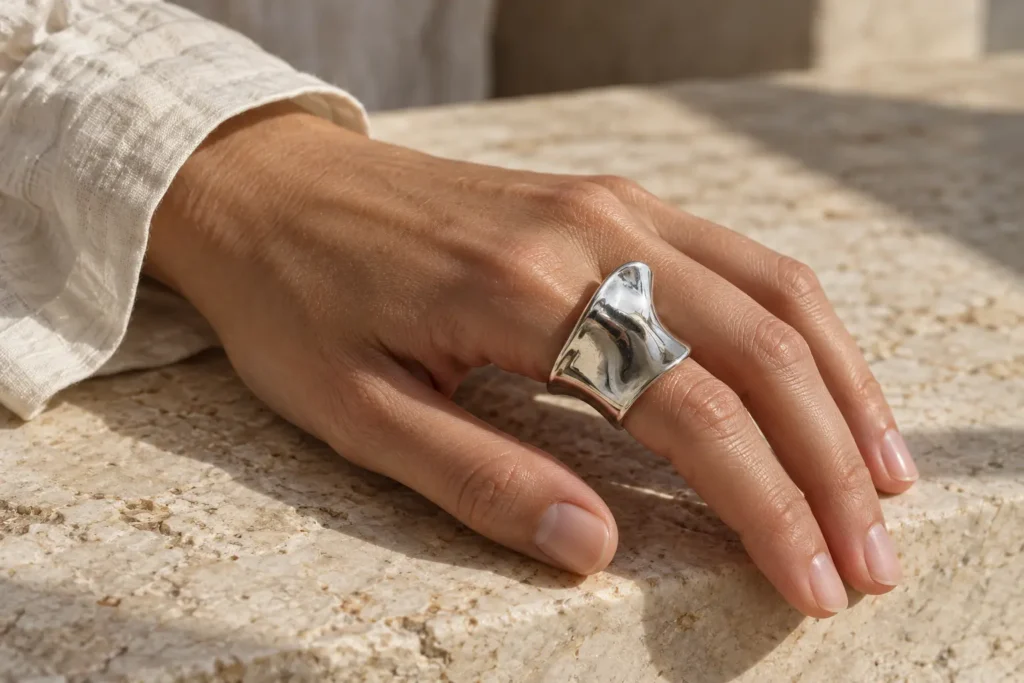
A sculptural silver ring can bring an otherwise simple outfit into focus. In a photograph, the decision seems to be about shape: a broad polished surface, an irregular edge, a stone held above the hand. Once the ring is worn, another set of details takes over. It turns while typing. It presses against the next finger. The shape that looked so balanced in the product shot never quite stays in place. Choosing a ring involves both its visual proportions and its contact with the hand. The size label is part of that decision, but it cannot describe the whole design. A useful fitting considers width, profile, position and the movements the ring will accompany.
Choose the finger before choosing the size. A ring intended for an index finger has a different job from one worn beside a wedding band. Think about how you hold a pen, use a trackpad or carry a bag. A design can be comfortable when the hand is resting and distracting when the fingers move together. When trying on a ring, let the hand relax. Bend the fingers and hold an everyday object. Check whether the setting catches a sleeve or the edges press into neighbouring fingers. These small movements reveal more about regular wear than keeping the hand posed under flattering light.
There is no rule that a statement ring must be worn all day. A piece chosen for an evening can serve a different purpose from a ring you expect to leave on through a working week. Decide which kind of use matters before judging its practicality.
Ring size describes the opening; band width describes how much of the finger the ring covers. They can be confused in a listing because both may appear as millimetre measurements. A 6 mm-wide band is not a ring with a 6 mm opening. A broad band can feel snugger than a narrow band with the same nominal size. This makes an existing slim ring an imperfect guide to a wide replacement. Ask to try a similar width, or request the maker’s fitting advice for that particular design. Automatically adding half a size skips over differences in construction and the shape of the wearer’s finger.
Two rings with similar outlines can have different inner profiles. One may have a flatter inside surface; another may be rounded at the edges or through the interior. Thickness also changes how substantial the ring feels between the fingers, even when the width looks right from above.
Ask for a side view and an image of the underside. “Comfort fit” is useful information, but it does not remove the need to check sizing for the specific piece. Follow the maker’s instructions rather than applying a general correction based on that phrase alone.
An open or adjustable ring deserves the same attention. Ask whether it is intended to be adjusted, over what range, and whether the seller recommends having the adjustment made professionally. An opening in a design does not automatically make it suitable for every finger.
A ring you already wear comfortably can provide a reference if it belongs on the same finger and is reasonably similar in width. Measure its inner diameter across the centre, without including the metal. If the shape has become distorted, take it to a jeweller rather than trying to turn an uneven opening into a precise size.
Home methods remain estimates. For a costly piece, a personalised order or a design that cannot readily be resized, confirm the fit with a jeweller or an appropriate physical sizing set. Avoid treating the nearest available size as the correct one simply because the preferred design is in stock.
Stacking changes the composition on the hand and the space occupied on the finger. Three fine bands may look delicate individually while feeling more substantial together. Try the intended combination, including the order in which the rings will sit. Look from the side as well as from above. Notice whether raised settings meet, whether one ring pushes another into an awkward position, and whether the arrangement still feels comfortable when the hand closes. Ask a jeweller about contact between settings if you plan to wear the pieces together regularly.
You do not have to make every ring work in every arrangement. Keeping a sculptural piece separate can preserve its outline and make it easier to wear. A photograph of a successful stack is a styling reference, not a promise that the same combination will suit another hand.
Once a ring works visually and physically, record the exact version you tried: size system, size, width, metal and any alteration discussed. Confirm whether the sample matches the ring being supplied and what the exchange or resizing terms allow. Ask about engraving after those details are settled. A well-chosen ring does more than look convincing in a close-up. It sits where the design needs it to sit and allows the hand to move naturally. Paying attention to that relationship gives an expressive piece a better chance of becoming something you reach for, rather than something you keep adjusting.