Free shipping on all US orders
10% OF OUR PROFIT GOES TO KIDS’N’CULTURE NON-PROFIT ORGANIZATION
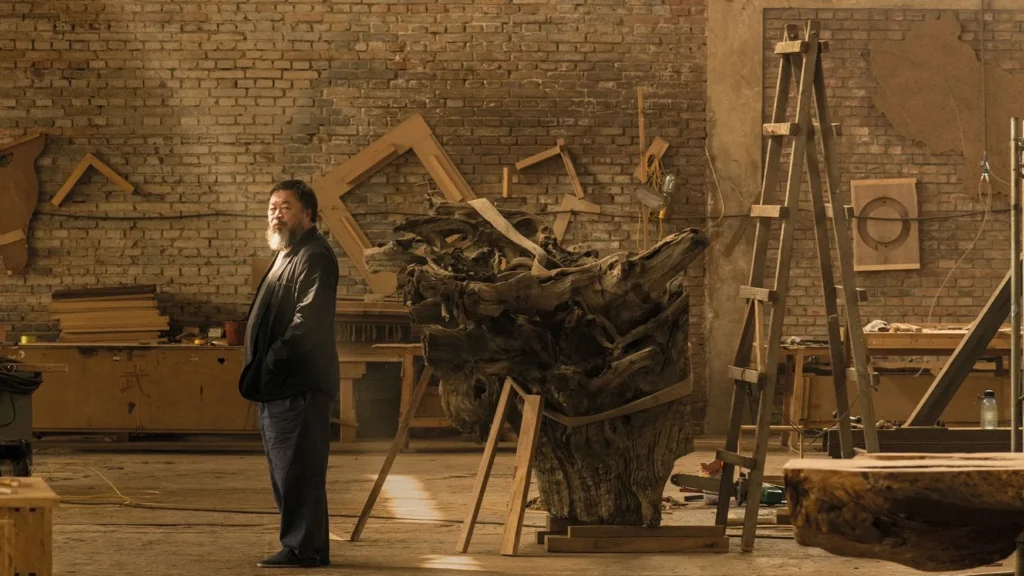
Ai Weiwei is a recognized contemporary artist of the 21st century, and he is known for combining art with political matters and using simple everyday objects to show his work and explore human rights, freedom and migration along with government power.
He makes art to ask various questions about society, and doesn’t use it for only decorative purposes. The work inspires people to think about various topics like injustice, individual freedom, and cultural identity.
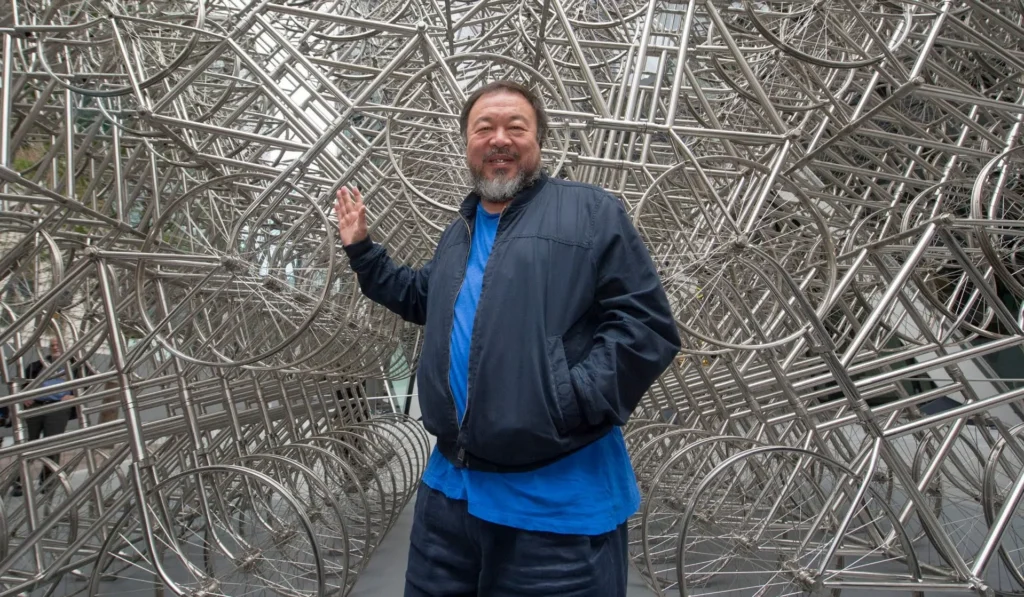
Ai Weiwei was born in 1957 in Beijing. He was raised in China when there was political instability. In the 1980s, he completed his studies at the Beijing Film Academy and then moved to New York, where he got familiar with Western art. He stayed there for some time and then came back to China and became influential in contemporary art.
His father was a famous poet. He was persecuted during Mao Zedong’s Cultural Revolution, and his family was sent to a labor camp. Incidents like that influenced his understanding of freedom of expression and political power.
Art and activism were closely related for him, and his work addressed real-world events instead of being exhibited in galleries and museums. His art focused on the following aspects:
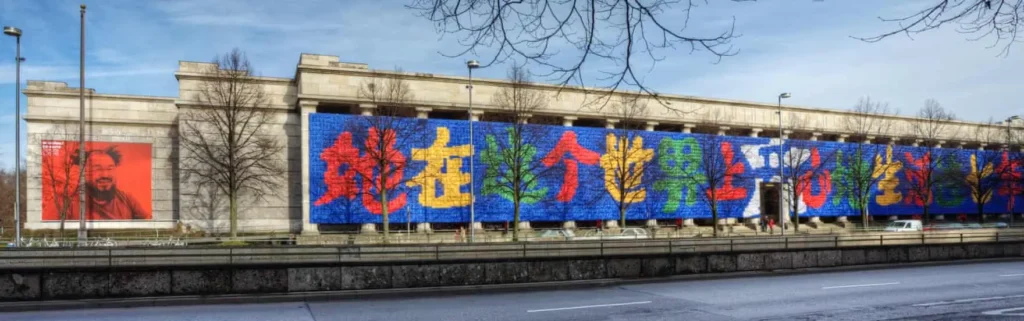
Among his important examples of art is his work on the 2008 Sichuan earthquake in China. The earthquake was a total disaster and killed tens of thousands of people including children. Ai Weiwei volunteered with a group of people and investigated the deaths of students to identify their names and to show how poorly constructed school buildings were.
His work changed documentation into a form of public remembrance, and it later became the centre for his various artworks. The best-known example is “Remembering”(2009) which was created for the Haus der Kunst in Munich.
His work usually explores the relationship between institutions of power and individuals and his art questions different things like who controls information, who gets remembered and what happens when people challenge authorities.
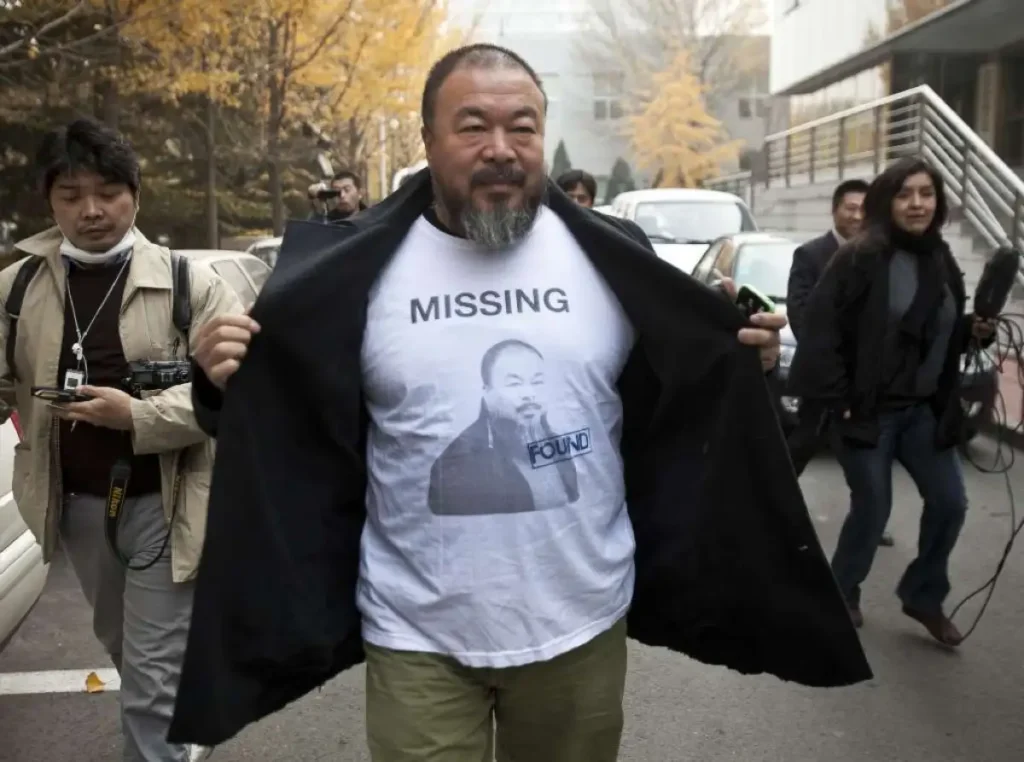
His approach also placed him in direct conflict with the Chinese government. He was detained and held by Chinese authorities for 81 days in 2011. The detention drew the attention of international authorities, which became another important part of his story.
He didn’t treat political pressure separately from his work, but he often put his personal experiences into his creative pieces. That’s why Ai Weiwei’s work operates on various levels. An installation can work as an aesthetic object as well as a political statement.
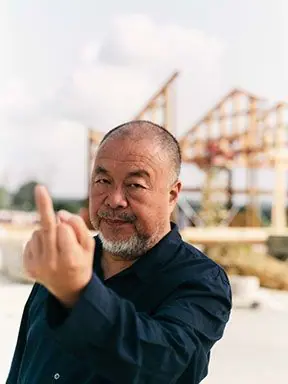
Another example of Ai Weiwei confrontational approach is “Study of Perspective”. The captured photographs show a raised middle finger that was directed towards famous symbols of political and cultural power, along with government buildings and landmarks.
It was a deliberately provocative message. He questioned authorities and challenged the assumption that institutions should remain beyond criticism by placing a simple gesture against the institutions. Now let’s check his famous artworks.
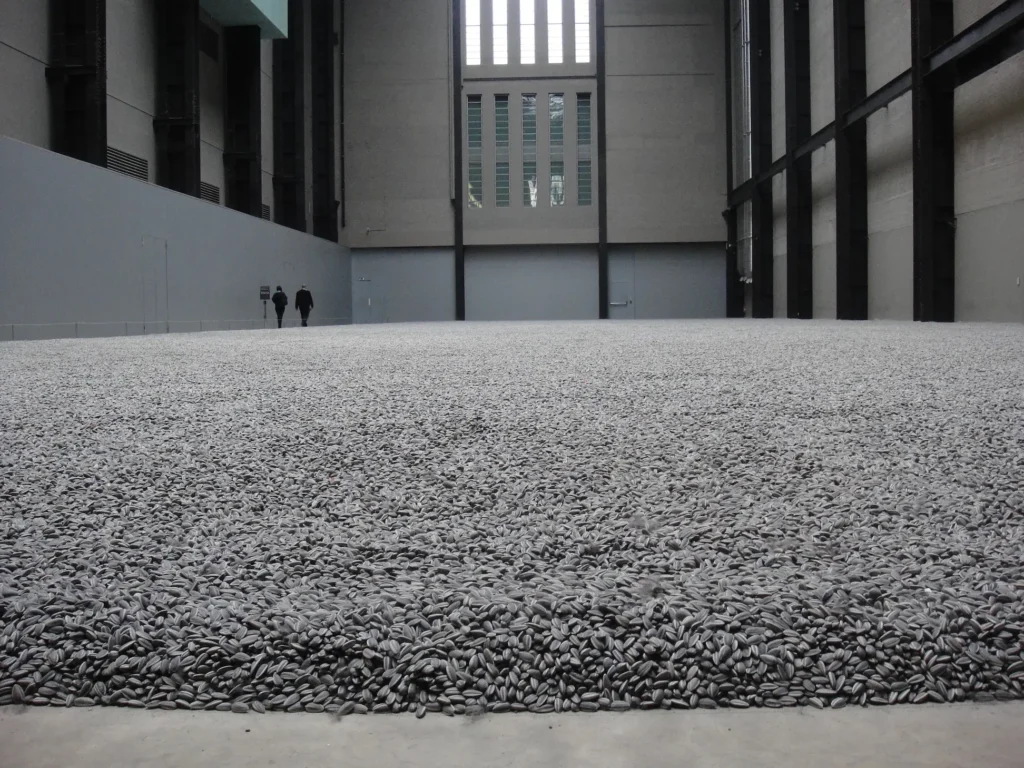
Sunflower Seeds was his famous work in 2010 which was exhibited at Tate Modern’s Turbine Hall. The installation featured millions of hand-painted porcelain sunflower seeds. These seeds were individually produced by craftspeople.
The idea of the work was individuality, mass production, labor and collective identity. In the work, the seeds look the same if they are seen from a distance, but they are made individually.
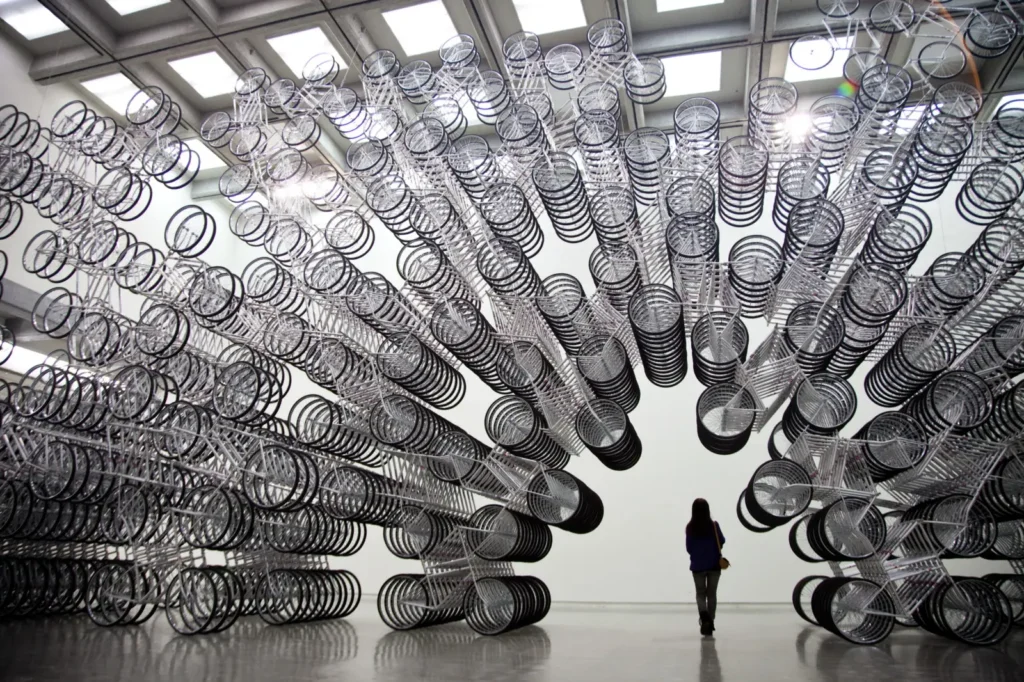
Forever Bicycles is another famous work that consists of thousands of interconnected bicycles arranged into large structures. He used these bicycles to create a huge geometric sculpture that shows personal memory, Chinese society, industrial production, and changing lifestyles.
Ai Weiwei not only influences the contemporary art world; his exhibitions are presented in international museums and galleries. His work is widely recognized because he talks about different global issues like migration, censorship, freedom, surveillance, and political power.
His work is also a motivation for audiences, which gives them the right to question information given by institutions and to think about the people who are behind the headlines.
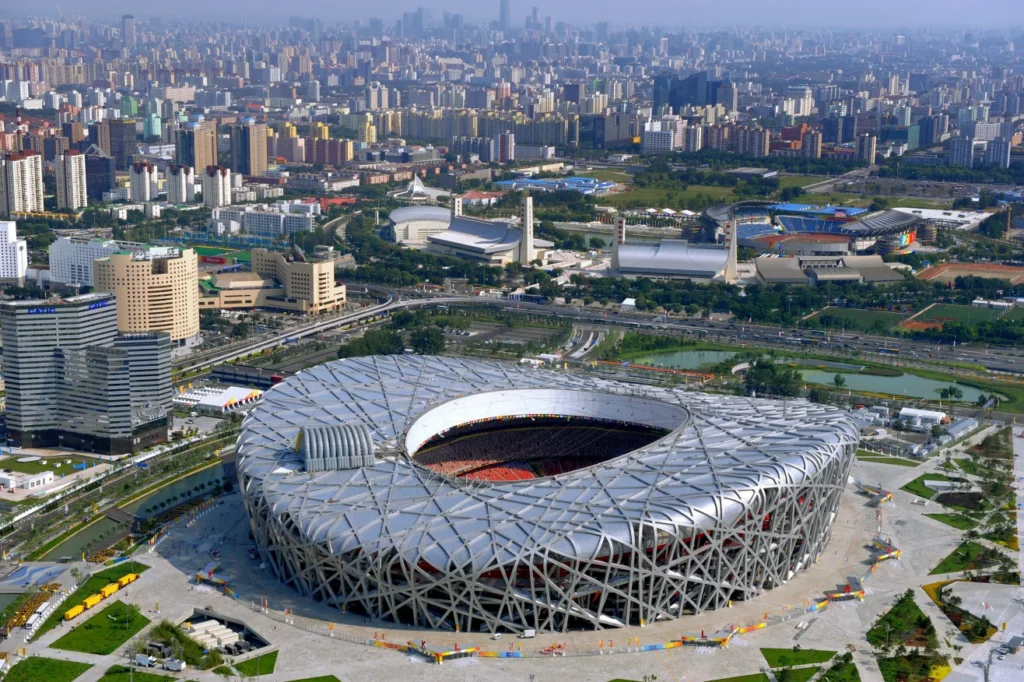
Ai Weiwei also made significant contributions to architecture and design.He was part of the design, along with some Swiss architects of the Beijing National Stadium for the 2008 Olympics, which is known as the Bird’s Nest.
The stadium was recognized as an international landmark, but Ai criticized how it was used as a political spectacle.
Photography played a major role in his career. He covered protests, political events, personal experiences, and everyday life. He used social media as an artistic and political tool more than other traditional artists.
Different platforms such as blogs and social networks helped him to have direct communication with viewers and also to challenge official narratives.
Ai Weiwei became an important example because of the combination of art and digital communication. This showed how contemporary artists can work outside of museums and galleries.
His importance comes from his ability to connect contemporary art with global issues that affect ordinary people. The work of Ai Weiwei shows that contemporary art should not always be beautiful and easy to understand.
The art can be provocative, can be a documentation and can question authority; along with this, it can give people visibility on matters that are ignored. He turns simple objects like seeds, bicycles, photographs and backpacks into questions.
He changed contemporary art by being a political activist and working on different problems such as political power, freedom, migration, human rights, cultural identity and social responsibility.
His work also shows how simple objects carry meanings. The work done shows that creativity can do a lot of things and can also ask questions along with this challenge.
He is known for contemporary art, activism and criticism of political power and human rights issues. His work includes sculpture, installation, photography, film and architecture.
Marcel Duchamp was one of his strongest influences, particularly Duchamp’s idea of the readymade turning ordinary objects into art.
He currently lives and works primarily in Portugal while also maintaining connections to Berlin and Cambridge.
Yes, he is alive.
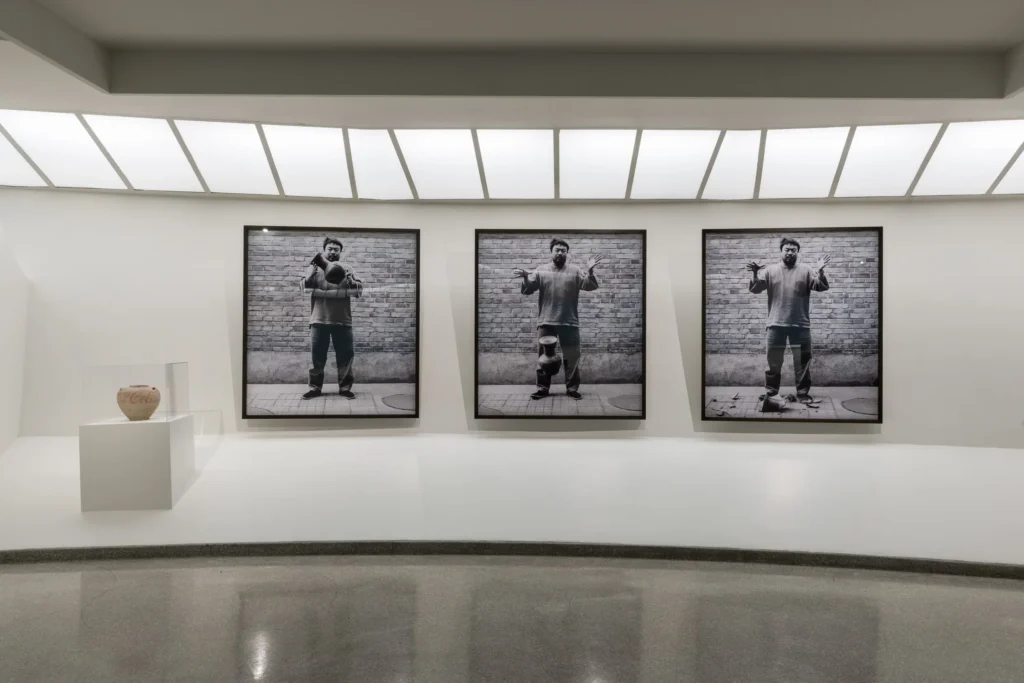
In Dropping a Han Dynasty Urn (1995), he deliberately destroyed an ancient urn to question cultural value, authority and the destruction of China’s heritage.
There are no reviews yet. Be the first one to write one.

A whole world on the tip of a pencil. The story of an artist who proved that true art has no limits and that it is never too late to start all over again.
$130.00 Original price was: $130.00.$65.00Current price is: $65.00.

International fashion icon and symbol of Parisian style, Ines de la Fressange is one of the most famous women in France.

Anastasia Pilepchuk is a Berlin-based artist with Buryat roots. She creates masks and face jewellery inspired by the nature and the culture of her beautiful region.

A whole world on the tip of a pencil. The story of an artist who proved that true art has no limits and that it is never too late to start all over again.