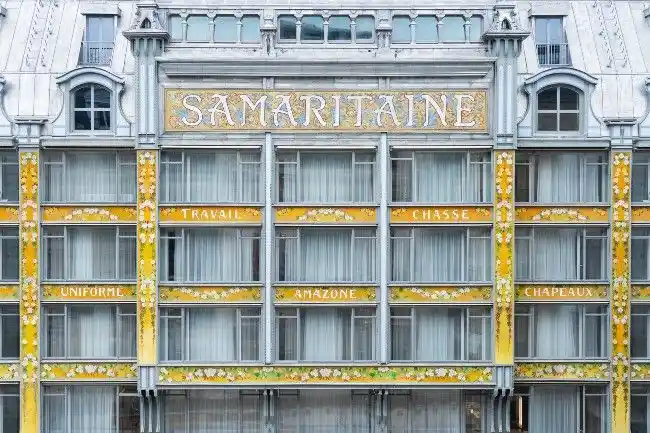
There are multiple places for shopping in Paris, but few feel like an experience before you even walk through the doors. The Samaritan is one of them with its remarkable architecture of more than 150 years of Parisian history. It is located along the banks of the Seine, very close of the Louvre. La Samaritaine offers something that goes far beyond retail. It is a place where history, design, and modern luxury come together under one spectacular roof.
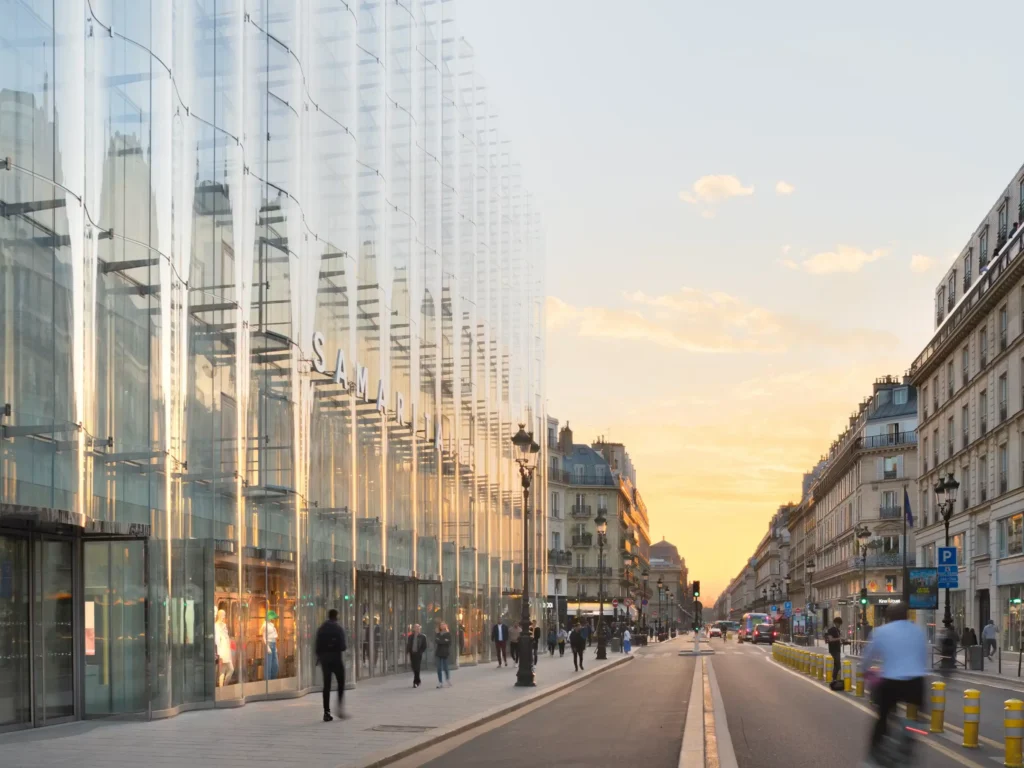
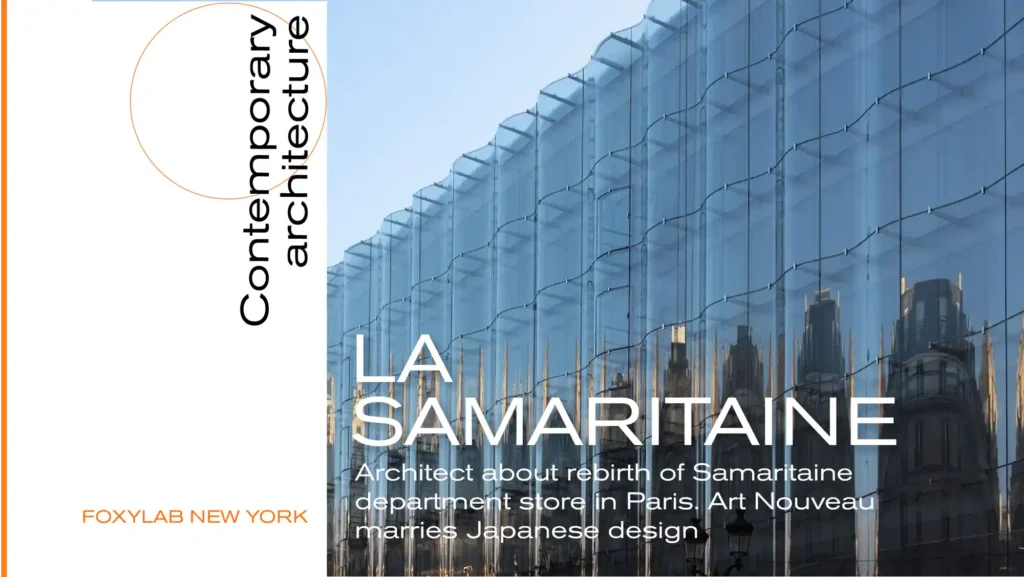
We are continuing a series of art walks in the French capital. Our guide is the professional architect Anna Bakhlina. Anna will walk us thought both, historical and modern part of the complex. We will enjoy the magnificent Art Nouveau elements of the original building, street views of the surroundings and also the modern wave like glassy facade which is signature of the contemporary Japanese architectural style. We will discover the interior of the building which hides some curiosities known only by insiders, such as Anna who used to collaborate with SANAA on another project and had a chance to visit the construction site of La Samaritaine.
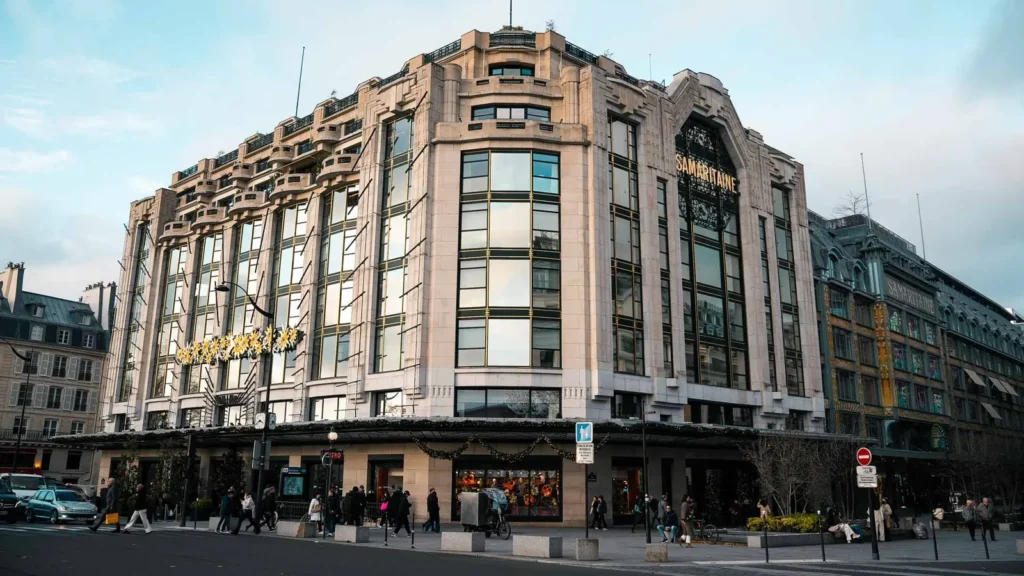
The object of our today’s episode is La Samaritaine, historically one of the largest department stores of the French capital located in its first arrondissement. Inaugurated in 1869 as a small apparel shop, it has progressively expanded to what became a series of department store buildings.
The complex has been listed since 1990 as a “monument historique” by the French Ministry of Culture. However, La Samaritaine, which had been operating at a loss since the 1970s, was closed in 2005. A luxury-goods conglomerate LVMH bought the complex to undertake its large reconstruction and modernisation. For this purpose, it selected the Japanese architectural bureau SANAA. After seven years of renovation a mixed-use complex, which massively expanded to the neighbouring district was (re)open. New Samaritaine features shops, boutique hotel, fine restaurant, brewery, cafes, offices, and social housing.
Creative walk with Parisian-based architect Anna Bakhlina around La Samaritaine, a complex of buildings owned by LVMH where the Art Nouveau marries the modern Japanese design.
She began her career as a professional volunteer and a researcher, in the international settlement of Auroville in South India. Until recently, Anna was a key member of the design team for the Garage Museum of Contemporary Art SANAA, the 2010 Pritzker Prize-winning bureau in Tokyo. In 2016, as a leading architect at atelier Tekuto, she was involved in the development of the Boltun project, which won the annual national Japan Concrete Institute award as the best concrete building of the year in Japan (2018).
La Samaritaine opened up in 1870. It was a small shop founded by Ernest Cognacq and Marie-Louise Jaÿ, a husband-and-wife who believed shopping should be an enjoyable expirience. Their business quickly grew, eventually becoming one of the largest and most famous Parisian department stores. By the early 20th century, La Samaritaine had become famous for offering everything from fashion, home goods, perfumes and even household essentials.
Many years of success passed and the store closed in 2005 because the buildings didn’t met modern safety standards and was operting at a loss. It was a sad news for Paris and many expected it never reopens. But after an extensive restoration led by LVMH, La Samaritaine welcomed visitors again in 2021, carefully preserving its historic character while creating a contemporary luxury destination. Samaritaine’s history an important part of today’s Paris.
One of the main reasons people visit La Samaritaine is because it is finest architectural landmarks in Paris.
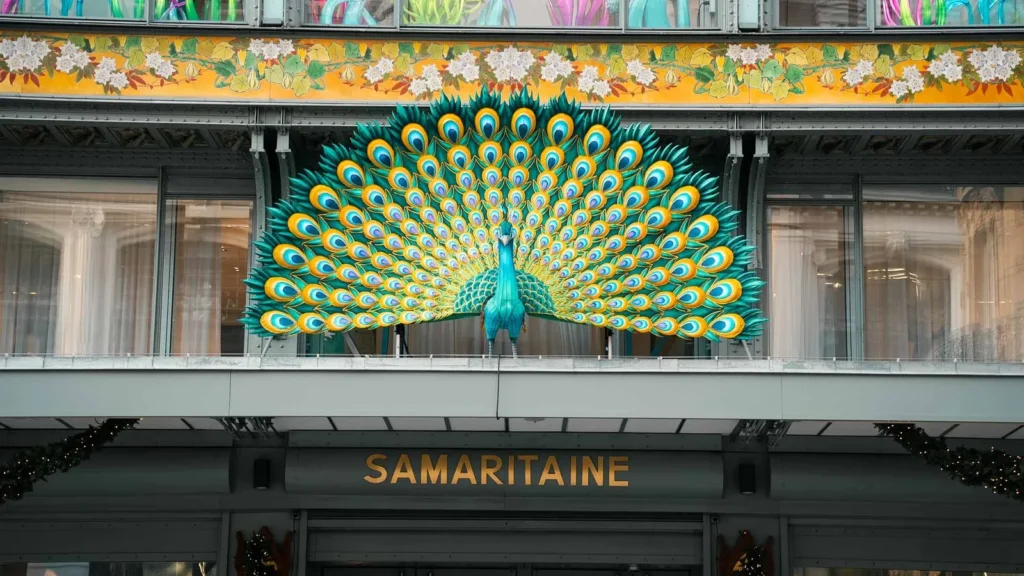
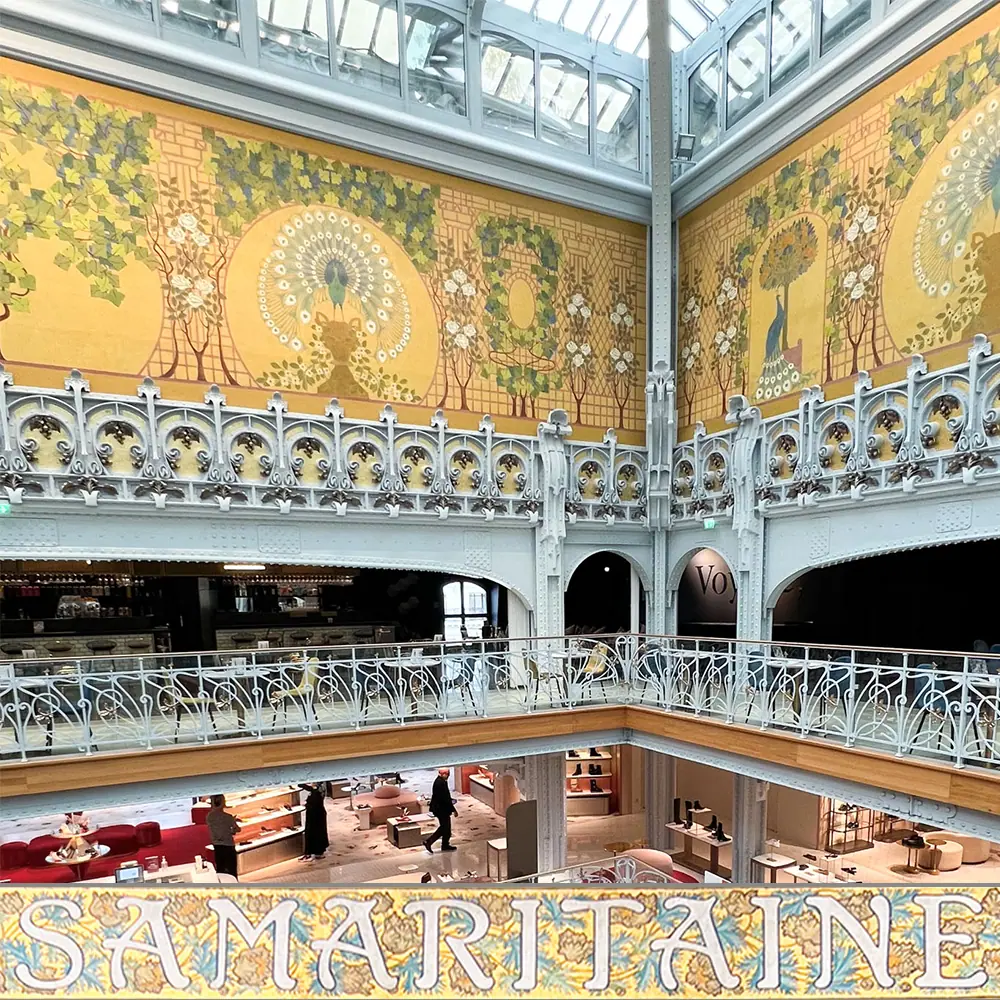
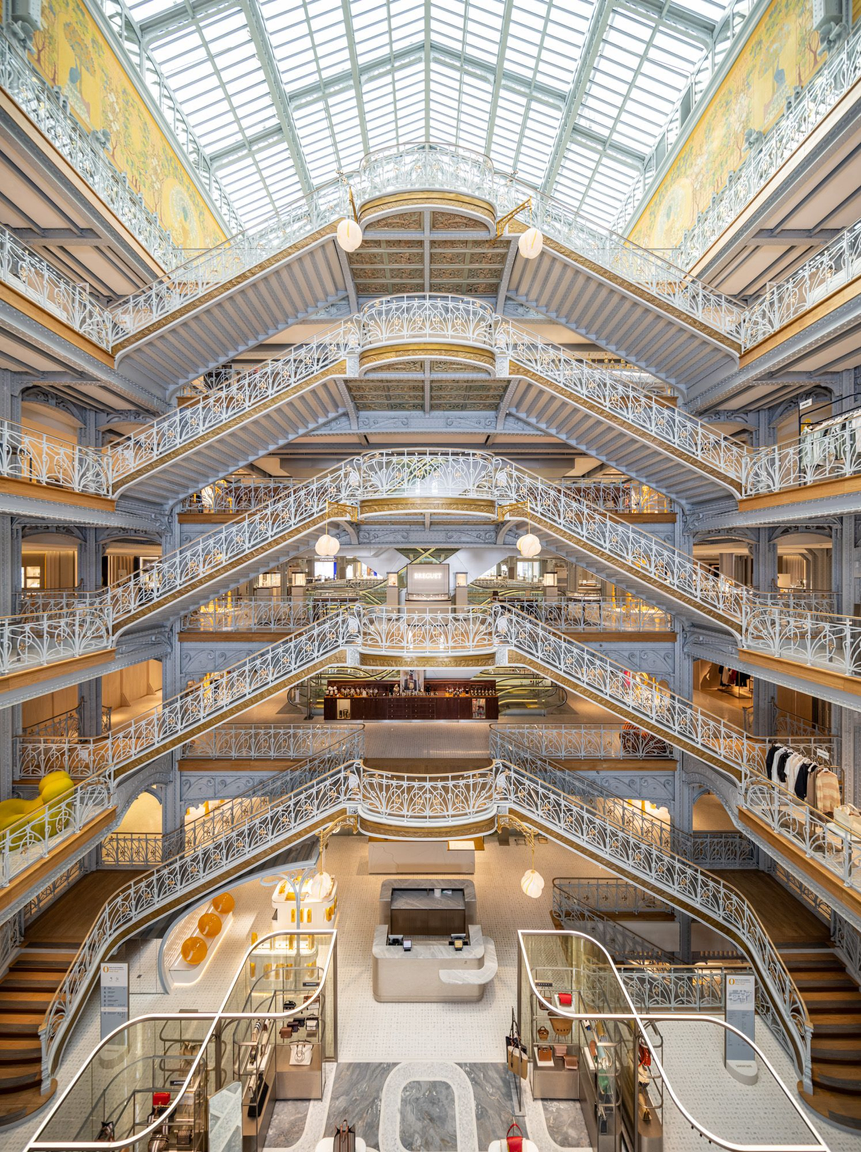
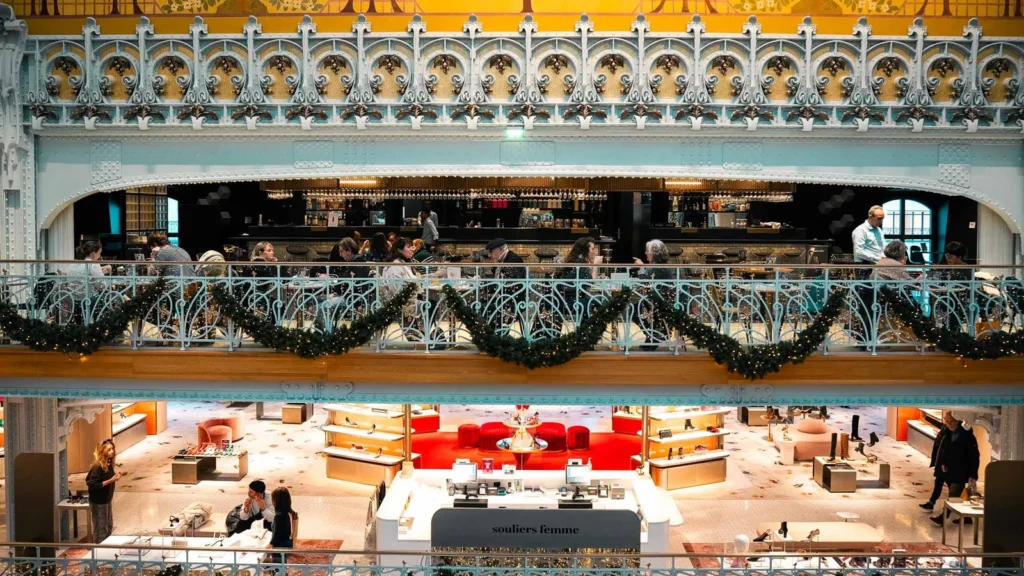
The oldest sections of La Samaritaine are masterpieces of Art Nouveau Paris design. Decorative ironwork, colorful ceramic details, floral motifs, sweeping staircases and an enormous glass roof filled with natural light.
One of Art Nouveau recognizable features is the restored peacock-colored frescoes on the upper floors. Every corner of the building reveals handcrafted details. These detailes reflect the artistry of early 20th-century Paris. La Samaritaine feels like walking through a museum retail space.
Over the past 2 years in collaboration with buro LOCAL, Anna worked on a joint Franco-Russian research project for the housing sector in Russia.
The store was expanded during the 1920s and new sections were added in the Art Deco style. These new spaces introduced cleaner lines, geometric decoration, larger open shopping areas, and elegant stone façades. Together, the Art Nouveau and Art Deco buildings tell us about changing architectural tastes during two important periods of French design. And the combination of these two architectural movements is very harmonious at La Samaritane.
The recent restoration took nearly sixteen years and considered one of the most ambitious heritage projects completed in Paris.
Historic details were carefully restored while modern technology, accessibility and contemporary retail spaces were seamlessly integrated between one another. The result of new La Samaritane respects the original building without freezing it in the past.
Today La Samaritaine Paris is one of the city’s premier destinations for luxury shopping. More than 600 brands are spread across multiple floors, ranging from iconic fashion houses to emerging designers.
The atmosphere is elegant without feeling overly formal.
La Samaritan has collections from many of the world’s leading luxury brands alongside contemporary labels. Beautiful displays, spacious interiors, and attentive service make shopping here feel relaxed.
The jewelry and watch boutiques showcase fine craftsmanship from internationally recognized luxury houses reflecting the timeless elegance associated with Parisian luxury.
Shopping is only part of the experience. La Samaritaine offers several cafés and restaurants where visitors can pause. The food ranges from casual cafés to refined dining.
La Samaritaine has always represented more than commerce. It has become part of Paris’s cultural identity.
Throughout the year, La Samaritaine hosts exhibitions, artistic installations, seasonal displays, designer collaborations and creative events that blur the line between retail and culture.
The reopening of La Samaritaine marked one of the most celebrated restoration projects in recent Paris history.
La Samaritaine is located in the heart of Paris along the Seine River, between the Louvre Museum and Pont Neuf. Its central location makes it easy to include in almost any sightseeing itinerary. Many visitors combine it with nearby attractions.
Many luxury department stores offer designer brands, but very few offer the same sense of place. La Samaritaine stands out because every visit combines architecture, history, fashion, gastronomy and Parisian culture in one destination.
La Samaritaine beautifully restored architecture tells the story of Paris across generations, while its luxury boutiques, restaurants, and cultural spaces show how the city continues to evolve without losing its identity.