Wall art is growing beyond just being a finishing touch. Designers are now using paintings, prints, photography, textiles and sculptural pieces to transform the mood of a whole room. We are observing a trend of oversized design elements, moving away from the typical flatter home styling.
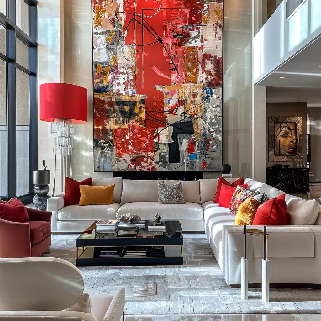
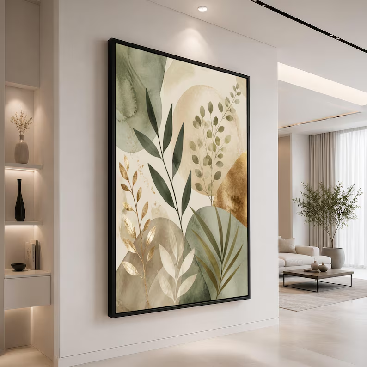
People are starting to prefer a single piece of art for their walls rather than a lot of small pieces – one large artwork of a striking photograph or a large abstract canvas. The oversized statement is the focus of the wall and a major decoration piece.
Those artworks look very nice when they are placed above a sofa, bed or a dining table. The art should easily blend with the room surroundings without extra decorations around it.
How to style it: Use an oversized artwork that covers 2-3 widths of the wall.
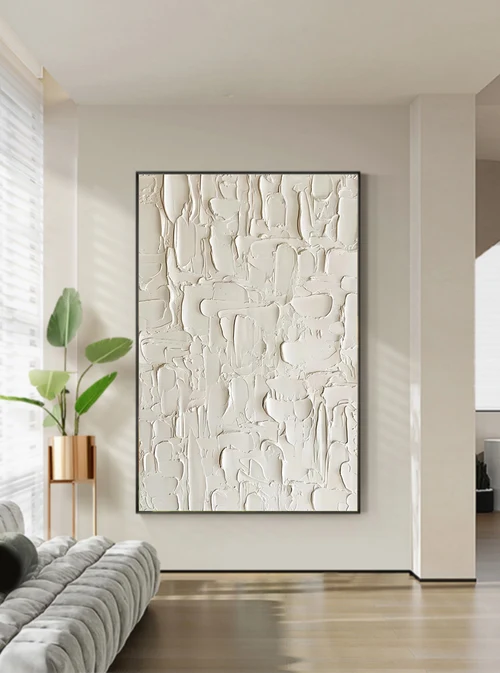
Flat digital-looking prints are being replaced with artwork that looks and feels handmade. It includes the use of brushstrokes, plaster effects, raised surfaces, woven designs and mixed details visible in handmade artwork. These types of artworks can add a lot of depth to a room.
Textured and tactile art looks particularly well with warm and minimalist designs, as texture provides visual interest without being dependent on loud colors. The most trending type is 3D art which is dominant in high-end interiors.
How to style it: Use textured cream, beige and sand colored artwork together with wood and boucle furniture.
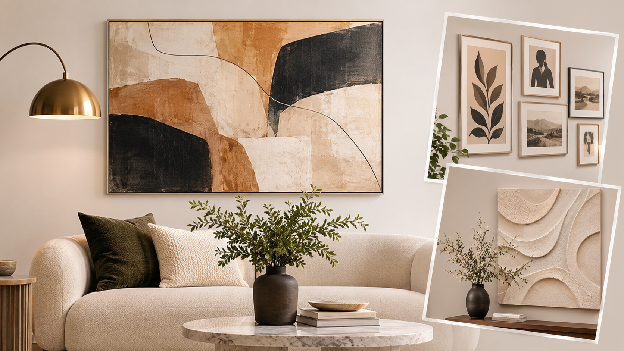
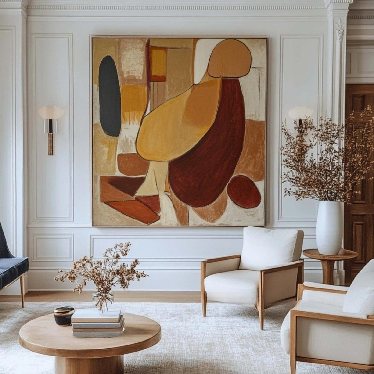
Cool gray colors are giving way to warmer colors, which include ochre, terracotta, sand, clay, rust and warm beige. This brings warmth and depth to the space.
Paintings made in these colors give a softer and more inviting feel to modern rooms. Some reports suggest that combining warm earth tones with blue will add contrast.
Artwork inspired by nature has become less popular these days. Now growing preference for “nature art” is mainly to choose organic shapes, abstract landscapes, flowing forms, leaves, water and natural colors. Traditional photographs of forests & flowers are not being used as much as they were in the past, giving way to subtle interpretation of nature.
The paintings don’t give a strongly themed feeling but they add a biophilic feeling. Abstract artwork works very well with Japandi interiors and warm minimalism, where natural elements play a central role.
How to style it: Create abstract art in soft shades of green, cream, brown, blue-gray, and sandy tones.
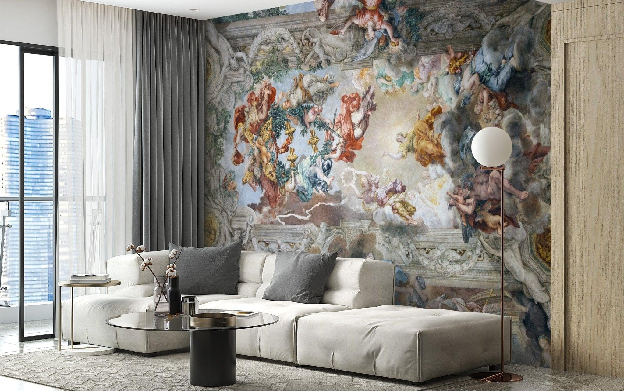
Another design approach is to bring a museum feel into a room. To get a historic look, you should pick classical paintings, ancient frescoes, Renaissance-inspired imagery and modern masters.
The 2026 trend data highlights people’s strong interest in museum-style reproductions, including ancient Roman frescoes and works of artists like Henri Matisse.
How to style it: Combine a classical artwork with a simple modern frame and traditional furniture. It gives a fresh look.
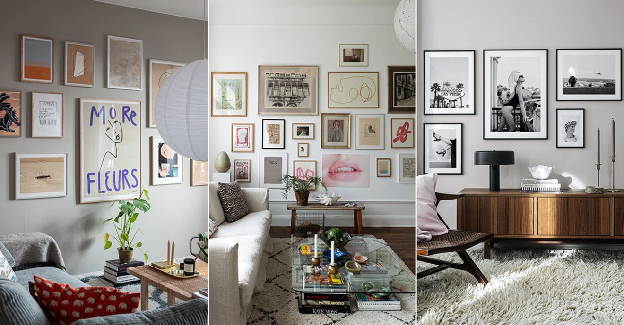
Gallery walls are trending again in 2026 while perfectly symmetrical arrangements have become less important now. Gallery walls these days are shown as historic and a mix of various shapes, artwork styles, photographs and personal pieces.
How to style it: Place a larger piece on its side and try to add smaller pieces too.
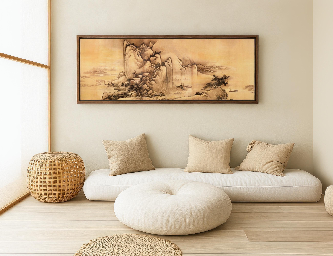
Japanese-inspired artwork has also gained a lot of attention. It fits great with calm and minimalist interiors and these artworks use different techniques such as ukiyo-e references (“pictures of the floating world”), misty landscapes, botanical drawings, Zen-inspired compositions and different color palettes. Japanese designs don’t give an overwhelming feeling but they maintain the clear architecture of a room. The artwork suits a Japandi interior as it adds to its character.
How to style it: You can place a large Japanese inspired print above a sofa or create a small display with plenty of negative space.
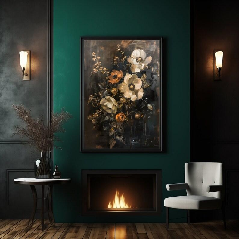
Botanical art is used for a dramatic look with different darker colors (like deep green and charcoal) used for backgrounds. Oversized leaves, wildflowers, abstract plants and vintage botanical illustrations are becoming popular choices for creating a calm and sophisticated atmosphere. These pieces work particularly well with warm neutral interiors, dark wood furniture and natural textures.
The idea is to bring nature indoors without making it feel overly tropical or traditional.
How to style it: Place a dark botanical print on a neutral, deep green or charcoal wall.
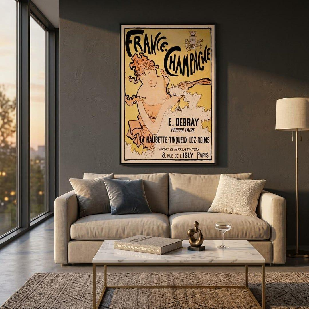
Using vintage and heritage artwork is a great option to add into a modern interior. Use some old travel posters, botanical photographs from the past, vintage ads and old graphics.
Designers are increasingly mixing vintage artwork with contemporary furniture, creating interiors that feel more personal and collected over time. Warm, faded colors, aged paper textures and classic illustrations work especially well with natural materials, wooden furniture and neutral color palettes.
How to style it: Do not give a vintage look to everything.
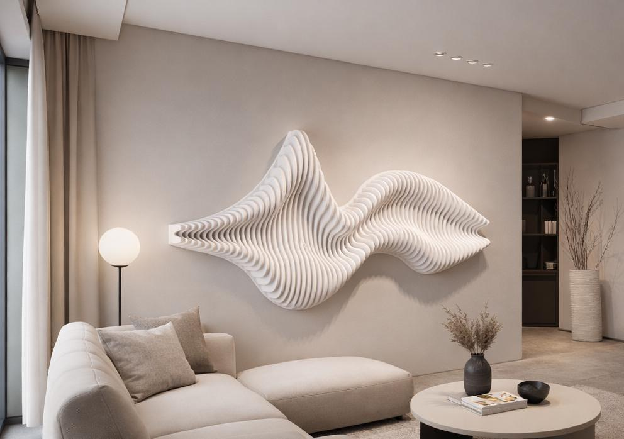
Sculptural artwork is beyond traditional framed artwork – now designers treat the walls as artwork, they use texture, movement and depth in interior spaces. Sculptural wall decor has become three-dimensional and created tactilely by using different methods, including plaster reliefs, ceramic pieces, woven wall hangings, carved wood and metal sculptures.
This trend works particularly well in minimalist and contemporary spaces, where a single sculptural piece can become the focal point of an entire room without overwhelming the design.
How to style it: Place a large sculptural piece and place it under soft lighting.
Art like oversized pieces, warm tones, nature designs, museum art and relaxed gallery walls are trending.
Yes, gallery walls are still popular but the designs are more personal. The gallery styles are also not perfectly symmetrical.
Terracotta, ochre, sand, clay, brown, muted green and warm beige.
Oversized wall art is the most consistent trend of 2026, so it is still popular. It doesn’t require smaller pieces beside it.
There are a lot of styles that are replacing traditional gallery walls such as sculptural artwork and more curated gallery arrangements.
The best wall art for a living room would be a large painting, nature-inspired pieces or a museum-style print.