Free shipping on all US orders
10% OF OUR PROFIT GOES TO KIDS’N’CULTURE NON-PROFIT ORGANIZATION
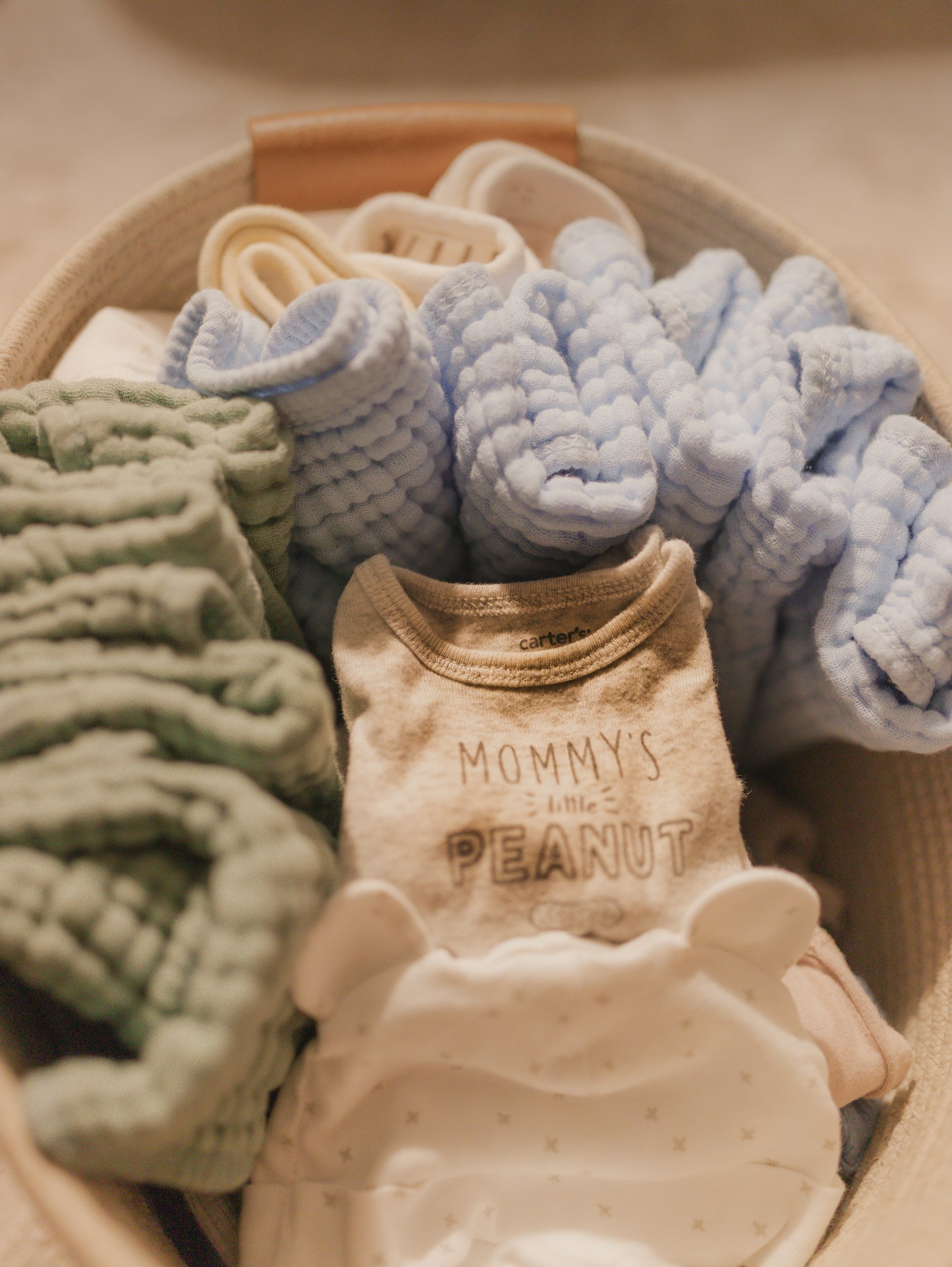
Baby clothes have a particular ability to make sensible shopping plans disappear.
A tiny knitted cardigan, miniature trousers or a beautifully coordinated outfit can be difficult to resist. Before long, a baby’s wardrobe can contain more clothes than an adult’s, even though many of those pieces may only fit for a few months.
The most successful baby wardrobes tend to work differently.
Rather than being built around dozens of individual outfits, they combine comfortable basics with a smaller number of distinctive pieces. The result is a wardrobe that still feels stylish but is much easier to use every day.
Here is how to find that balance.
A practical baby wardrobe begins with the pieces that will be worn repeatedly.
Bodysuits are an obvious starting point. They can be worn alone in warmer conditions or underneath other clothes when temperatures drop.
Soft trousers and leggings are equally useful because they can be combined with almost any top.
One-piece outfits and sleepsuits also deserve plenty of space in the wardrobe, particularly during the first months. They are comfortable, quick to put on and require very little styling.
Once those essentials are covered, it becomes much easier to add more interesting pieces without losing practicality.
Think of the basics as the foundation of the wardrobe rather than the entire wardrobe.
One of the easiest ways to make a baby’s wardrobe feel more considered is to choose a loose colour palette.
It does not have to mean dressing a baby exclusively in beige.
Instead, select a few colours that naturally work together.
Neutral shades such as cream, grey, navy or brown can form the base, while brighter colours can be introduced through tops, knitwear or accessories.
Alternatively, a wardrobe can be built around softer pastels or stronger, playful colours.
Having some consistency means that more clothes can be mixed and matched.
A pair of trousers that works with four different tops will usually be more useful than a highly specific piece that only matches one outfit.
Style matters, but babies have very different priorities.
They spend much of their early life sleeping, lying down, kicking their legs and gradually discovering how to roll, sit and move.
Clothes should allow all of that to happen comfortably.
Soft fabrics and flexible fits are generally easier for everyday wear than stiff or heavily structured garments.
Pay attention to details as well.
A decorative element may look beautiful while the garment is hanging in a shop, but consider where it will sit when the baby is lying on their back.
Likewise, waistbands should feel comfortable and clothes should offer enough room around the arms and legs for natural movement.
The most stylish outfit is rarely successful if the baby clearly dislikes wearing it.
A baby wardrobe does not need to choose between practical and fashionable.
The easiest solution is to combine the two.
Keep everyday essentials relatively versatile, then introduce personality through a few more distinctive items.
That could mean a colourful cardigan, printed trousers, an interesting sweatshirt or a particularly beautiful knitted piece.
When browsing baby collections from brands such as Name It, looking across bodysuits, trousers, knitwear and other categories can make it easier to create combinations rather than shopping for completely separate outfits.
This approach also makes the wardrobe feel larger than it actually is.
The same trousers might work with a simple bodysuit one day and a more expressive top the next.
Few things are harder to resist than newborn clothing.
Unfortunately, newborn clothes can also have an extremely short lifespan.
Some babies wear the smallest sizes for several weeks. Others barely use them before moving up.
It is impossible to know exactly how quickly a baby will grow before they arrive.
Instead of filling an entire wardrobe with one size, spread purchases across a few sizes.
Have enough clothing for the first weeks, but keep some larger basics ready too.
This is especially useful when relatives or friends are buying gifts. New parents often receive plenty of very small clothes, while larger sizes may prove more useful later.
Layering is practical, but it also makes baby outfits more interesting.
A simple bodysuit and trousers can be transformed with a cardigan, knitted vest or sweatshirt.
Layers also make it easier to adapt clothing throughout the day.
A baby might move from a warm home to a cooler outdoor environment and then into a heated café or shop. Being able to remove or add one layer is far easier than changing the entire outfit.
This flexibility is especially useful during spring and autumn, when temperatures can change significantly between morning and afternoon.
It also means that many clothes can remain useful across more than one season.
Parents often become unexpectedly passionate about clothing fastenings.
There is a reason.
Babies need frequent nappy changes, and an outfit that takes several minutes to open can quickly become frustrating.
Look at how easily the lower part of an outfit can be accessed.
Snap fasteners are common for good reason, while well-placed zips can make one-piece outfits particularly easy to use.
Some beautifully designed garments require almost complete removal for every nappy change.
That may be fine for occasional wear, but it can become inconvenient as everyday clothing.
Good baby fashion works with the realities of parenting rather than ignoring them.
Interesting outfits do not always need bold colours or prints.
Texture can add just as much personality.
Knitted cardigans, ribbed fabrics, soft fleece and textured cotton can create visual variety while remaining easy to combine.
This is particularly useful when building a wardrobe around a relatively restrained colour palette.
A cream knitted cardigan, for example, can feel very different from a plain cream sweatshirt even though both occupy a similar place in the wardrobe.
Mixing textures is a simple way to create outfits that feel styled without making them overly complicated.
There will always be reasons to dress a baby in something special.
Family celebrations, photographs, holidays and other occasions are all good opportunities for more elaborate clothing.
The mistake is assuming that a baby needs a large collection of occasion wear.
They usually do not.
A few carefully selected outfits are enough, especially if individual pieces can also be combined with everyday clothing.
A beautiful cardigan, for instance, may work for a family celebration but still look perfectly appropriate with simple trousers the following week.
Versatility is particularly useful because babies can grow out of occasion wear before there is another opportunity to use it.
Baby clothing gets washed frequently.
Very frequently.
That means care should be part of the purchasing decision.
Check washing instructions and consider whether a garment fits realistically into your household routine.
Parents already have enough laundry without introducing a large collection of clothes that require complicated treatment.
This does not mean every item must be basic.
It simply means that everyday clothing should ideally be easy enough to care for that parents are happy to use it regularly.
A beautiful garment that is permanently saved because nobody wants to wash it is not contributing much to the wardrobe.
Buying ahead can save money, particularly during sales, but there is one obvious complication: seasons.
A thick jumper in a larger size is only useful if the baby actually reaches that size during colder weather.
The same applies to very lightweight summer clothing.
When buying larger sizes, estimate when the clothes are likely to fit.
There is no need to predict growth perfectly, but thinking about the season can prevent obvious mismatches.
Versatile basics are generally safer to buy ahead, while highly seasonal pieces are often better purchased closer to when they will be needed.
Perhaps the biggest mistake is trying to complete a baby’s wardrobe before the baby arrives.
Parents quickly develop preferences.
Some discover that they love one-piece outfits. Others prefer separate bodysuits and trousers.
One baby may move through sizes rapidly, while another stays in the same size for months.
There is no way to predict every detail in advance.
Start with enough clothing to cover everyday needs and leave room to learn.
After a few weeks, it becomes obvious which pieces are constantly in the laundry because they are being worn again and again.
Those are the clothes worth buying more of.
A stylish baby wardrobe does not need to be enormous, expensive or perfectly coordinated.
It simply needs a sense of consistency.
Choose comfortable basics that work together, introduce personality through colour, print and texture, and avoid filling the wardrobe with pieces that only suit one particular outfit.
Most importantly, remember what baby clothes are actually for.
They need to survive naps, feeding, crawling, cuddles and frequent washing while remaining comfortable enough for a baby to move freely.
When fashion and function work together, getting dressed becomes easier – and the wardrobe still feels personal, thoughtful and fun.
There are no reviews yet. Be the first one to write one.

A whole world on the tip of a pencil. The story of an artist who proved that true art has no limits and that it is never too late to start all over again.
$130.00 Original price was: $130.00.$65.00Current price is: $65.00.

International fashion icon and symbol of Parisian style, Ines de la Fressange is one of the most famous women in France.

Anastasia Pilepchuk is a Berlin-based artist with Buryat roots. She creates masks and face jewellery inspired by the nature and the culture of her beautiful region.

A whole world on the tip of a pencil. The story of an artist who proved that true art has no limits and that it is never too late to start all over again.